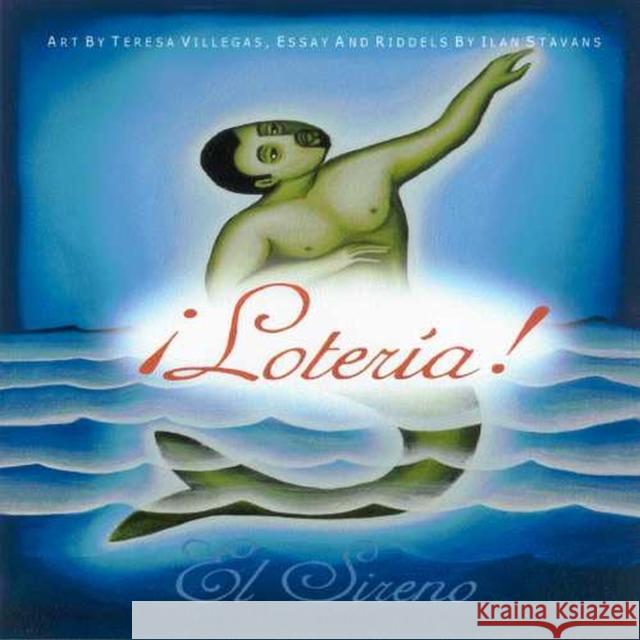
A pastime, delightful-- Chips, cards, and a table. The riddles insightful, the future, unstable What is it? It's Loteria, the Mexican game of chance For the uninitiated, it might seem like bingo played with a riddling tarot deck. But this enthralling board game is more than entertainment. The images found on its cards--La Virgen, El Pan Dulce, La Telenovela--are miniature reflections of an entire culture, capturing the joys and sorrows of the Mexican people. Wildly popular on both sides of the border, Loteria cards originated in the...
A pastime, delightful-- Chips, cards, and a table. The riddles insightful, the future, unstable What is it? It's L...
The Hispanic Malcolm X. Writer. Activist. Civil rights attorney. Obese, dark-skinned, and angry. Man with a surplus of personality. Man of vision. All the above describe Oscar "Zeta" Acosta. El Paso-born, Acosta became a leading figure in the Chicano rights movement of the 1960s and 1970s, winning landmark decisions in civil rights cases as an attorney. As a tireless writer and activist, he had a profound influence on his contemporaries. He seemed to be everywhere at once, knowing everyone in "el movimiento" and involving himself in many of its key moments. Tumultuous and prone to excess, he...
The Hispanic Malcolm X. Writer. Activist. Civil rights attorney. Obese, dark-skinned, and angry. Man with a surplus of personality. Man of vision. All...
"The One-Handed Pianist "was published to acclaim in the early 1990 s, with the two-part Spanish edition winning the Latino Literature Prize in 1989 and the Gamma Literature Prize in 1992. Its tales look at what it means to be Jewish in the Hispanic world a world in which spirituality is often exercised outside the realm of orthodoxy.
Stavans constructs fables that raise questions about ethnicity and community; even Stavans person raises questions about ethnicity and community: what does it mean that a Jew of Eastern European lineage can call himself Latino and speak for that group?"
"The One-Handed Pianist "was published to acclaim in the early 1990 s, with the two-part Spanish edition winning the Latino Literature Prize in 198...
An entertaining, provocative and often exhilarating collection, this anthology celebrates some of the most original and cutting-edge work to emerge from the cultural collide that is Latino life in the United States.
An entertaining, provocative and often exhilarating collection, this anthology celebrates some of the most original and cutting-edge work to emerge fr...
As the largest and youngest minority group in the United States, the 60 million Latinos living in the U.S. represent the second-largest concentration of Hispanic people in the entire world, after Mexico. Needless to say, the population of Latinos in the U.S. is causing a shift, not only changing the demographic landscape of the country, but also impacting national culture, politics, and spoken language. While Latinos comprise a diverse minority group -- with various religious beliefs, political ideologies, and social values-commentators on both sides of the political divide have lumped Latino...
As the largest and youngest minority group in the United States, the 60 million Latinos living in the U.S. represent the second-largest concentration ...
The year 2015 marks the four hundredth anniversary of the publication of the complete Don Quixote of La Mancha--an ageless masterpiece that has proven unusually fertile and endlessly adaptable. Flaubert was inspired to turn Emma Bovary into "a knight in skirts." Freud studied Quixote's psyche. Mark Twain was fascinated by it, as were Kafka, Picasso, Nabokov, Borges, and Orson Welles. The novel has spawned ballets and operas, poems and plays, movies and video games, and even shapes the identities of entire nations. Spain uses it as a sort of constitution and travel guide; and the...
The year 2015 marks the four hundredth anniversary of the publication of the complete Don Quixote of La Mancha--an ageless masterpiece tha...
In the face of social inequalities, sometimes strength for mobilization can be found through laughter. It is this ethos that Ilan Stavans employs in this politically minded graphic novel. Weaving humor with social commentary, Stavans tells a tale of a Latino man taking Los Angeles' mayoral office by storm and refusing to stop there. Illustrated throughout by Roberto Weil, the story follows the life and political development of Mr. Spic Samuel Patricio Inocencio Cardenas as he upends the political machine by owning up to and embracing his rough-and-tumble past, refusing to bend to corporate...
In the face of social inequalities, sometimes strength for mobilization can be found through laughter. It is this ethos that Ilan Stavans employs in t...
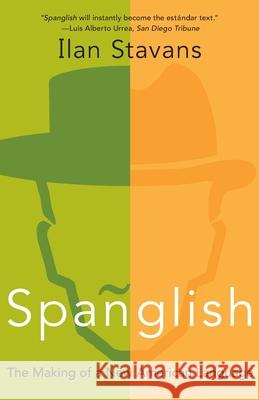
With the release of the census figures in 2000, Latino America wasanointed the future driving force of American culture. The emergence of Spanglish as a form of communication is one of the more influential markers of an America gone Latino. Spanish, present on this continent since the fifteenth century, when Iberian explorers sought to colonize territories in what are now Florida, New Mexico, Texas, and California, has become ubiquitous in the last few decades. The nation's unofficial second language, it is highly visible on several 24-hour TV networks and on more than 200 radio stations...
With the release of the census figures in 2000, Latino America wasanointed the future driving force of American culture. The emergence of Spanglish...
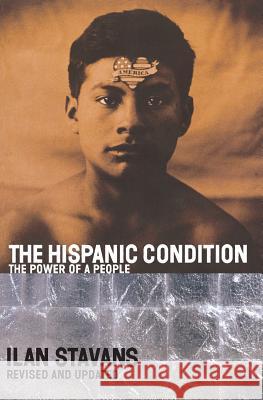
In The Hispanic Condition, Ilan Stavans offers a subtle and insightful meditation on Hispanic society in the United States. A native of Mexico, Stavans has emerged as one of the most distinguished Latin American writers of our time, an award-winning novelist and critic praised by scholars and beloved by readers. In this pioneering psycho-historical profile, he delves into the cultural differences and similarities among the five major Hispanic groups: Cubans, Puerto Ricans, Mexicans, Central and South Americans, and Spaniards.
Sixteen master translators have chosen their favorite stories from Latin America. Writers and translators include Edith Grossman, Helen R. Lane, Augusto Monterroso, Gregory Rabassa, Alfonso Reyes, Hardie St. Martin, and Luisa Valenzuela. An introductory essay on translation by Ilan Stavans and an epilogue by Margaret Sayers Peden provide entertaining food for thought.
Sixteen master translators have chosen their favorite stories from Latin America. Writers and translators include Edith Grossman, Helen R. Lane, Augus...