DNA Interactions with Polymers and Surfactants » książka





DNA Interactions with Polymers and Surfactants
ISBN-13: 9780470258187 / Angielski / Twarda / 2008 / 432 str.
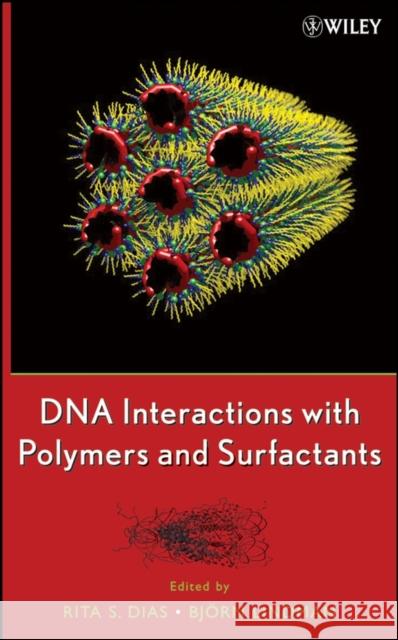
DNA Interactions with Polymers and Surfactants
ISBN-13: 9780470258187 / Angielski / Twarda / 2008 / 432 str.
(netto: 901,94 VAT: 5%)
Najniższa cena z 30 dni: 899,60
ok. 30 dni roboczych.
Darmowa dostawa!
Due to the potential benefits of biotechnology, interest in the interaction between DNA and surfactants and polymers has become increasingly significant. Now, DNA Interactions with Polymers and Surfactants provides an extensive, up-to-date overview of the subject, giving readers a basis for understanding the factors leading to complexation between DNA and different cosolutes, including metal ions, polyelectrolytes, spermine, spermidine, surfactants and lipids, and proteins.
Wydanie ilustrowane
"Aims to give readers an overview of the subject and a basis for understanding the factors leading to the complexation between DNA and different co–salutes." ( TCE – The Chemical Engineer, July 2008)
Preface.
Contributors.
1 Polyelectrolytes. Physicochemical Aspects and Biological Significance (Magnus Ullner).
1.1 Introduction.
1.2 Polyelectrolytes and Biological Function.
1.3 Electrostatic Interactions.
1.4 Solution Properties.
1.5 Flexibility.
References.
2 Solution Behavior of Nucleic Acids (Rita S. Dias).
2.1 Biological Function of Nucleic Acids.
2.2 Discovery of DNA.
2.3 Structure of Nucleic Acids.
2.4 Nuclei Acids Nanostructures.
2.5 Behavior of DNA in Solution.
2.6 Melting of Double–Stranded DNA.
Acknowledgments.
References.
3 Single DNA Molecules: Compaction and Decompaction (Anatoly A. Zinchenko, Olga A. Pyshkina, Andrey V. Lezov, Vladimir G. Sergeyev, and Kenichi Yoshikawa).
3.1 Introduction.
3.2 Condensation and Compaction of DNA by Surfactants.
3.3 DNA Condensation by Cationic Liposomes.
3.4 DNA Compaction and Decompaction by Multivalent Cations.
3.5 DNA Compaction by Polycations.
3.6 Compaction of DNA in a Crowded Environment of Neutral Polymer.
3.7 Conclusion.
References.
4 Interaction of DNA with Surfactants in Solution (Rita S. Dias, Kenneth Dawson, and Maria G. Miguel).
4.1 Introduction.
4.2 DNA Cationic Surfactant Interactions.
4.3 DNA Covalent Gels and Their Interaction with Surfactants.
4.4 Applications.
Acknowledgments.
References.
5 Interaction of DNA with Cationic Polymers (Eric Raspaud, Adriana C. Toma, Francoise Livolant, and Joachim Radler).
5.1 Introduction.
5.2 Theory of DNA Interacting with Polycations.
5.3 Condensation of DNA, Phase Diagram, and Structure.
5.4 Formation of Polycation DNA Complexes: Polyplexes.
5.5 DNA–Nanoparticles for Gene Delivery.
5.6 Cellular Uptake and Intracellular Interactions of Polyplexes.
5.7 Conclusion.
Acknowledgment.
References.
6 Interactions of Histones with DNA: Nucleosome Assembly, Stability, Dynamics, and Higher Order Structure (Karsten Rippe, Jacek Mazurkiewicz, and Nick Kepper).
6.1 Introduction.
6.2 Histones.
6.3 Structure of Histone DNA Complexes.
6.4 Assembly of Nucleosomes and Chromatosomes.
6.5 Stability and Dynamics of Nucleosomes.
6.6 Higher Order Chromatin Structures.
Acknowledgments.
References.
7 Opening and Closing DNA: Theories on the Nucleosome (Igor M. Kulic and Helmut Schiessel).
7.1 Introduction.
7.2 Unwrapping Nucleosomes.
7.3 Nucleosome Sliding.
7.4 Transcription Through Nucleosomes.
7.5 Tail Bridging.
7.6 Discussion and Conclusion.
Acknowledgment.
References.
8 DNA DNA Interactions (Lars Nordenskiöld, Nikolay Korolev, and Alexander P. Lyubartsev).
8.1 Introduction.
8.2 The Statistical Polymer Solution Model Predicts DNA Collapse/Aggregation Phase Behavior.
8.3 DNA in Solution is Condensed to a Compact State by Multivalent Cationic Ligands.
8.4 Ion Correlation Effects Included in Theory and in Computer Modeling Explain DNA DNA Attraction.
8.5 Conclusions and Future Prospects.
References.
9 Hydration of DNA Amphiphile Complexes (Cecilia Leal and Hakan Wennerstrom).
9.1 Introduction.
9.2 General Properties of DNA Double Helices and Cationic Aggregates.
9.3 Thermodynamics of DNA Amphiphile Complexes.
9.4 Molecular Properties of DNA Amphiphile Complexes.
9.5 Concluding Remarks.
References.
10 DNA Surfactant/Lipid Complexes at Liquid Interfaces (Dominique Langevin).
10.1 Introduction.
10.2 Soluble Surfactants.
10.3 Insoluble Surfactants.
10.4 Lipids.
10.5 Mixtures of Surfactants and Lipids.
10.6 Conclusion.
References 286
11 DNA and DNA Surfactant Complexes at Solid Surfaces (Marite Cardenas and Tommy Nylander).
11.1 Introduction.
11.2 Adsorption of DNA at Surfaces.
11.3 Attachment of DNA Surfaces Strategies and Challenges.
11.4 DNA Structure on Surfaces Comparison with Highly Charged Polyelectrolytes.
11.5 Some Applications Arrays and Nanostamping.
Acknowledgments.
References.
12 Role of Correlation Forces for DNA Cosolute Interactions (Malek O. Khan).
12.1 Introduction.
12.2 Experimental Evidence of DNA Condensation Induced by Electrostatic Agents.
12.3 Simulations Used to Characterize the DNA Compaction Mechanism.
12.4 Ion Correlations Limiting the Validity of DLVO Theory.
12.5 Ion Correlations Driving the Compaction of DNA.
12.6 Conformation of Compact DNA The Coil to Toroid Transition.
12.7 Conclusions.
References.
13 Simulations of Polyions: Compaction, Adsorption onto Surfaces, and Confinement (A.A.C.C. Pais and P. Linse).
13.1 Introduction.
13.2 Models.
13.3 Solutions of Polyions with Multivalent Counterions.
13.4 Polyion Adsorption onto Charged Surfaces.
13.5 Polyions in Confined Geometries.
13.6 Concluding Remarks.
References.
14 Cross–linked DNA Gels and Gel Particles (Diana Costa, M. Carmen Moran, Maria G. Miguel, and Bjorn Lindman)
14.1 Introduction.
14.2 Covalently Cross–Linked DNA Gels.
14.3 ds–DNA versus ss–DNA: Skin Formation.
14.4 DNA Gel Particles.
14.5 Physical DNA Gels.
References.
15 DNA as an Amphiphilic Polymer (Rita S. Dias, Maria G. Miguel, and Bjorn Lindman).
15.1 Some General Aspects of Self–Assembly.
15.2 Illustrations.
References.
16 Lipid DNA Interactions: Structure Function Studies of Nanomaterials for Gene Delivery (Kai K. Ewert, Charles E. Samuel, and Cyrus R. Safinya).
16.1 Introduction.
16.2 Formation and Structures of CL DNA Complexes.
16.3 Effect of the Lipid DNA Charge Ratio (rchg) on CL DNA Complex Properties.
16.4 Effect of the Membrane Charge Density (sM) on CL DNA Complex Properties.
16.5 Effect of Nonlamellar CL DNA Complex Structure on the Transfection Mechanism.
16.6 Model of Transfection with Lamellar CL DNA Complexes.
16.7 Model of Transfection with Inverted Hexagonal CL DNA Complexes.
16.8 PEGylated CL DNA Complexes: Surface Functionalization and Distinct DNA DNA Interaction Regimes.
16.9 Conclusion and Summary.
Acknowledgments.
References.
Index.
Rita S. Dias, PhD, is a postdoctoral scientist in the Department of Physical Chemistry at Lund University, Sweden. Her current research involves the control of DNA condensation using surfactant mixtures and Monte Carlo simulations on the compaction of DNA and interaction of macromolecules with coarse–grained lipid membranes.
Björn Lindman, PhD, has served as Full Professor at Lund University for the past three decades. Dr. Lindman′s contributions have included the determination of the structure of microemulsions, the development of novel delivery systems for pharmaceuticals, and new systems for eliminating adhesions in surgery. He was the first to establish phase diagrams for mixed polymer–surfactant solutions as well as the bicontinuity of microemulsions. Dr. Lindman is the author of hundreds of scientific publications and has coauthored or edited several books, including Surfactants and Polymers in Aqueous Solution, Second Edition (Wiley).
A broad overview of the interaction of DNA with surfactants and polymers
Due to the potential benefits of biotechnology, interest in the interaction between DNA and surfactants and polymers has become increasingly significant. Now, DNA Interactions with Polymers and Surfactants provides an extensive, up–to–date overview of the subject, giving readers a basis for understanding the factors leading to complexation between DNA and different cosolutes, including metal ions, polyelectrolytes, spermine, spermidine, surfactants and lipids, and proteins.
Topical coverage includes:
-
Polyelectrolytes, physico–chemical aspects and biological significance
-
Solution behavior of nucleic acids
-
Single DNA molecules: compaction and decompaction
-
Interaction of DNA with surfactants and cationic polymers
-
Interactions of histones with DNA
-
DNA–DNA interactions
-
The hydration of DNA–amphiphile complexes
-
DNA–surfactant/lipid complexes at liquid interfaces
-
DNA and DNA–surfactant complexes at solid surfaces
-
The role of correlation forces for DNA–cosolute interactions
-
Simulations of polyions
-
Cross–linked DNA gels and gel particles
-
DNA as an amphiphilic polymer
-
Lipid–DNA interactions
Covering both theoretical and practical aspects of the subject, DNA Interactions with Polymers and Surfactants is an ideal resource for chemists and biochemists working in gene and DNA delivery research in industry and academia, as well as for cell biologists, chemical engineers, molecular biologists, and development biologists in the pharmaceutical industry.




Czytaj nas na:
1997-2026 DolnySlask.com Agencja Internetowa
KrainaKsiazek.PL - Księgarnia Internetowa


