• Wyszukiwanie zaawansowane
  • Kategorie
  • Kategorie BISAC
  • Książki na zamówienie
  • Promocje
  • Granty
  • Książka na prezent
  • Opinie
  • Pomoc
  • Załóż konto
  • Zaloguj się

The Pharmacology of Monoclonal Antibodies » książka


zaloguj się | załóż konto
Logo Krainaksiazek.pl

koszyk

konto

szukaj
topmenu
Księgarnia internetowa
Szukaj
Książki na zamówienie
Promocje
Granty
Książka na prezent
Moje konto
Pomoc
 
 
Wyszukiwanie zaawansowane
Pusty koszyk
Bezpłatna dostawa dla zamówień powyżej 20 złBezpłatna dostawa dla zamówień powyżej 20 zł

Kategorie główne

• Nauka
 [2946912]
• Literatura piękna
 [1852311]

  więcej...
• Turystyka
 [71421]
• Informatyka
 [150889]
• Komiksy
 [35717]
• Encyklopedie
 [23177]
• Dziecięca
 [617324]
• Hobby
 [138808]
• AudioBooki
 [1671]
• Literatura faktu
 [228371]
• Muzyka CD
 [400]
• Słowniki
 [2841]
• Inne
 [445428]
• Kalendarze
 [1545]
• Podręczniki
 [166819]
• Poradniki
 [480180]
• Religia
 [510412]
• Czasopisma
 [525]
• Sport
 [61271]
• Sztuka
 [242929]
• CD, DVD, Video
 [3371]
• Technologie
 [219258]
• Zdrowie
 [100961]
• Książkowe Klimaty
 [124]
• Zabawki
 [2341]
• Puzzle, gry
 [3766]
• Literatura w języku ukraińskim
 [255]
• Art. papiernicze i szkolne
 [7810]
Kategorie szczegółowe BISAC

The Pharmacology of Monoclonal Antibodies

ISBN-13: 9783642784347 / Angielski / Miękka / 2012 / 406 str.
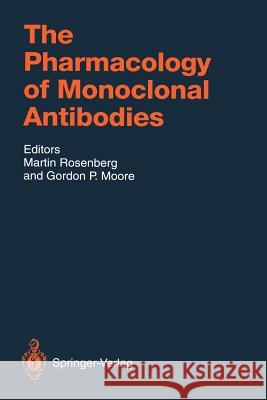
Martin Rosenberg; Gordon P. Moore; R. Balint
The Pharmacology of Monoclonal Antibodies Martin Rosenberg Gordon P. Moore R. Balint 9783642784347 Springer - książkaWidoczna okładka, to zdjęcie poglądowe, a rzeczywista szata graficzna może różnić się od prezentowanej.

The Pharmacology of Monoclonal Antibodies

ISBN-13: 9783642784347 / Angielski / Miękka / 2012 / 406 str.

Martin Rosenberg; Gordon P. Moore; R. Balint
cena 403,47
(netto: 384,26 VAT:  5%)

Najniższa cena z 30 dni: 385,52
Termin realizacji zamówienia:
ok. 22 dni roboczych
Bez gwarancji dostawy przed świętami

Darmowa dostawa!

It has been almost 20 years since the discovery by Kohler and Milstein of the technology to produce monoclonal antibodies (MAbs), a discovery that promised revolutionary changes in research, clinical diagnosis and human therapy. From today's perspective, it is fair to conclude that this promise has been realized in two areas of the three. As research tools, MAbs have been invaluable: their ability to selectively bind and localize specific antigens, detect and identify new ligands and their receptors, and agonize and/or antagonize specific molecular interactions continues to provide a useful and enabling technology to basic research endeavors. Similarly, MAbs have demonstrated enormous practical impact as diagnostic tools. Recent advances in clinical diagnostic medicine continue to rely heavily on the use of MAb-based reagents for detecting and localizing antigens of clinical import. In contrast, however, MAbs have not proven to have major impact on human disease therapy. With the single exception of an immunosup- pressive MAb against the T-cell antigen, CD3, MAbs have as yet found few meaningful applications as therapeutic agents. During the 1980s, a set of technologies to clone, modify and express genes encoding MAbs was developed. These breakthroughs permitted MAbs to be genetically engineered which consequently gave them the potential to greatly enhance their therapeutic utility as well as significantly expand their research and diagnostic applications. New MAbs, fragments of MAbs, bispecific MAbs, single-chain MAbs, and fusions of MAbs with other gene products became available for study.


Kategorie:
Nauka, Medycyna
Kategorie BISAC:
Science > Biochemia
Medical > Farmakologia
Medical > Immunology
Wydawca:
Springer
Seria wydawnicza:
Handbook of Experimental Pharmacology
Język:
Angielski
ISBN-13:
9783642784347
Rok wydania:
2012
Wydanie:
Softcover Repri
Numer serii:
000049097
Ilość stron:
406
Waga:
0.66 kg
Wymiary:
23.5 x 15.5
Oprawa:
Miękka
Wolumenów:
01

Section I: Human Monoclonal Antibodies.- 1 Human Monoclonal Antibody Technology.- A. Introduction.- I. Why Produce Human Monoclonals?.- II. Chapter Aims.- III. Approach Used.- B. General Production Strategies.- I. Introduction.- II. Source of Immune Lymphocytes.- 1. Usual Sources.- 2. In Vitro Immunization.- 3. Generating Immune Lymphocytes in Severe Combined Immunodeficiency Mice.- III. Processing of Lymphoid Tissues.- IV. Immortalization Strategies.- 1. Introduction.- 2. Cell Fusion.- 3. Epstein-Barr Virus Fusion.- 4. Combined Epstein-Barr Virus Transformation and Cell Fusion.- 5. Novel Approaches.- V. Selection, Cloning and Expansion.- 1. Introduction.- 2. Selection.- 3. Cloning.- 4. Expansion.- 5. Additional Evaluation.- VI. Bispecific and Trispecific Antibodies.- C. Human Monoclonal Targets.- I. Antibody Specificities Generated.- II. Application of Human Monoclonal Antibody Technology.- 1. Introduction.- 2. Tumour Field.- 3. AIDS Research.- 4. Autoimmunity.- 5. Future Targets.- D. Limitations of Orthodox Technology.- I. Introduction.- II. Why Is Antibody Secretion Unsatisfactory?.- III. Is Unsatisfactory Secretion Related to Cell Surface Phenotype or Cytokine Secretion?.- E. Conclusion.- I. Impact and Potential of Recombinant Technology.- 1. Chimeric and Humanized Antibodies.- 2. Repertoire Cloning.- 3. Combining Cell and Gene Cloning Technologies.- References.- 2 Recombinant Therapeutic Human Monoclonal Antibodies.- A. Therapeutic Human Monoclonal Antibodies.- B. Rapid Direct Cloning of Antibody Variable Regions.- C. Genetically Engineered Chimeric Monoclonal Antibodies.- I. Chimeric Antibodies.- 1. Summary of Work with Therapeutic Chimeric Monoclonal Antibodies.- II. Recombinant Conjugates and Fusion Proteins.- 1. Immunotoxins.- 2. A Recombinant Monoclonal Antibody Linked to Tissue-Type Plasminogen Activator.- 3. T Cell Receptor Conjugates.- 4. Growth Factor Conjugates.- 5. Other Fusion Proteins.- 6. Antibody-Enzyme Conjugates for Cancer.- D. Reshaped or Composite Antibodies.- E. Immortalization of the Immunoglobulin Repertoire Using rDNA Technology.- F. Recombinatorial Antibody Libraries.- G. Phage Antibody Libraries: Wholly Synthetic Monoclonal Antibodies.- References.- 3 Transgenic Approaches to Human Monoclonal Antibodies.- A. Introduction.- B. Competing Technologies for the Generation of Therapeutic Antibodies.- C. Origins of Antibody Diversity.- I. Functional Requirements for a Human Immunoglobulin Transgene.- II. Structure of the Human Immunoglobulin Loci.- 1. The Human ? Light Chain Locus.- 2. The Human ? Light Chain Locus.- 3. The Human Heavy Chain Locus.- D. Transgenic Technology.- I. Pronuclear Microinjection.- II. Embryonic Stem Cells.- III. Transgene Constructs.- 1. Bacteriophage Cloning Vectors.- 2. Plasmid Cloning Vectors.- 3. Yeast Artificial Chromosome Vectors.- E. Immunoglobulin Transgenics.- I. High Level and Cell Type Specific Expression.- 1. Cis-acting Regulatory Sequences.- 2. Transgene Expression.- 3. Human Transgene Constructs.- II. Rearrangement.- 1. Target Sequences.- 2. Immunoglobulin Gene Rearrangements in Transgenic Mice.- 3. Light Chain Junctions.- 4. Heavy Chain Junctions.- 5. Repercussions of Mouse B Cell Environment on Human VDJ Joints.- III. Allelic Exclusion.- 1. Background.- 2. Induction of Allelic Exclusion by Rearranged Transgenes.- 3. Response to Allelic Exclusion by Unrearranged Transgenes.- 4. Alternatives to Direct Feedback Allelic Exclusion.- IV. Primary Repertoire.- V. Intracellular Signaling.- 1. Background.- 2. B Cell Receptor Complex.- 1. Pre-B Cell Complex.- II. Class Switching.- 1. Background.- 2. Class Switching in Transgenic Mice.- 3. Importance of Class Switching for a Human Antibody Mouse.- III. Substrate for Somatic Mutation.- IV. Domination of the Immune Response.- 1. Antibody Depletion.- 2. Anti-sense Transgenes.- 3. Gene Targeting.- A. Perspective.- References.- Section II: Genetically Engineered Monoclonal Antibodies.- 4 Humanization of Monoclonal Antibodies.- A. Introduction.- B. Structure of Antibodies.- I. General.- II. The Antibody Combining Site.- III. Complementarity Determining Regions.- IV. Influence of Framework Residues on Combining Site Structure.- C. Strategies for the Humanization of Antibodies.- I. Transplanting a Nonhuman Combining Site onto a Human Framework.- II. Recombinant Methodology of Complementarity Determining Region Transfer.- 1. Polymerase Chain Reaction-Mediated Complementarity Determining Region Transfer.- 2. Humanization of the Murine Monoclonal Antibody IB4.- 3. Antibody Reshaping.- III. Replacing Surface Residues to Humanize (Veneering).- D. Immunogenicity of Humanized Antibodies.- E. Conclusion.- References.- 5 Applications for Escherichia coli-Derived Humanized Fab’ Fragments: Efficient Construction of Bispecific Antibodies.- A. Introduction.- B. Choice of Antigen Specificities for Bispecific F(ab’)2.- C. Expression of Humanized Fab’ Fragments in E. coli.- D. Recovery of Fab’-SH Fragments.- E. Construction of Bispecific F(ab’)2.- F. Uses of E. coli-Derived Fab’ Fragments.- G. Conclusions.- References.- Section III: MAb Conjugates and Fusions.- 6 Immunotoxins.- A. Introduction.- B. Considerations in Immunotoxin Development.- I. In Vitro Testing To Identify Effective Antibodies.- II. Immunotoxin Design.- C. The Toxic Moiety.- I. Ricin.- II. Pseudomonas Exotoxin A.- III. Diphtheria Toxin.- IV. Drug Conjugates.- V. Novel Approaches.- D. Cell Biology of Immunotoxin Action.- E. Pharmacology of Immunotoxin Administration.- I. Pharmacokinetics.- II. Pharmacologic Enhancement of Immunotoxin Action.- III. Immunogenicity.- F. Clinical Applications.- I. Cancer.- II. Immunosuppression.- 1. Transplantation.- 2. Autoimmune Disease.- III. Infectious Diseases.- I. Disordered Cellular Growth.- A. Conclusions.- References.- 7 Antibody-Enzyme Fusion Proteins and Bispecific Antibodies.- A. Introduction.- B. Antibody-Enzyme Fusion Proteins.- I. Development of the Concept of a Bifunctional Protein.- II. Chemically Cross-Linked Conjugates as Models for Fusion Proteins.- 1. Cross-Linked Antibody-Plasminogen Activator Conjugates.- 2. Methods for Synthesizing and Purifying Cross-Linked Conjugates.- III. Fusion Protein Construction.- 1. Cloning the Rearranged Immunoglobulin Gene.- 2. Constructing the Expression Vector.- 3. Selecting Loss Variant Cell Lines.- 4. Transfecting the Expression Plasmid.- 5. Purifying and Analyzing Protein.- 6. Recombinant Protein Expression Levels.- IV. Structural and Functional Properties of Specific Fusion Proteins.- 1. Antibody-Plasminogen Activator Fusion Proteins.- 2. A Model Minimal Size Fusion Protein.- 3. Fv and Single Chain Fv.- 4. Minimal Fv-Containing Fusion Protein.- 5. Prodrug Activation.- C. Bispecific Antibodies.- I. Development of the Concept of a Bispecific Antibody.- II. Chemically Cross-Linked Bispecific Antibodies as Models.- III. Cell Fusion in the Production of Bispecific Antibodies.- IV. Functional Properties of Bispecific Antibodies.- D. Conclusion.- References.- 8 Three Generations of Recombinant CD4 Molecules as Anti-HIV Reagents.- A. Introduction.- B. General Aspects of HIV Infection.- C. Characteristics of Different Forms of sCD4.- I. First Generation: Truncated Forms of sCD4.- II. Second Generation: CD4-Immunoglobulins.- III. Third Generation: CD4-FvCD3 Janusins.- D. Molecular Designs and Strategies to Produce Recombinant CD4 Molecules.- I. Production of sCD4 Molecules.- II. CD4-Ck Molecules.- III. Multivalent sCD4 Molecules: CD4 Immunoglobulins.- IV. Bispecific Reagents: CD4-FvCD3 Janusins.- E. Concluding Remarks.- References.- Section IV: Combinatorial Libraries.- 9 Chemical and Biological Approaches to Catalytic Antibodies.- A. Introduction.- B. Background.- I. Bases of Enzymatic Catalysis.- C. Hapten Design Strategies for Catalytic Antibodies.- I. Transition State Stabilization.- II. Entropic Effects.- III. Charge Complementarity.- IV. Solvent Effects.- D. Catalytic Antibodies in Organic Solvents.- E. Biological Aspects.- I. Hybridoma Techniques.- II. Auxotrophic Selection.- III. Expression Methods.- F. Prospects.- References.- 10 The Combinatorial Approach to Human Antibodies.- A. Introduction.- B. The Combinatorial Approach.- C. From Screening to Selection.- D. Features of the Combinatorial Approach.- E. Human Antiviral Antibodies.- I. Introduction.- II. Antibodies to HIV-1.- 1. Rationale.- 2. Source of RNA.- 3. Characterization of Antibodies.- III. Antibodies to Respiratory Syncytial Virus.- IV. Antibodies to Hepatitis B Virus.- F. Alternatives to the Use of Seropositive Humans.- I. Naive Libraries.- II. Synthetic and Semisynthetic Antibodies.- III. Human Antibodies from Severe Combined Immunodeficiency Mice.- IV. Antibodies from Chimpanzees.- G. Production of Whole Antibodies and Gene Rescue from Cell Lines.- H. The Future of Antibodies.- References.- Section V: Expression of MAbs/MAb Fragments.- 11 Antibodies from Escherichia coli.- A. Introduction.- B. Expression of Functional Antibody Fragments in E. coli by Secretion.- I. General Overview.- II. Relation of Functional Secretion to Phage Libraries.- III. Description of the Secretion Process.- IV. The Role of Periplasmic Protein Folding.- V. Catalysis of Periplasmic Protein Folding.- 1. Disulfide Bond Formation.- 2. Proline cis-trans Isomerization.- II. Design of Secretion Vectors.- III. Fermentation.- IV. Cloning Antibodies by Polymerase Chain Reaction.- V. Purification.- A. Expression of Antibody Fragments as Inclusion Bodies.- B. Antibody Fragments.- I. Fv Fragments.- II. Single Chain Fv Fragments.- III. Disulfide-Linked Fv Fragments.- IV. Mini-antibodies.- 1. Mini-antibodies Based on Coiled-Coil Helices.- 2. Mini-antibodies Based on Four-Helix Bundles.- C. Conclusions.- References.- 12 Structure, Function and Uses of Antibodies from Transgenic Plants and Animals.- A. Introduction.- B. Transgenic Antibodies from Mice.- C. Potential Uses of Antibody Expression in Transgenic Animals.- I. Investigation of Immune System Regulation.- II. Human Monoclonal Antibodies in Animals.- III. Pathogen Protection in Agricultural Animals.- D. Transgenic Antibodies from Plants.- E. Structure and Function of Antibodies from Plants.- I. Glycosylation of Antibodies Produced in Plants.- II. Antibody Processing and Assembly.- III. Mutagenesis to Remove N-Linked Glycosylation.- IV. Deletion of Heavy Chain Constant Regions.- F. Potential Uses of Antibodies Expressed in Transgenic Plants.- I. Scale and Economics of Plantibody Production.- II. Potential Medical Uses of Plant Produced Antibodies.- III. Pathogen Protection in Agricultural Plants.- References.- 13 Some Aspects of Monoclonal Antibody Production.- References.- Section VI: Medical Applications.- 14 Prospects for Cancer Imaging and Therapy with Radioimmunoconjugates.- A. Introduction.- B. Nature and Pharmacology of Radioimmunoconjugates.- C. Radioimmunoconjugates in Detection vs Therapy.- D. Nature and Problems of Radioimmunodetection.- E. Nature and Problems of Radioimmunotherapy.- F. Current Clinical Status of Radioimmunotherapy.- G. Experimental Studies of Adjuvant Radioimmunotherapy.- H. Conclusions and Future Prospects.- References.- 15 Clinical Experience with Murine, Human and Genetically Engineered Monoclonal Antibodies.- A. Introduction.- B. Difficulties Encountered with Murine Monoclonal Reagents.- I. Immunogenicity of Murine Antibodies.- II. Pharmacokinetics of Murine Antibodies.- III. Clinical Efficacy of Murine Antibodies.- 1. In Cancer.- 2. In Nonmalignant Disorders.- IV. Toxicity Associated with Murine Antibodies.- C. Human Monoclonal Antibody Trials.- D. Chimeric Antibody Trials.- E. CDR-Grafted Humanized Monoclonal Antibody Trials.- F. Future Prospects.- References.- 16 Anti-idiotypic Monoclonal Antibodies: Novel Approach to Immunotherapy.- A. Introduction.- B. Advantages of Anti-idiotypic Antibodies Over Conventional Vaccines.- C. Acquired Immune Deficiency Syndrome.- D. Solid Tumors and Cutaneous T Cell Lymphoma.- E. B Cell Lymphomas and Leukemias.- F. Conclusion.- References.

Rosenberg, Martin Martin Rosenberg is Associate Professor of Art His... więcej >


Udostępnij

Facebook - konto krainaksiazek.pl


Opinie o Krainaksiazek.pl na Opineo.pl

Partner Mybenefit

Krainaksiazek.pl w programie rzetelna firma Krainaksiaze.pl - płatności przez paypal

Czytaj nas na:

Facebook - krainaksiazek.pl
  • książki na zamówienie
  • granty
  • książka na prezent
  • kontakt
  • pomoc
  • opinie
  • regulamin
  • polityka prywatności

Zobacz:

  • Księgarnia czeska

  • Wydawnictwo Książkowe Klimaty

1997-2025 DolnySlask.com Agencja Internetowa

© 1997-2022 krainaksiazek.pl
     
KONTAKT | REGULAMIN | POLITYKA PRYWATNOŚCI | USTAWIENIA PRYWATNOŚCI
Zobacz: Księgarnia Czeska | Wydawnictwo Książkowe Klimaty | Mapa strony | Lista autorów
KrainaKsiazek.PL - Księgarnia Internetowa

Polityka prywatnosci - link
Krainaksiazek.pl - płatnośc Przelewy24
Przechowalnia Przechowalnia






