• Wyszukiwanie zaawansowane
  • Kategorie
  • Kategorie BISAC
  • Książki na zamówienie
  • Promocje
  • Granty
  • Książka na prezent
  • Opinie
  • Pomoc
  • Załóż konto
  • Zaloguj się

The Biochemistry of Inorganic Polyphosphates » książka

zaloguj się | załóż konto
Logo Krainaksiazek.pl

koszyk

konto

szukaj
topmenu
Księgarnia internetowa
Szukaj
Książki na zamówienie
Promocje
Granty
Książka na prezent
Moje konto
Pomoc
 
 
Wyszukiwanie zaawansowane
Pusty koszyk
Bezpłatna dostawa dla zamówień powyżej 20 złBezpłatna dostawa dla zamówień powyżej 20 zł

Kategorie główne

• Nauka
 [2946350]
• Literatura piękna
 [1816154]

  więcej...
• Turystyka
 [70666]
• Informatyka
 [151172]
• Komiksy
 [35576]
• Encyklopedie
 [23172]
• Dziecięca
 [611458]
• Hobby
 [135995]
• AudioBooki
 [1726]
• Literatura faktu
 [225763]
• Muzyka CD
 [378]
• Słowniki
 [2917]
• Inne
 [444280]
• Kalendarze
 [1179]
• Podręczniki
 [166508]
• Poradniki
 [469467]
• Religia
 [507199]
• Czasopisma
 [496]
• Sport
 [61352]
• Sztuka
 [242330]
• CD, DVD, Video
 [3348]
• Technologie
 [219391]
• Zdrowie
 [98638]
• Książkowe Klimaty
 [124]
• Zabawki
 [2382]
• Puzzle, gry
 [3525]
• Literatura w języku ukraińskim
 [259]
• Art. papiernicze i szkolne
 [7107]
Kategorie szczegółowe BISAC

The Biochemistry of Inorganic Polyphosphates

ISBN-13: 9780470858103 / Angielski / Twarda / 2004 / 304 str.
I. S. Kulaev; Igor S. Kulaev; Vladimir Vagabov
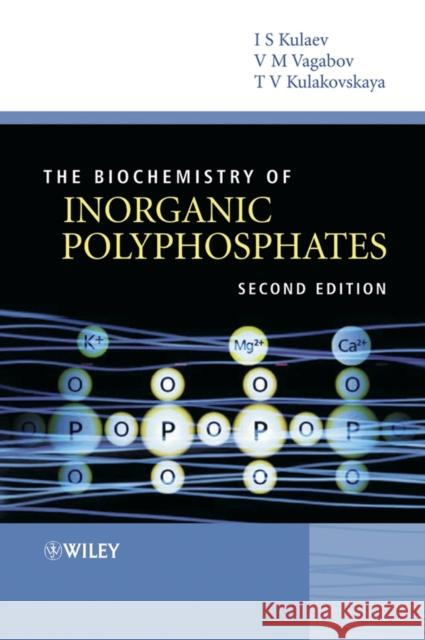
The Biochemistry of Inorganic Polyphosphates I. S. Kulaev Igor S. Kulaev Vladimir Vagabov 9780470858103 John Wiley & Sons - książkaWidoczna okładka, to zdjęcie poglądowe, a rzeczywista szata graficzna może różnić się od prezentowanej.

The Biochemistry of Inorganic Polyphosphates

ISBN-13: 9780470858103 / Angielski / Twarda / 2004 / 304 str.

I. S. Kulaev; Igor S. Kulaev; Vladimir Vagabov
cena 989,10
(netto: 942,00 VAT:  5%)

Najniższa cena z 30 dni: 977,00
Termin realizacji zamówienia:
ok. 22 dni roboczych.

Darmowa dostawa!

Now in a second edition, Biochemistry of Inorganic Polyphosphates fills the need for an exhaustive resource on inorganic polyphosphate metabolism. The authors describe the structure and properties of these compounds and presents a comparative analysis of the newest and traditional methods of their extraction from cells. Distribution of polyphosphates in organisms, their localization in cells and tissues is also described.

  • Comprehensive presentation of inorganic polyphosphate metabolism
  • Follows polyphosphates in cells of organisms from different stages of evolution
  • Presents methods for the analysis and study of polyP-dependent enzymes
  • Comprehensive information on genetics, metabolism and biotechnology of polyphosphates
  • Textbook and reference work on all aspects of polyphosphates

Kategorie:
Nauka, Chemia
Kategorie BISAC:
Science > Biochemia
Science > Chemia - Nieorganiczna
Wydawca:
John Wiley & Sons
Język:
Angielski
ISBN-13:
9780470858103
Rok wydania:
2004
Wydanie:
Revised
Ilość stron:
304
Waga:
0.64 kg
Wymiary:
25.04 x 17.22 x 2.18
Oprawa:
Twarda
Wolumenów:
01
Dodatkowe informacje:
Bibliografia

"This book is recommended for academic libraries supporting advanced biochemistry or related programs." ( E–STREAMS, January 2005)

Foreword to the First Edition.

Preface.

Acknowledgements.

Introduction.

1 The Chemical Structures and Properties of Condensed Inorganic Phosphates.

1.1 The Structures of Condensed Phosphates.

1.1.1 Cyclophosphates.

1.1.2 Polyphosphates.

1.1.3 Branched Inorganic Phosphates, or Ultraphosphates .

1.2 Some Chemical Properties of Condensed Inorganic Polyphosphates.

1.3 Physico–Chemical Properties of Condensed Inorganic Polyphosphates.

2 Methods of Polyphosphate Assay in Biological Materials.

2.1 Methods of Extraction from Biological Materials.

2.2 Chromatographic Methods.

2.3 Colorimetric and Fluorimetric Methods.

2.4 Cytochemical Methods.

2.5 X–Ray Energy Dispersive Analysis.

2.6 31P Nuclear Magnetic Resonance Spectroscopy.

2.7 Other Physical Methods.

2.8 Gel Electrophoresis.

2.9 Enzymatic Methods.

3 The Occurrence of Polyphosphates in Living Organisms.

4 The Forms in which Polyphosphates are Present in Cells.

4.1 Polyphosphate Cation Complexes.

4.2 Polyphosphate Ca2+ Polyhydroxybutyrate Complexes.

4.3 Complexes of Polyphosphates with Nucleic Acids.

4.4 Binding of Polyphosphates with Proteins.

5 Localization of Polyphosphates in Cells of Prokaryotes and Eukaryotes.

5.1 Prokaryotes.

5.2 Eukaryotes.

6 Enzymes of Polyphosphate Biosynthesis and Degradation.

6.1 Enzymes of Polyphosphate Biosynthesis.

6.1.1 Polyphosphate Kinase (Polyphosphate:ADP Phosphotransferase, EC 2.7.4.1).

6.1.2 3–Phospho–D–Glyceroyl–Phosphate:Polyphosphate Phosphotransferase (EC 2.7.4.17).

6.1.3 Dolichyl–Diphosphate:Polyphosphate Phosphotransferase (EC 2.7.4.20).

6.2 Enzymes of Polyphosphate Degradation.

6.2.1 Polyphosphate–Glucose Phosphotransferase (EC 2.7.1.63).

6.2.2 NAD Kinase (ATP:NAD 2—–Phosphotransferase, EC 2.7.1.23).

6.2.3 Exopolyphosphatase (Polyphosphate Phosphohydrolase, EC 3.6.1.11).

6.2.4 Adenosine Tetraphosphate Phosphohydrolase (EC 3.6.1.14).

6.2.5 Triphosphatase (Tripolyphosphatase, EC 3.6.1.25).

6.2.6 Endopolyphosphatase (Polyphosphate Depolymerase, EC 3.6.1.10).

6.2.7 PolyP:AMP Phosphotransferase.

7 The Functions of Polyphosphates and Polyphosphate–Dependent Enzymes.

7.1 Phosphate Reserve.

7.1.1 In Prokaryotes.

7.1.2 In Eukaryotes.

7.2 Energy Source.

7.2.1 Polyphosphates in Bioenergetics of Prokaryotes.

7.2.2 Polyphosphate in Bioenergetics of Eukaryotes.

7.3 Cations Sequestration and Storage.

7.3.1 In Prokaryotes.

7.3.2 In Eukaryotes.

7.4 Participation in Membrane Transport.

7.5 Cell Envelope Formation and Function.

7.5.1 Polyphosphates in the Cell Envelopes of Prokaryotes.

7.5.2 Polyphosphates in the Cell Envelopes of Eukaryotes.

7.6 Regulation of Enzyme Activities.

7.7 Gene Activity Control, Development and Stress Response.

7.7.1 In Prokaryotes.

7.7.2 In Lower Eukaryotes.

7.8 The Functions of Polyphosphates in Higher Eukaryotes.

8 The Peculiarities of Polyphosphate Metabolism in Different Organisms.

8.1 Escherichia coli.

8.1.1 The Dynamics of Polyphosphates under Culture Growth.

8.1.2 The Effects of Pi Limitation and Excess.

8.1.3 The Effects of Mutations on Polyphosphate Levels and Polyphosphate–Metabolizing Enzyme Activities.

8.1.4 The Effects of Nutrition Deficiency and Environmental Stress.

8.2 Pseudomonas aeruginosa.

8.3 Acinetobacter.

8.4 Aerobacter aerogenes (Klebsiella aerogenes).

8.5 Azotobacter.

8.6 Cyanobacteria (Blue Green Algae) and other Photosynthetic Bacteria.

8.7 Mycobacteria and Corynebacteria.

8.8 Propionibacteria.

8.9 Archae.

8.10 Yeast.

8.10.1 Yeast Cells Possess Different Polyphosphate Fractions.

8.10.2 The Dynamics of PolyP Fractions during the Cell Cycle.

8.10.3 The Relationship between the Metabolism of Polyphosphates and other Compounds.

8.10.4 Polyphosphate Fractions at Growth on a Pi–Sufficient Medium with Glucose.

8.10.5 The Effects of Pi Limitation and Excess.

8.10.6 The Effects of other Conditions on the Polyphosphate Content in Yeast Cells.

8.10.7 The Effects of Inhibitors on the Polyphosphate Content in Yeast Cells.

8.10.8 The Effects of Mutations on the Content and Chain Lengths of Polyphosphate in Yeast.

8.11 Other Fungi (Mould and Mushrooms).

8.12 Algae.

8.12.1 Localization and Forms in Cells.

8.12.2 The Dynamics of Polyphosphates in the Course of Growth.

8.12.3 The Influence of Light and Darkness.

8.12.4 The Effects of Pi Limitation and Excess.

8.12.5 Changes in Polyphosphate Content under Stress Conditions.

8.13 Protozoa.

8.14 Higher Plants.

8.15 Animals.

9 Applied Aspects of Polyphosphate Biochemistry.

9.1 Bioremediation of the Environment.

9.1.1 Enhanced Biological Phosphate Removal.

9.1.2 Removal of Heavy Metals from Waste.

9.2 Polyphosphates and Polyphosphate–Metabolizing Enzymes in Assay and Synthesis.

9.3 Polyphosphates in Medicine.

9.3.1 Antiseptic and Antiviral Agents.

9.3.2 Polyphosphate Kinase as a Promising Antimicrobial Target.

9.3.3 Polyphosphates as New Biomaterials.

9.3.4 Polyphosphates in Bone Therapy and Stomathology.

9.4 Polyphosphates in Agriculture.

9.5 Polyphosphates in the Food Industry.

10 Inorganic Polyphosphates in Chemical and Biological Evolution.

10.1 Abiogenic Synthesis of Polyphosphates and Pyrophosphate.

10.2 Phosphorus Compounds in Chemical Evolution.

10.3 Polyphosphates and Pyrophosphates: Fossil Biochemical Reactions and the Course of Bioenergetic Evolution.

10.4 Changes in the Role of Polyphosphates in Organisms at Different Evolutionary Stages.

References.

Index of Generic Names.

Subject Index.

More than one hundred years ago, L. Liberman found high–polymeric inorganic polyphosphates (PolyP) in living organisms. These compounds are linear polymers containing a few to several hundred residues of orthophosphate (Pi) linked by energy–rich phosphoanhydride bonds. However, these mysterious cell components have as yet been ignored in most biochemistry manuals. This research being undertaken in this fast–developing field often yields unexpected results revealing the most important regulatory mechanisms of the living cell. The Biochemistry of Inorganic Polyphosphates 2nd edition concentrates on the modern concepts of PolyP biochemistry and includes such topics as the chemical structure and properties of condensed inorganic phosphates characteristics of the known enzymes of PolyP metabolism the functions of PolyP and PolyP–dependent enzymes, including phosphate and energy reservation, sequestration and storage of cations, formation of membrane channels, involvement in cell envelope formation and function, gene activity control, regulation of enzyme activities, participation in stress response and stationary phase adaptation. a critical analysis of the methods of isolation and quantitative assay of PolyP in the cells. localization and forms of PolyP in prokaryotic and eukaryotic cells the applied aspects of PolyP biochemistry. inorganic PolyP in chemical and biological evolution This book will be of interest to research chemists, biochemists, microbiologists and postgraduate students.


Udostępnij

Facebook - konto krainaksiazek.pl


Opinie o Krainaksiazek.pl na Opineo.pl

Partner Mybenefit

Krainaksiazek.pl w programie rzetelna firma Krainaksiaze.pl - płatności przez paypal

Czytaj nas na:

Facebook - krainaksiazek.pl
  • książki na zamówienie
  • granty
  • książka na prezent
  • kontakt
  • pomoc
  • opinie
  • regulamin
  • polityka prywatności

Zobacz:

  • Księgarnia czeska

  • Wydawnictwo Książkowe Klimaty

1997-2026 DolnySlask.com Agencja Internetowa

© 1997-2022 krainaksiazek.pl
     
KONTAKT | REGULAMIN | POLITYKA PRYWATNOŚCI | USTAWIENIA PRYWATNOŚCI
Zobacz: Księgarnia Czeska | Wydawnictwo Książkowe Klimaty | Mapa strony | Lista autorów
KrainaKsiazek.PL - Księgarnia Internetowa

Polityka prywatnosci - link
Krainaksiazek.pl - płatnośc Przelewy24
Przechowalnia Przechowalnia








