• Wyszukiwanie zaawansowane
  • Kategorie
  • Kategorie BISAC
  • Książki na zamówienie
  • Promocje
  • Granty
  • Książka na prezent
  • Opinie
  • Pomoc
  • Załóż konto
  • Zaloguj się

Sensory Evaluation of Food: Principles and Practices » książka


zaloguj się | załóż konto
Logo Krainaksiazek.pl

koszyk

konto

szukaj
topmenu
Księgarnia internetowa
Szukaj
Książki na zamówienie
Promocje
Granty
Książka na prezent
Moje konto
Pomoc
 
 
Wyszukiwanie zaawansowane
Pusty koszyk
Bezpłatna dostawa dla zamówień powyżej 20 złBezpłatna dostawa dla zamówień powyżej 20 zł

Kategorie główne

• Nauka
 [2952079]
• Literatura piękna
 [1850969]

  więcej...
• Turystyka
 [71058]
• Informatyka
 [151066]
• Komiksy
 [35579]
• Encyklopedie
 [23181]
• Dziecięca
 [620496]
• Hobby
 [139036]
• AudioBooki
 [1646]
• Literatura faktu
 [228729]
• Muzyka CD
 [379]
• Słowniki
 [2932]
• Inne
 [445708]
• Kalendarze
 [1409]
• Podręczniki
 [164793]
• Poradniki
 [480107]
• Religia
 [510956]
• Czasopisma
 [511]
• Sport
 [61267]
• Sztuka
 [243299]
• CD, DVD, Video
 [3411]
• Technologie
 [219640]
• Zdrowie
 [100984]
• Książkowe Klimaty
 [124]
• Zabawki
 [2281]
• Puzzle, gry
 [3363]
• Literatura w języku ukraińskim
 [258]
• Art. papiernicze i szkolne
 [8020]
Kategorie szczegółowe BISAC

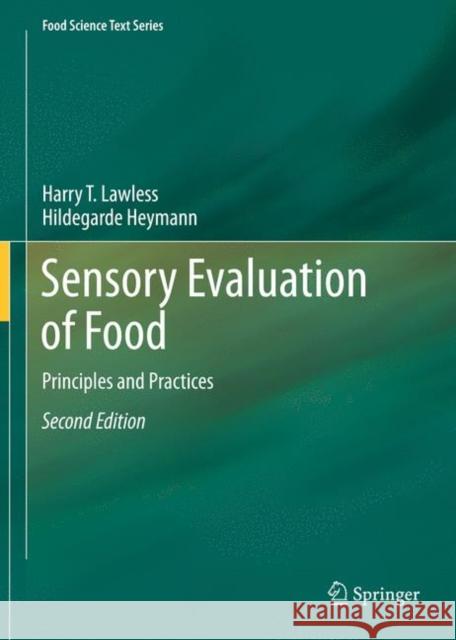
Sensory Evaluation of Food: Principles and Practices

ISBN-13: 9781441964878 / Angielski / Twarda / 2010 / 596 str.
Hildegarde Heymann
Sensory Evaluation of Food: Principles and Practices Heymann, Hildegarde 9781441964878 Springer-Verlag New York Inc. - książkaWidoczna okładka, to zdjęcie poglądowe, a rzeczywista szata graficzna może różnić się od prezentowanej.

Sensory Evaluation of Food: Principles and Practices

ISBN-13: 9781441964878 / Angielski / Twarda / 2010 / 596 str.

Hildegarde Heymann
cena 322,01
(netto: 306,68 VAT:  5%)

Najniższa cena z 30 dni: 308,41
Termin realizacji zamówienia:
ok. 22 dni roboczych
Dostawa w 2026 r.

Darmowa dostawa!

The ?eld of sensory science has grown exponentially since the publication of the p- vious version of this work. Fifteen years ago the journal Food Quality and Preference was fairly new. Now it holds an eminent position as a venue for research on sensory test methods (among many other topics). Hundreds of articles relevant to sensory testing have appeared in that and in other journals such as the Journal of Sensory Studies. Knowledge of the intricate cellular processes in chemoreception, as well as their genetic basis, has undergone nothing less than a revolution, culminating in the award of the Nobel Prize to Buck and Axel in 2004 for their discovery of the olfactory receptor gene super family. Advances in statistical methodology have accelerated as well. Sensometrics meetings are now vigorous and well-attended annual events. Ideas like Thurstonian modeling were not widely embraced 15 years ago, but now seem to be part of the everyday thought process of many sensory scientists. And yet, some things stay the same. Sensory testing will always involve human participants. Humans are tough measuring instruments to work with. They come with varying degrees of acumen, training, experiences, differing genetic equipment, sensory capabilities, and of course, different preferences. Human foibles and their associated error variance will continue to place a limitation on sensory tests and actionable results. Reducing, controlling, partitioning, and explaining error variance are all at the heart of good test methods and practices.


Kategorie:
Technologie
Kategorie BISAC:
Technology & Engineering > Food Science - General
Medical > Neuroscience
Science > Biochemia
Wydawca:
Springer-Verlag New York Inc.
Język:
Angielski
ISBN-13:
9781441964878
Rok wydania:
2010
Numer serii:
000008710
Ilość stron:
596
Waga:
1.44 kg
Wymiary:
19.81 x 26.16 x 4.57
Oprawa:
Twarda
Wolumenów:
01
Dodatkowe informacje:
Bibliografia

From the reviews of the second edition:

"This volume is an academic text, bringing together theory, methodologies and analysis techniques of sensory evaluation and references to thousands of research articles on sensory science in a logical and practical manner. ... its primary aim is as a textbook for university-level sensory science modules. ... also serves as an over-arching technical manual and resource for practicing food and drink technologists and sensory scientists. ... The book is essential reading for those in the sensory evaluation sphere and serves as an excellent and practical reference." (Patricia Stefanowicz, Journal of Wine Research, Vol. 24 (1), 2013)

Preface I Appendix I - Basic Statistical Concepts for Sensory Evaluation II Appendix A II- Nonparametric and Binomial-based Statistical Methods III Statistical Appendix III- Analysis of Variance IV Appendix IV- Correlation, Regression and Measures of association V Appendix V - Statistical Power and Test Sensitivity 1 Chapter 1 2 Physiological and Psychological Foundations of Sensory Function 3 Principles of Good Practice 4 Discrimination Testing 5 Similarity, Equivalence Testing and Discrimination Theory 6 Measurement of Sensory Thresholds 7 Scaling 8 Time-intensity Methods 9 Context Effects and Biases in Sensory Judgment 10 Descriptive Judgment 11 Texture Evalution 12 Color and Appearance 13 Preference Testing 14 Acceptance Testing 15 Consumer Field Tests and Questionnaire Design 16 Qualitative Consumer Research Methods 17 Quality Control and Shelf-life (Stability) Testing 18 Data relationships and multivariate applications 19 Strategic Research Tables A-Q

Harry T. Lawless is Professor of Food Science at Cornell University where he teaches sensory evaluation. He has 35 years of experience in chemosensory research and psychophysics. He spent five years in consumer testing in industry, and serves as a consultant to various food and consumer products companies on sensory test methods. Hildegarde Heymann is Professor of Viticulture and Enology at the University of California at Davis where she teaches sensory evaluation of wine and sensometrics. She spent nearly 17 years at the University of Missouri as a professor of sensory science.

The field of sensory science has grown exponentially since the publication of the first edition of Sensory Evaluation of Food. Fifteen years ago, the journal Food Quality and Preference was fairly new. Now it holds an eminent position as a venue for research on sensory test methods (among many other topics).  Knowledge of the intricate cellular processes in chemoreception, as well as their genetic basis has undergone nothing less than a revolution, culminating in the award of the Nobel Prize to Buck and Axel in 2004 for their discovery of the olfactory receptor gene super family. Advances in statistical methodology have accelerated as well. Sensometrics meetings are now vigorous and well-attended annual events. And yet, some things stay the same. Sensory testing will always involve human participants. But humans are tough measuring instruments to work with. They come with varying degrees of acumen, training, experiences, differing genetic equipment, sensory capabilities, and of course, different preferences. Human foibles and their associated error variance will continue to place a limitation on sensory tests and actionable results.

Although methods continue to evolve, appreciation of the core principles of the field is the key to effective application of sensory test methods. This book has been expanded to reflect the advances in methodologies, theory, and analysis that have transpired in the last 15 years. The chapters are now divided into numbered subsections. This may be of assistance to educators who may wish to assign only certain critical sections to beginning students. In some of the opening sections instructors will find suggestions about which sections are key for fundamental understanding of that topic or method. In many chapters we have gone out on a limb and specified a “recommended procedure.” In cases where there are multiple options for procedure or analysis, we usually chose a simple solution over one that is more complex.

This text attempts to be comprehensive, yet understandable to all students at the university level. All the major sensory test methods are illustrated and discussed, including discrimination, descriptive, and affective tests. Some chapters are devoted to special topics, such as thresholds, time-intensity methods, similarity testing, color, texture, sensory quality control, qualitative research methods, consumer test methods and questionnaires, shelf life testing, an introduction to multivariate statistical techniques, and strategic sensory research. The statistical appendix provides basic instruction in the common statistical analyses for sensory evaluation with worked examples.

Harry T. Lawless is Professor of Food Science at Cornell University where he teaches sensory evaluation. He has 35 years of experience in chemosensory research and psychophysics. He spent five years in consumer testing in industry, and serves as a consultant to various food and consumer products companies on sensory test methods.

Hildegarde Heymann is Professor of Viticulture and Enology at the University of California at Davis where she teaches sensory evaluation of wine and sensometrics. She spent nearly 17 years at the University of Missouri as a professor of sensory science.


Udostępnij

Facebook - konto krainaksiazek.pl


Opinie o Krainaksiazek.pl na Opineo.pl

Partner Mybenefit

Krainaksiazek.pl w programie rzetelna firma Krainaksiaze.pl - płatności przez paypal

Czytaj nas na:

Facebook - krainaksiazek.pl
  • książki na zamówienie
  • granty
  • książka na prezent
  • kontakt
  • pomoc
  • opinie
  • regulamin
  • polityka prywatności

Zobacz:

  • Księgarnia czeska

  • Wydawnictwo Książkowe Klimaty

1997-2025 DolnySlask.com Agencja Internetowa

© 1997-2022 krainaksiazek.pl
     
KONTAKT | REGULAMIN | POLITYKA PRYWATNOŚCI | USTAWIENIA PRYWATNOŚCI
Zobacz: Księgarnia Czeska | Wydawnictwo Książkowe Klimaty | Mapa strony | Lista autorów
KrainaKsiazek.PL - Księgarnia Internetowa

Polityka prywatnosci - link
Krainaksiazek.pl - płatnośc Przelewy24
Przechowalnia Przechowalnia






