• Wyszukiwanie zaawansowane
  • Kategorie
  • Kategorie BISAC
  • Książki na zamówienie
  • Promocje
  • Granty
  • Książka na prezent
  • Opinie
  • Pomoc
  • Załóż konto
  • Zaloguj się

STEM Education with Robotics: Lessons from Research and Practice » książka


zaloguj się | załóż konto
Logo Krainaksiazek.pl

koszyk

konto

szukaj
topmenu
Księgarnia internetowa
Szukaj
Książki na zamówienie
Promocje
Granty
Książka na prezent
Moje konto
Pomoc
 
 
Wyszukiwanie zaawansowane
Pusty koszyk
Bezpłatna dostawa dla zamówień powyżej 20 złBezpłatna dostawa dla zamówień powyżej 20 zł

Kategorie główne

• Nauka
 [2946600]
• Literatura piękna
 [1856966]

  więcej...
• Turystyka
 [72221]
• Informatyka
 [151456]
• Komiksy
 [35826]
• Encyklopedie
 [23190]
• Dziecięca
 [619653]
• Hobby
 [140543]
• AudioBooki
 [1577]
• Literatura faktu
 [228355]
• Muzyka CD
 [410]
• Słowniki
 [2874]
• Inne
 [445822]
• Kalendarze
 [1744]
• Podręczniki
 [167141]
• Poradniki
 [482898]
• Religia
 [510455]
• Czasopisma
 [526]
• Sport
 [61590]
• Sztuka
 [243598]
• CD, DVD, Video
 [3423]
• Technologie
 [219201]
• Zdrowie
 [101638]
• Książkowe Klimaty
 [124]
• Zabawki
 [2473]
• Puzzle, gry
 [3898]
• Literatura w języku ukraińskim
 [254]
• Art. papiernicze i szkolne
 [8170]
Kategorie szczegółowe BISAC

STEM Education with Robotics: Lessons from Research and Practice

ISBN-13: 9781032367569 / Angielski / Twarda / 2023 / 352 str.
Purvee Chauhan; Vikram Kapila
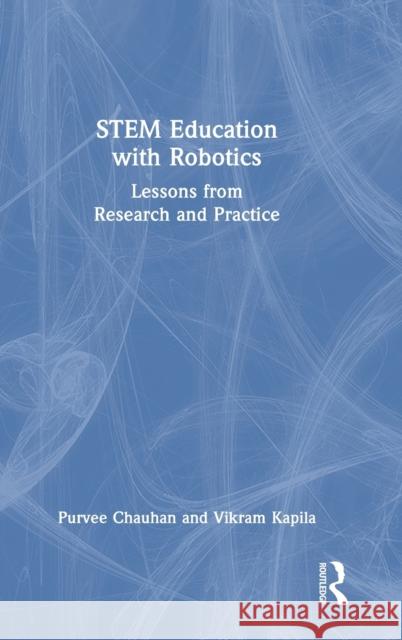
STEM Education with Robotics: Lessons from Research and Practice Purvee Chauhan Vikram Kapila 9781032367569 Routledge - książkaWidoczna okładka, to zdjęcie poglądowe, a rzeczywista szata graficzna może różnić się od prezentowanej.

STEM Education with Robotics: Lessons from Research and Practice

ISBN-13: 9781032367569 / Angielski / Twarda / 2023 / 352 str.

Purvee Chauhan; Vikram Kapila
cena 707,28 zł
(netto: 673,60 VAT:  5%)

Najniższa cena z 30 dni: 680,04 zł
Termin realizacji zamówienia:
ok. 22 dni roboczych
Bez gwarancji dostawy przed świętami

Darmowa dostawa!
inne wydania

This book offers a synthesis of research, curriculum examples, pedagogy models, and classroom recommendations for the effective use of robotics in STEM teaching and learning. Authors Chauhan and Kapila demonstrate how the use of educational robotics can improve and enhance student learning and understanding within the STEM disciplines.

This book offers a synthesis of research, curriculum examples, pedagogy models, and classroom recommendations for the effective use of robotics in STEM teaching and learning. Authors Chauhan and Kapila demonstrate how the use of educational robotics can catalyze and enhance student learning and understanding within the STEM disciplines.

The book explores the implementation of design-based research (DBR); technological, pedagogical, and content knowledge (TPACK); and the 5E instructional model; among others. Chapters draw on a variety of pedagogical scaffolds to help teachers deploy educational robotics for classroom use, including research-driven case studies, strategies, and standards-aligned lesson plans from real-life settings.

This book will benefit STEM teachers, STEM teacher educators, and STEM education researchers.

Kategorie:
Technologie
Kategorie BISAC:
Education > Teaching - Subjects - Science & Technology
Technology & Engineering > Robotics
Education > Administration - General
Wydawca:
Routledge
Język:
Angielski
ISBN-13:
9781032367569
Rok wydania:
2023
Dostępne języki:
Ilość stron:
352
Oprawa:
Twarda
Dodatkowe informacje:
Bibliografia
Wydanie ilustrowane

Part I: Introduction. Chapter 1. Transformational Learning with Educational Robotics. 1.1. Introduction. 1.2. STEM and technology-enhanced learning environments. 1.3. Educational robotics. 1.4. Exhibiting the role of robots in supporting student learning. 1.5. Conclusion. 1.6. Key takeaways. Chapter 2. Applications of Robots in Educational Settings. 2.1. Introduction. 2.2. Constructionism and educational robotics. 2.3. Educational robotics: Roles and settings. 2.4. Examples of applications of robots as a learning tool in teaching and learning. 2.5. Conclusion. 2.6. Key takeaways. Chapter 3. Teaching STEM with Robotics: Synopsis of a Research-guided Program. 3.1. Introduction. 3.2. Need for authentic STEM learning experiences. 3.3. Rationale for robotics in STEM education. 3.4. Overview, theoretical background, and project design. 3.5. Illustrative examples from implementation. 3.6. Project outcomes and recommendations. 3.7.  Conclusion. 3.8. Key takeaways. Part II: Theory, Design, and Implementation. Chapter 4. Design-based Research for Robotics-enhanced Learning Environments. 4.1. Introduction. 4.2. Design-based research. 4.3. Literature review exemplifying the use of design-based research in robotics-enabled learning. 4.4. Design-based research implementation examples from robotics-enhanced learning environments. 4.5. Implementation challenges of design-based research. 4.6. Conclusion. 4.7. Key takeaways. Chapter 5. Effective Professional Development for Robotics-focused Learning Environments. 5.1. Introduction. 5.2. Teacher professional development. 5.3. Designing for effective professional development. 5.4. Literature review on teacher professional development for robotics-based learning. 5.5. Designing a robotics-based professional development program using situated learning. 5.6. Creating a professional development program using the social capital theory. 5.7. Challenges in planning effective professional development programs and incorporating their lessons. 5.8. Conclusion. 5.9. Key takeaways. Chapter 6. Applying TPACK to Design for Robotics-enhanced Learning. 6.1. Introduction. 6.2. Technological, pedagogical, and content knowledge. 6.3. Literature review on teachers’ TPACK development. 6.4. Development of teacher TPACK through professional development aimed at using robotics as a learning tool. 6.5. Development of TPACK-guided robotics-based STEM learning units. 6.6. Conclusion. 6.7. Key takeaways. Part III: Instructional Perspectives and Lesson Designs. Chapter 7. Prerequisites, Practices, and Perceptions to Design Effective Robotics-based Lessons. 7.1. Introduction. 7.2. Enabling effective integration of robotics in classrooms. 7.3. Prerequisites for robotics-based STEM lessons. 7.4. Instructional practices for effective robotics-based lessons. 7.5. Factors that influence student perceptions of utilizing robots as educational tools. 7.6. Conclusion. 7.7. Key takeaways. Chapter 8. Applying Cognitive Domain of Bloom’s Taxonomy to Robotics-based Learning. 8.1. Introduction. 8.2. Bloom’s taxonomy. 8.3. Literature review on applications of Bloom’s taxonomy in robotics. 8.4. Integrating cognitive domain of Bloom’s taxonomy with educational robotics to promote higher-order thinking. 8.5. Conclusion. 8.6. Key takeaways. Chapter 9. Using the 5E Instructional Model to Develop Robotics-based Science Units. 9.1. Introduction. 9.2. The 5E instructional model. 9.3. Literature review on integrating the 5E model in robotics-based learning. 9.4. Exemplar robotics-based science unit plans aligned with the 5E model and Next Generation Science Standards. 9.5. Implementing the 5E instructional model. 9.6. Conclusion. 9.7. Key takeaways. Appendix A. Appendix B. Index


Udostępnij

Facebook - konto krainaksiazek.pl


Opinie o Krainaksiazek.pl na Opineo.pl

Partner Mybenefit

Krainaksiazek.pl w programie rzetelna firma Krainaksiaze.pl - płatności przez paypal

Czytaj nas na:

Facebook - krainaksiazek.pl
  • książki na zamówienie
  • granty
  • książka na prezent
  • kontakt
  • pomoc
  • opinie
  • regulamin
  • polityka prywatności

Zobacz:

  • Księgarnia czeska

  • Wydawnictwo Książkowe Klimaty

1997-2025 DolnySlask.com Agencja Internetowa

© 1997-2022 krainaksiazek.pl
     
KONTAKT | REGULAMIN | POLITYKA PRYWATNOŚCI | USTAWIENIA PRYWATNOŚCI
Zobacz: Księgarnia Czeska | Wydawnictwo Książkowe Klimaty | Mapa strony | Lista autorów
KrainaKsiazek.PL - Księgarnia Internetowa

Polityka prywatnosci - link
Krainaksiazek.pl - płatnośc Przelewy24
Przechowalnia Przechowalnia






