• Wyszukiwanie zaawansowane
  • Kategorie
  • Kategorie BISAC
  • Książki na zamówienie
  • Promocje
  • Granty
  • Książka na prezent
  • Opinie
  • Pomoc
  • Załóż konto
  • Zaloguj się

Multiphased Ceramic Materials: Processing and Potential » książka


zaloguj się | załóż konto
Logo Krainaksiazek.pl

koszyk

konto

szukaj
topmenu
Księgarnia internetowa
Szukaj
Książki na zamówienie
Promocje
Granty
Książka na prezent
Moje konto
Pomoc
 
 
Wyszukiwanie zaawansowane
Pusty koszyk
Bezpłatna dostawa dla zamówień powyżej 20 złBezpłatna dostawa dla zamówień powyżej 20 zł

Kategorie główne

• Nauka
 [2949965]
• Literatura piękna
 [1857847]

  więcej...
• Turystyka
 [70818]
• Informatyka
 [151303]
• Komiksy
 [35733]
• Encyklopedie
 [23180]
• Dziecięca
 [617748]
• Hobby
 [139972]
• AudioBooki
 [1650]
• Literatura faktu
 [228361]
• Muzyka CD
 [398]
• Słowniki
 [2862]
• Inne
 [444732]
• Kalendarze
 [1620]
• Podręczniki
 [167233]
• Poradniki
 [482388]
• Religia
 [509867]
• Czasopisma
 [533]
• Sport
 [61361]
• Sztuka
 [243125]
• CD, DVD, Video
 [3451]
• Technologie
 [219309]
• Zdrowie
 [101347]
• Książkowe Klimaty
 [123]
• Zabawki
 [2362]
• Puzzle, gry
 [3791]
• Literatura w języku ukraińskim
 [253]
• Art. papiernicze i szkolne
 [7933]
Kategorie szczegółowe BISAC

Multiphased Ceramic Materials: Processing and Potential

ISBN-13: 9783642622786 / Angielski / Miękka / 2012 / 152 str.
Wei-Hsing Tuan; Jin-Kun Guo
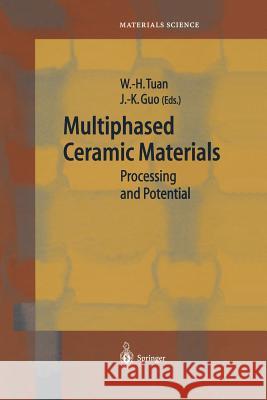
Multiphased Ceramic Materials: Processing and Potential Tuan, Wei-Hsing 9783642622786 Springer - książkaWidoczna okładka, to zdjęcie poglądowe, a rzeczywista szata graficzna może różnić się od prezentowanej.

Multiphased Ceramic Materials: Processing and Potential

ISBN-13: 9783642622786 / Angielski / Miękka / 2012 / 152 str.

Wei-Hsing Tuan; Jin-Kun Guo
cena 403,47 zł
(netto: 384,26 VAT:  5%)

Najniższa cena z 30 dni: 385,52 zł
Termin realizacji zamówienia:
ok. 22 dni roboczych
Bez gwarancji dostawy przed świętami

Darmowa dostawa!

In many fields of thermomechanical applications, such as advanced gas turbine, thermal protection of space planes, oil and coal electric generation, advanced brake devices, etc. high performance materials are needed. Lacking of toughness and reliability, monolithic ceramics had reached their limits and multi-phase - terials are expected as the most promising candidates. Apart from the impro- ment on the thermomechanical performance, more than one function, such as magnetic, electrical and optical functions, can be incorporated simultaneously into the multi-phase material. However, several key problems remained to be solved in the near future. These problems include microstructure complexity, process challenge, machining ability and the most important cost issue. Fourteen scientists from 9 leading research - stitutes across Taiwan Strait are invited to give their view and experimental e- dence on solving the above problems. These reports highlight the principles of - signing delicate microstructure and novel processing routes. The potential of improving machining ability is also demonstrated. However, the most critical cost problem remained to be solved. In light of the economic surge in China in recent years, the market demands more technology breakthrough. The market can accept value-added products. It further indicates the importance of developing of multi-phase materials with multi-functions. Along with the market growth, the cost problem will be solved soon as the mass production technology becoming available.


Kategorie:
Technologie
Kategorie BISAC:
Science > Physics - Condensed Matter
Technology & Engineering > Materials Science - Electronic Materials
Wydawca:
Springer
Seria wydawnicza:
Springer Series in Materials Science
Język:
Angielski
ISBN-13:
9783642622786
Rok wydania:
2012
Wydanie:
Softcover Repri
Numer serii:
000044317
Ilość stron:
152
Waga:
0.27 kg
Wymiary:
23.5 x 15.5
Oprawa:
Miękka
Wolumenów:
01
Dodatkowe informacje:
Wydanie ilustrowane

1 Multi-phase Materials.- 1.1 Introduction.- 1.2 The Basic Concept of Multi-phase Materials.- 1.2.1 Blurring the Boundaries Between Various Phases.- 1.2.2 Applying Nano-technology.- 1.2.3 Applying Advanced Fabrication Processes.- 1.2.4 Marketability and Reliability.- 1.2.5 Material Design.- 1.3 The Need for Multi-phase Materials.- 1.4 Research Objectives.- References.- 2 New Concepts in the Design of Tough Ceramics.- 2.1 Introduction.- 2.2 Experiments.- 2.3 Results and Discussion.- 2.3.1 Transformation Toughening Mechanism.- 2.3.2 Plastic Deformation Mechanism.- 2.3.3 Interactions Between Transformation and Toughening Plastic Deformation.- 2.4 Conclusions.- Acknowledgement.- References.- 3 Interface Design of Tough Ceramics: Si3N4/BN Fibrous Monolithic Ceramic.- 3.1 Introduction.- 3.2 Measurement of Interfacial Toughness.- 3.3 Preparation of Si3N4/BN Fibrous Monolithic Ceramic.- 3.3.1Fabrication of Si3N4/BN Fibrous Monolithic Ceramic.- 3.3.2 Mechanical Properties at Elevated Temperatures.- 3.3.2.1 Creep Resistance.- 3.3.2.2 Thermal Shock Behavior.- 3.4 Conclusions.- Acknowledgement.- References.- 4 Microstructural Design : Si/SiC Composites Derived from Wood.- 4.1 Introduction.- 4.2 Experimental Work.- 4.2.1 Starting Materials.- 4.2.2 Fabrication Process.- 4.2.3 Testing.- 4.3 Results and Discussion.- 4.3.1 XRD Analysis and Phase Composition.- 4.3.2 Microstructure.- 4.3.3 Mechanical Properties.- 4.3.4 Reaction Mechanism.- 4.3.5 Removal of Free Silicon.- Acknowledgements.- References.- 5 Microstructure through Design in-situ Seeding Technique.- 5.1 Introduction.- 5.2 Experimental Work.- 5.2.1 Preparation of ?-Si3N4 Seeds.- 5.2.2 Sample Preparation.- 5.2.3 Microstructural Analysis.- 5.2.4 Characterization.- 5.3 Results and Discussion.- 5.4 Summary and Conclusions.- Acknowledgements.- References.- 6 Directional Solidification : ZrB2-LaB6 Eutectic Composites.- 6.1 Introduction.- 6.2 Experimental Work.- 6.3 Results and Discussion.- 6.4 Conclusions.- Acknowledgements.- References.- 7 A Co-Sedimentation Technique to Fabricate Continuous Gradient Composites.- 7.1 Introduction.- 7.2 Physical Modeling.- 7.3 Numerical Modeling.- 7.3.1 The Continuum Equation.- 7.3.2 Initial Conditions.- 7.3.3 Mathematical Model Based on Co-sedimentation.- 7.4 Results and Discussions.- 7.4.1 The Effect of Particle Sizes on the Deposited Mass per Unit Time.- 7.4.2 The Influence of Suspension Height.- 7.5 Validation of the Model.- 7.6 Conclusions.- Acknowledgements.- References.- 8 Spark Plasma Sintering : A Promising New Technique and its Mechanism.- 8.1 Introduction.- 8.2 Experimental Work.- 8.2.1 The Sintering Resistance.- 8.2.2 The Microstructure.- 8.2.3 The Analysis of Vapor.- 8.3 Results.- 8.3.1 The Sintering Resistance.- 8.3.2 The Microstructure.- 8.3.3 The Analysis on Vapor Deposit.- 8.4 Discussion.- 8.5 Conclusions.- Acknowledgments.- References.- 9 Pulsed Chemical Vapor Infiltration : Carbon/SiC Nanocomposites.- 9.1 Introduction.- 9.2 Experimental Work.- 9.2.1 Preparation of Specimen.- 9.2.2 PCVI Process.- 9.2.3 Mechanical and Physical Properties.- 9.2.4 Microstructure Examination.- 9.3 Results and Discussion.- 9.3.1 Mechanical Properties.- 9.3.2 Formation of Nanofibers.- 9.3.2 Formation of Nanofibers.- 9.3.3 Composition and Structure of the Nanofiber.- 9.4 Summary.- Acknowledgements.- References.- 10 Metal Oxidation Process : NiAl/Al2O3 Composites.- 10.1 Introduction.- 10.2 Experimental Work.- 10.3 Results and Discussion.- 10.3.1 Ball Milling Followed by Oxidation.- 10.3.2 Sedimentation Followed by Oxidation.- 10.4 Conclusions.- Acknowledgment.- References.- 11 Co-electroplating Nano-ceramic Particulates with Ni Layer.- 11.1 Introduction.- 11.2 Experimental Procedures.- 11.3 Results and Discussion.- 11.3.1 Modeling of Composite Plating.- 11.3.2 Microstructure.- 11.4 Conclusions.- References.- 12 Hot-Pressing Technique : SiC/AlN Composites.- 12.1 Introduction.- 12.2 Applications of Silicon Carbide Ceramics.- 12.3 SiC/AlN Particulate Composites.- 12.3.1 Microstructure.- 12.3.2 Microhardness.- 12.3.3 Mechanical Properties.- 12.4 Conclusions.- Acknowledgements.- References.- 13 Nondestructive Evaluation of Strength and Residual Stress using Sphere Indentation.- 13.1 Introduction.- 13.2 Effect of Stress Gradient on Fracture.- 13.3 Critical Issues and Local Strength.- 13.4 Experimental Work.- 13.5 Proof Tests of Strength.- 13.6 Discussions and Conclusions.- Acknowledgements.- References.- 14 Machinable Ceramic Graded Composites.- 14.1 Introduction.- 14.2 Basic Design Principles.- 14.3 Machinable Graded Si3N4/h-BN Composite.- 14.4 Machinable Graded Al2O3/LaPO4 Composite.- 14.5 Conclusions.- References.- 15 Future of Structural Multi-phase Ceramics.- 15.1 Obstacles for the Applications of Ceramics.- 15.2 Novel Materials.- 15.3 Challenges.- References.

The book summarizes the recent progress in ceramics research. Several novel concepts for materials selection and microstructural design are presented, as are experimental results that substantiate the ideas. These newly designed materials include multiphase ceramic composites of three phases with strengths of 1000 MPa and toughnessof 10 MPam0.5. They can be fabricated to mimic the macrostructure of wood and are machineable because of their novel microstructure.


Udostępnij

Facebook - konto krainaksiazek.pl


Opinie o Krainaksiazek.pl na Opineo.pl

Partner Mybenefit

Krainaksiazek.pl w programie rzetelna firma Krainaksiaze.pl - płatności przez paypal

Czytaj nas na:

Facebook - krainaksiazek.pl
  • książki na zamówienie
  • granty
  • książka na prezent
  • kontakt
  • pomoc
  • opinie
  • regulamin
  • polityka prywatności

Zobacz:

  • Księgarnia czeska

  • Wydawnictwo Książkowe Klimaty

1997-2025 DolnySlask.com Agencja Internetowa

© 1997-2022 krainaksiazek.pl
     
KONTAKT | REGULAMIN | POLITYKA PRYWATNOŚCI | USTAWIENIA PRYWATNOŚCI
Zobacz: Księgarnia Czeska | Wydawnictwo Książkowe Klimaty | Mapa strony | Lista autorów
KrainaKsiazek.PL - Księgarnia Internetowa

Polityka prywatnosci - link
Krainaksiazek.pl - płatnośc Przelewy24
Przechowalnia Przechowalnia





