• Wyszukiwanie zaawansowane
  • Kategorie
  • Kategorie BISAC
  • Książki na zamówienie
  • Promocje
  • Granty
  • Książka na prezent
  • Opinie
  • Pomoc
  • Załóż konto
  • Zaloguj się

High-Performance Gradient Elution: The Practical Application of the Linear-Solvent-Strength Model » książka


zaloguj się | załóż konto
Logo Krainaksiazek.pl

koszyk

konto

szukaj
topmenu
Księgarnia internetowa
Szukaj
Książki na zamówienie
Promocje
Granty
Książka na prezent
Moje konto
Pomoc
 
 
Wyszukiwanie zaawansowane
Pusty koszyk
Bezpłatna dostawa dla zamówień powyżej 20 złBezpłatna dostawa dla zamówień powyżej 20 zł

Kategorie główne

• Nauka
 [2946912]
• Literatura piękna
 [1852311]

  więcej...
• Turystyka
 [71421]
• Informatyka
 [150889]
• Komiksy
 [35717]
• Encyklopedie
 [23177]
• Dziecięca
 [617324]
• Hobby
 [138808]
• AudioBooki
 [1671]
• Literatura faktu
 [228371]
• Muzyka CD
 [400]
• Słowniki
 [2841]
• Inne
 [445428]
• Kalendarze
 [1545]
• Podręczniki
 [166819]
• Poradniki
 [480180]
• Religia
 [510412]
• Czasopisma
 [525]
• Sport
 [61271]
• Sztuka
 [242929]
• CD, DVD, Video
 [3371]
• Technologie
 [219258]
• Zdrowie
 [100961]
• Książkowe Klimaty
 [124]
• Zabawki
 [2341]
• Puzzle, gry
 [3766]
• Literatura w języku ukraińskim
 [255]
• Art. papiernicze i szkolne
 [7810]
Kategorie szczegółowe BISAC

High-Performance Gradient Elution: The Practical Application of the Linear-Solvent-Strength Model

ISBN-13: 9780471706465 / Angielski / Twarda / 2006 / 496 str.
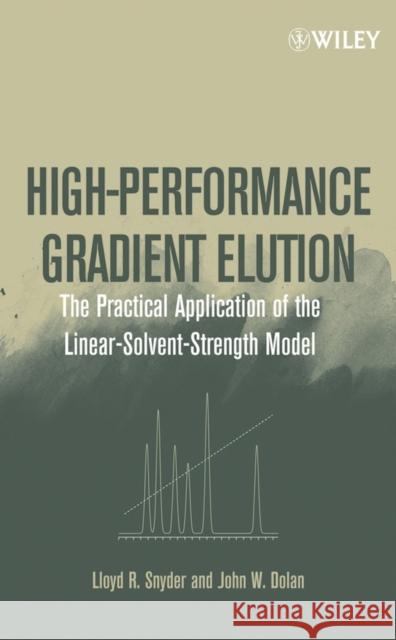
Lloyd R. Snyder; John W. Dolan
High-Performance Gradient Elution: The Practical Application of the Linear-Solvent-Strength Model Snyder, Lloyd R. 9780471706465 Wiley-Interscience - książkaWidoczna okładka, to zdjęcie poglądowe, a rzeczywista szata graficzna może różnić się od prezentowanej.

High-Performance Gradient Elution: The Practical Application of the Linear-Solvent-Strength Model

ISBN-13: 9780471706465 / Angielski / Twarda / 2006 / 496 str.

Lloyd R. Snyder; John W. Dolan
cena 785,61
(netto: 748,20 VAT:  5%)

Najniższa cena z 30 dni: 782,38
Termin realizacji zamówienia:
ok. 30 dni roboczych
Dostawa w 2026 r.

Darmowa dostawa!

Gradient elution demystified

Of the various ways in which chromatography is applied today, few have been as misunderstood as the technique of gradient elution, which presents many challenges compared to isocratic separation. When properly explained, however, gradient elution can be less difficult to understand and much easier to use than often assumed.

Written by two well-known authorities in liquid chromatography, High-Performance Gradient Elution: The Practical Application of the Linear-Solvent-Strength Model takes the mystery out of the practice of gradient elution and helps remove barriers to the practical application of this important separation technique. The book presents a systematic approach to the current understanding of gradient elution, describing theory, methodology, and applications across many of the fields that use liquid chromatography as a primary analytical tool.

This up-to-date, practical, and comprehensive treatment of gradient elution:
* Provides specific, step-by-step recommendations for developing a gradient separation for any sample
* Describes the best approach for troubleshooting problems with gradient methods
* Guides the reader on the equipment used for gradient elution
* Lists which conditions should be varied first during method development, and explains how to interpret scouting gradients
* Explains how to avoid problems in transferring gradient methods

With a focus on the use of linear solvent strength (LSS) theory for predicting gradient LC behavior and separations by reversed-phase HPLC, High-Performance Gradient Elution gives every chromatographer access to this useful tool.


Kategorie:
Nauka, Chemia
Kategorie BISAC:
Science > Chemia - Analityczna
Wydawca:
Wiley-Interscience
Język:
Angielski
ISBN-13:
9780471706465
Rok wydania:
2006
Ilość stron:
496
Waga:
0.81 kg
Wymiary:
23.52 x 16.51 x 2.87
Oprawa:
Twarda
Wolumenów:
01
Dodatkowe informacje:
Bibliografia

"This book is clear, well written, and easy to understand despite the complexity of the subject." ( Journal of the American Chemical Society, July 2007)

PREFACE.

GLOSSARY OF SYMBOLS AND TERMS.

1 INTRODUCTION.

1.1 The General Elution Problem and the Need for Gradient Elution.

1.2 Other Reasons for the Use of Gradient Elution.

1.3 Gradient Shape.

1.4 Similarity of Isocratic and Gradient Elution.

1.5 Computer Simulation.

1.6 Sample Classification.

2 GRADIENT ELUTION FUNDAMENTALS.

2.1 Isocratic Separation.

2.2 Gradient Separation.

2.3 Effect of Gradient Conditions on Separation.

2.4 Related Topics.

3 METHOD DEVELOPMENT.

3.1 A Systematic Approach to Method Development.

3.2 Initial Experiments.

3.3 Developing a Gradient Separation: Resolution versus Conditions.

3.4 Computer Simulation.

3.5 Method Reproducibility and Related Topics.

3.6 Additional Means for an Increase in Separation Selectivity.

3.7 Orthogonal Separations.

4 GRADIENT EQUIPMENT.

4.1 Gradient System Design.

4.2 General Considerations in System Selection.

4.3 Measuring Gradient System Performance.

4.4 Dwell Volume Considerations.

5 SEPARATION ARTIFACTS AND TROUBLESHOOTING.

5.1 Avoiding Problems.

5.2 Method Transfer.

5.3 Column Equilibration.

5.4 Separation Artifacts.

5.5 Troubleshooting.

6 SEPARATION OF LARGE MOLECULES.

6.1 General Considerations.

6.2 Biomolecules.

6.3 Synthetic Polymers.

7 PREPARATIVE SEPARATIONS.

7.1 Introduction.

7.2 Isocratic Separation.

7.3 Gradient Separation.

7.4 Severely Overloaded Separation.

8 OTHER APPLICATIONS OF GRADIENT ELUTION.

8.1 Gradient Elution for LC–MS.

8.2 Ion–Exchange Chromatography.

8.3 Normal–Phase Chromatography.

8.4 Ternary– or Quaternary–Solvent Gradients.

9 THEORY AND DERIVATIONS.

9.1 The Linear Solvent Strength Model.

9.2 Second–Order Effects.

9.3. Accuracy of Gradient Elution Predictions.

9.4 Values of S.

9.5 Values of N in Gradient Elution.

Appendix I: THE CONSTANT–S APPROXIMATION IN GRADIENT ELUTION.

Appendix II: ESTIMATION OF CONDITIONS FOR ISOCRATIC ELUTION, BASED ON AN INITIAL GRADIENT RUN.

Appendix III: CHARACTERIZATION OF REVERSED–PHASE COLUMNS FOR SELECTIVITY AND PEAK TAILING.

Appendix IV: SOLVENT PROPERTIES RELEVANT TO THE USE OF GRADIENT ELUTION.

Appendix V: THEORY OF PREPARATIVE SEPARATION.

Appendix VI FURTHER INFORMATION ON VIRUS CHROMATOGRAPHY.

Index.

LLOYD R. SNYDER, PHD, is a Principal at LC Resources in Walnut Creek, California. He is the author or coauthor of several books including An Introduction to Separation Science, Introduction to Modern Liquid Chromatography, Second Edition, and the bestselling Practical HPLC Method Development, Second Edition, all published by Wiley.

JOHN W. DOLAN, PHD, is a Principal at LC Resources. He is author of the popular " LC Troubleshooting" column in LCGC Magazine and coauthor with Lloyd Snyder of Troubleshooting LC Systems.

Gradient elution demystified

Of the various ways in which chromatography is applied today, few have been as misunderstood as the technique of gradient elution, which presents many challenges compared to isocratic separation. When properly explained, however, gradient elution can be less difficult to understand and much easier to use than often assumed.

Written by two well–known authorities in liquid chromatography, High–Performance Gradient Elution: The Practical Application of the Linear–Solvent–Strength Model takes the mystery out of the practice of gradient elution and helps remove barriers to the practical application of this important separation technique. The book presents a systematic approach to the current understanding of gradient elution, describing theory, methodology, and applications across many of the fields that use liquid chromatography as a primary analytical tool.

This up–to–date, practical, and comprehensive treatment of gradient elution:

  • Provides specific, step–by–step recommendations for developing a gradient separation for any sample
  • Describes the best approach for troubleshooting problems with gradient methods
  • Guides the reader on the equipment used for gradient elution
  • Lists which conditions should be varied first during method development, and explains how to interpret scouting gradients
  • Explains how to avoid problems in transferring gradient methods

With a focus on the use of linear solvent strength (LSS) theory for predicting gradient LC behavior and separations by reversed–phase HPLC, High–Performance Gradient Elution gives every chromatographer access to this useful tool.

Snyder, Lloyd R. LLOYD R. SNYDER, PHD, is a Principal at LC Resourc... więcej >


Udostępnij

Facebook - konto krainaksiazek.pl


Opinie o Krainaksiazek.pl na Opineo.pl

Partner Mybenefit

Krainaksiazek.pl w programie rzetelna firma Krainaksiaze.pl - płatności przez paypal

Czytaj nas na:

Facebook - krainaksiazek.pl
  • książki na zamówienie
  • granty
  • książka na prezent
  • kontakt
  • pomoc
  • opinie
  • regulamin
  • polityka prywatności

Zobacz:

  • Księgarnia czeska

  • Wydawnictwo Książkowe Klimaty

1997-2025 DolnySlask.com Agencja Internetowa

© 1997-2022 krainaksiazek.pl
     
KONTAKT | REGULAMIN | POLITYKA PRYWATNOŚCI | USTAWIENIA PRYWATNOŚCI
Zobacz: Księgarnia Czeska | Wydawnictwo Książkowe Klimaty | Mapa strony | Lista autorów
KrainaKsiazek.PL - Księgarnia Internetowa

Polityka prywatnosci - link
Krainaksiazek.pl - płatnośc Przelewy24
Przechowalnia Przechowalnia




