• Wyszukiwanie zaawansowane
  • Kategorie
  • Kategorie BISAC
  • Książki na zamówienie
  • Promocje
  • Granty
  • Książka na prezent
  • Opinie
  • Pomoc
  • Załóż konto
  • Zaloguj się

Fundamental Laboratory Approaches for Biochemistry and Biotechnology » książka


zaloguj się | załóż konto
Logo Krainaksiazek.pl

koszyk

konto

szukaj
topmenu
Księgarnia internetowa
Szukaj
Książki na zamówienie
Promocje
Granty
Książka na prezent
Moje konto
Pomoc
 
 
Wyszukiwanie zaawansowane
Pusty koszyk
Bezpłatna dostawa dla zamówień powyżej 20 złBezpłatna dostawa dla zamówień powyżej 20 zł

Kategorie główne

• Nauka
 [2946912]
• Literatura piękna
 [1852311]

  więcej...
• Turystyka
 [71421]
• Informatyka
 [150889]
• Komiksy
 [35717]
• Encyklopedie
 [23177]
• Dziecięca
 [617324]
• Hobby
 [138808]
• AudioBooki
 [1671]
• Literatura faktu
 [228371]
• Muzyka CD
 [400]
• Słowniki
 [2841]
• Inne
 [445428]
• Kalendarze
 [1545]
• Podręczniki
 [166819]
• Poradniki
 [480180]
• Religia
 [510412]
• Czasopisma
 [525]
• Sport
 [61271]
• Sztuka
 [242929]
• CD, DVD, Video
 [3371]
• Technologie
 [219258]
• Zdrowie
 [100961]
• Książkowe Klimaty
 [124]
• Zabawki
 [2341]
• Puzzle, gry
 [3766]
• Literatura w języku ukraińskim
 [255]
• Art. papiernicze i szkolne
 [7810]
Kategorie szczegółowe BISAC

Fundamental Laboratory Approaches for Biochemistry and Biotechnology

ISBN-13: 9780470087664 / Angielski / Miękka / 2009 / 480 str.
Alexander J. Ninfa; David P. Ballou; Marilee Benore Parsons
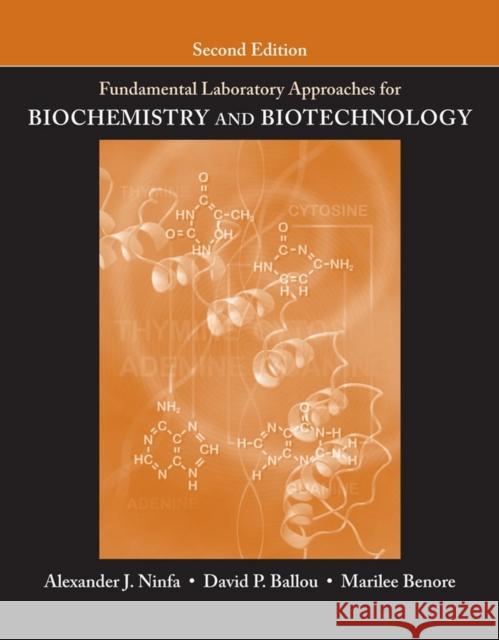
Fundamental Laboratory Approaches for Biochemistry and Biotechnology Alexander J. Ninfa David P. Ballou Marilee Benore Parsons 9780470087664 John Wiley & Sons - książkaWidoczna okładka, to zdjęcie poglądowe, a rzeczywista szata graficzna może różnić się od prezentowanej.

Fundamental Laboratory Approaches for Biochemistry and Biotechnology

ISBN-13: 9780470087664 / Angielski / Miękka / 2009 / 480 str.

Alexander J. Ninfa; David P. Ballou; Marilee Benore Parsons
cena 562,11
(netto: 535,34 VAT:  5%)

Najniższa cena z 30 dni: 559,80
Termin realizacji zamówienia:
ok. 30 dni roboczych
Bez gwarancji dostawy przed świętami

Darmowa dostawa!

Ninfa/Ballou/Benore is a solid biochemistry lab manual, dedicated to developing research skills in students, allowing them to learn techniques and develop the organizational approaches necessary to conduct laboratory research. Ninfa/Ballou/Benore focuses on basic biochemistry laboratory techniques with a few molecular biology exercises, a reflection of most courses which concentrate on traditional biochemistry experiments and techniques. The manual also includes an introduction to ethics in the laboratory, uncommon in similar manuals. Most importantly, perhaps, is the authors' three-pronged approach to encouraging students to think like a research scientist: first, the authors introduce the scientific method and the hypothesis as a framework for developing conclusive experiments; second, the manual's experiments are designed to become increasingly complex in order to teach more advanced techniques and analysis; finally, gradually, the students are required to devise their own protocols. In this way, students and instructors are able to break away from a "cookbook" approach and to think and investigate for themselves. Suitable for lower-level and upper-level courses; Ninfa spans these courses and can also be used for some first-year graduate work.


Kategorie:
Nauka, Chemia
Kategorie BISAC:
Science > Biochemia
Medical > Biochemistry
Medical > Laboratory Medicine
Wydawca:
John Wiley & Sons
Język:
Angielski
ISBN-13:
9780470087664
Rok wydania:
2009
Ilość stron:
480
Waga:
0.85 kg
Wymiary:
27.18 x 21.34 x 2.03
Oprawa:
Miękka
Wolumenów:
01
Dodatkowe informacje:
Podręcznik

Chapter 1: Getting Started in Scientific Research.

1.1 The Difference Between Experiments and Demonstration.

1.2 Philosophy and Design of Experiments.

1.3 Designing Informative Experiments.

1.4 Ethics in Science.

1.5 Keeping a Laboratory Notebook.

1.6 Laboratory Reports.

1.7 Presentation and Analysis of Data.

1.8 The Minisymposium.

Chapter 2: Basic Procedures in the Biochemistry Laboratory.

2.1 Laboratory Safety.

2.2 Special Safety Procedures Are Required for Using Radioactive Materials and Operating the Autoclave.

2.3 Measurement of Weights, Volumes, and pH.

2.4 Various Instruments Used.

2.5 Other General Techniques.

2.6 Solutions and Dilutions.

2.7 Buffers and pH.

2.8 Appendix Calculating Titration Curves for Polyprotic Acids and Other Multiple Binding Site Receptors.

2.9 Equipment Used in This Course.

Chapter 3: Spectroscopic Methods.

3.1 Introduction.

3.2 Design and Properties of Spectrophotometers.

3.3 Effects of Spectral Bandpass and Stray Light.

3.4 Recording Spectrophotometers.

3.5 Fluorescence Spectroscopy.

3.6 Chromogenic and Fluorogenic Reactions Used for Analysis.

3.7 Other Spectroscopic Techniques.

3.8 Mass Spectrometry (MS).

Experiments 3–1 to 3–3.

Reagents Needed for Chapter 3.

Chapter 4: Quantification of Protein Concentration.

4.1 Purposes of Protein Quantification.

4.2 Factors to Consider in Choosing an Assay.

4.3 Non–Colorimetric Procedures for Quantification of Proteins.

4.4 Colorimetric Procedures for Quantification of Proteins.

Experiment 4–1.

Reagents Needed for Chapter 4.

Chapter 5: Chromatography.

5.1 Introduction.

5.2 Gel–Filtration (Size Exclusion or Gel–Permeation) Chromatography.

5.3 Affinity Chromatography.

5.4 Ion–Exchange Chromatography.

5.5 Hydrophobic Interaction Chromatography.

Experiments 5–1 and 5–2.

Reagents Needed for Chapter 5.

Chapter 6: Gel Electrophoresis of Proteins.

6.1 Process of Electrophoresis.

6.2 Polyacrylamide Gels.

6.3 SDS–Polyacrylamide Gel Electrophoresis (SDS–PAGE) of Proteins.

6.4 Detection of Proteins in SDS–Polyacrylamide Gels.

6.5 Applications of SDS–PAGE.

Experiments 6–1 and 6–2.

Reagents Needed for Chapter 6.

Chapter 7: Overview of Protein Purification.

7.1 Introduction.

7.2 Development of a Suitable Assay Procedure.

7.3 Time, Temperature, and Yield.

7.4 Selection of the Best Source Material.

7.5 Solubilization of the Protein.

7.6 Initial Steps of Purification.

7.7 Developing a Series of High–Resolution Chromatographic Steps.

7.8 Methods Used to Change Buffer and Concentrate Protein Samples.

7.9 A Logical Series of Steps.

7.10 Storage of the Purified Protein.

7.11 The Protein Purification Table.

Chapter 8: Subcellular Fractionation.

8.1 Introduction.

8.2 Structural Organization of Prokaryotic and Eukaryotic Cells.

8.3 Overview of Fractionation Protocols.

Reagents and Equipment Needed for Chapter 8.

Chapter 9: Isolation and Characterization of The Enzyme–alkaline phosphatase from EscHerichia Coli.

9.1 Objectives.

9.2 Introduction and Basic Principles.

9.3 Purification of Alkaline Phosphatase.

9.4 Characterization of Purified Alkaline Phosphatase.

Appendix 9–1 Assay of Alkaline Phosphatase.

Reagents and Equipment Needed for Chapter 9.

Chapter 10: Enzyme Kinetics.

10.1 Why Use Steady–State Kinetics?

10.2 Steady–State Kinetics Principles.

10.3 The Significance of Km and Vmax.

10.4 Graphical Analysis.

10.5 Competitive, "Noncompetitive," and "Uncompetitive" Inhibitors.

Experiments 10–1 to 10–3.

Reagents Needed for Chapter 10.

Chapter 11: Ligand Binding.

11.1 Ligand Binding Is the Key to Most Biological Processes.

11.2 Analysis of Ligand Binding at Equilibrium.

11.3 Digression on Regression.

11.4 Effects of the Concentrations of L and R.

11.5 Effects of Two Sites and Cooperative Behavior.

11.6 Analysis of the Kinetics of Ligand Binding.

11.7 Methods Used to Study Receptor–Ligand Interactions.

Experiments 11–1 and 11–2.

Reagents Needed for Chapter 11.

Chapter 12: Enzymatic Methods of Analysis.

12.1 Enzymatic Analysis of Substrates.

12.2 Assays for Enzymatic Activity.

12.3 Practical Considerations.

12.4 Coupled Assays.

12.5 Experiments with Pyridine Nucleotide–Requiring Enzymes.

Experiments 12–1 to 12–4.

Reagents Needed for Chapter 12.

Appendix 12–1: Sample Calculations.

Chapter 13: Recombinant DNA Techniques.

13.1 Introduction.

13.2 Properties of Nucleic Acids.

 13.3 Strategy of Recombinant DNA Techniques.

13.4 Cutting and Splicing DNA.

13.5 Gel Electrophoresis of DNA.

13.6 Introducing DNA into Cells.

13.7 Identifying Transformed Cells.

13.8 Vectors, Hosts, and Libraries for Recombinant DNA Experiments.

13.9 Applications of Recombinant DNA Technology.

Experiments 13–1 to 13–4.

Reagents Needed for Chapter 13.

Chapter 14: Polymerase Chain Reaction (PCR) Technology.

14.1 Introduction.

14.2 Principle of the PCR Method.

14.3 The Three Steps of PCR Are Controlled by Temperature.

14.4 Applications of PCR.

14.5 Legal and Ethical Issues.

Experiments 14–1 to 14–6.

Reagents Needed for Chapter 14.

Chapter 15: Using the Computer and the Internet for Biochemical Research and Communication.

15.1 Introduction to the World Wide Web (the Internet).

15.2 Information on the Internet Useful to Biochemists.

15.3 Literature and Data Searches.

15.4 Visualization of Molecular Structures.

15.5 Other Useful Information.

15.6 Homework Assignment.

Ninfa, Alexander J. Alexander J. Ninfa is Associate Professor in the D... więcej >


Udostępnij

Facebook - konto krainaksiazek.pl


Opinie o Krainaksiazek.pl na Opineo.pl

Partner Mybenefit

Krainaksiazek.pl w programie rzetelna firma Krainaksiaze.pl - płatności przez paypal

Czytaj nas na:

Facebook - krainaksiazek.pl
  • książki na zamówienie
  • granty
  • książka na prezent
  • kontakt
  • pomoc
  • opinie
  • regulamin
  • polityka prywatności

Zobacz:

  • Księgarnia czeska

  • Wydawnictwo Książkowe Klimaty

1997-2025 DolnySlask.com Agencja Internetowa

© 1997-2022 krainaksiazek.pl
     
KONTAKT | REGULAMIN | POLITYKA PRYWATNOŚCI | USTAWIENIA PRYWATNOŚCI
Zobacz: Księgarnia Czeska | Wydawnictwo Książkowe Klimaty | Mapa strony | Lista autorów
KrainaKsiazek.PL - Księgarnia Internetowa

Polityka prywatnosci - link
Krainaksiazek.pl - płatnośc Przelewy24
Przechowalnia Przechowalnia






