• Wyszukiwanie zaawansowane
  • Kategorie
  • Kategorie BISAC
  • Książki na zamówienie
  • Promocje
  • Granty
  • Książka na prezent
  • Opinie
  • Pomoc
  • Załóż konto
  • Zaloguj się

Fundamental Aspects of Silicon Oxidation » książka


zaloguj się | załóż konto
Logo Krainaksiazek.pl

koszyk

konto

szukaj
topmenu
Księgarnia internetowa
Szukaj
Książki na zamówienie
Promocje
Granty
Książka na prezent
Moje konto
Pomoc
 
 
Wyszukiwanie zaawansowane
Pusty koszyk
Bezpłatna dostawa dla zamówień powyżej 20 złBezpłatna dostawa dla zamówień powyżej 20 zł

Kategorie główne

• Nauka
 [2949965]
• Literatura piękna
 [1857847]

  więcej...
• Turystyka
 [70818]
• Informatyka
 [151303]
• Komiksy
 [35733]
• Encyklopedie
 [23180]
• Dziecięca
 [617748]
• Hobby
 [139972]
• AudioBooki
 [1650]
• Literatura faktu
 [228361]
• Muzyka CD
 [398]
• Słowniki
 [2862]
• Inne
 [444732]
• Kalendarze
 [1620]
• Podręczniki
 [167233]
• Poradniki
 [482388]
• Religia
 [509867]
• Czasopisma
 [533]
• Sport
 [61361]
• Sztuka
 [243125]
• CD, DVD, Video
 [3451]
• Technologie
 [219309]
• Zdrowie
 [101347]
• Książkowe Klimaty
 [123]
• Zabawki
 [2362]
• Puzzle, gry
 [3791]
• Literatura w języku ukraińskim
 [253]
• Art. papiernicze i szkolne
 [7933]
Kategorie szczegółowe BISAC

Fundamental Aspects of Silicon Oxidation

ISBN-13: 9783540416821 / Angielski / Twarda / 2001 / 262 str.
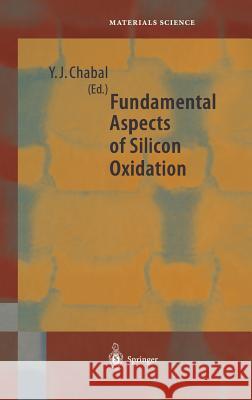
Fundamental Aspects of Silicon Oxidation  9783540416821 SPRINGER-VERLAG BERLIN AND HEIDELBERG GMBH &  - książkaWidoczna okładka, to zdjęcie poglądowe, a rzeczywista szata graficzna może różnić się od prezentowanej.

Fundamental Aspects of Silicon Oxidation

ISBN-13: 9783540416821 / Angielski / Twarda / 2001 / 262 str.

cena 403,47 zł
(netto: 384,26 VAT:  5%)

Najniższa cena z 30 dni: 385,52 zł
Termin realizacji zamówienia:
ok. 22 dni roboczych
Bez gwarancji dostawy przed świętami

Darmowa dostawa!

The idea for a book dealing specifically with elementary processes in silicon oxidation was formulated after a stimulating symposium that I organized at the American Physical Society meeting in March, 1998. The symposium, en- titled "Dynamics of silicon etching and oxidation," explored the mechanisms governing silicon oxidation. With three experimental talks (Hines, Weldon and Gibson) and two theoretical presentations (Pasquarello and Pantelides), it provided a good cross-section of the recent efforts to characterize the in- terfacial region of silicon oxide grown on silicon. The novelty of this work comes from the present experimental and theo- retical advances that allow the investigation of the formation of ultra-thin silicon oxides. Although structural characterization of bulk silicon oxides and electrical characterization of thin oxides and their interfaces with silicon have produced an extensive body of work over more than forty years, a mechanis- tic understanding of the initial oxidation processes has remained elusive. In the past, both the experimental and theoretical efforts have been thwarted by the complexity of dealing with the formation of a mostly amorphous oxide on a crystalline substrate. In this book we present a survey of the state-of-the-art methods, both ex- perimental and theoretical, specifically dealing with the issue of amorphous dielectric growth. Each chapter critically reviews and cross-correlates infor- mation provided by experimental techniques, such as microscopy, spectro- scopy, or scattering, with results obtained using theoretical methods, such as ab initio electronic structure calculations, molecular dynamics, and Monte Carlo simulations.


Kategorie:
Technologie
Kategorie BISAC:
Technology & Engineering > Materials Science - Electronic Materials
Medical > Medycyna
Technology & Engineering > Engineering (General)
Wydawca:
SPRINGER-VERLAG BERLIN AND HEIDELBERG GMBH &
Seria wydawnicza:
Springer Series in Materials Science
Język:
Angielski
ISBN-13:
9783540416821
Rok wydania:
2001
Wydanie:
2001
Numer serii:
000013115
Ilość stron:
262
Waga:
0.56 kg
Wymiary:
23.39 x 15.6 x 1.75
Oprawa:
Twarda
Wolumenów:
01
Dodatkowe informacje:
Wydanie ilustrowane

From the reviews:

"Silicon remains the dominant microelectronic material ... . One of the reasons for this is the 'extraordinary perfection' of its interface with its thermally grown oxide. ... The book provides a valuable snapshot as at early 2000 of the range of diverse approaches, both theoretical and experimental, being applied ... by some of the leading practitioners in this field. It would be of interest to scientists and engineers with a specialist's interest in this or related interfaces." (M. A. Green, The Physicist, Vol. 38 (6), 2001)

1 Introduction.- 1.1 The Silicon MOSFET.- 1.2 Surface States and the Early Discoveries.- 1.3 New Technologies.- 1.4 Silicon Dioxide Growth.- 1.5 Microstructure of the Interface.- References.- 2 Morphological Aspects of Silicon Oxidation in Aqueous Solutions.- 2.1 Introduction.- 2.2 Reaction Anisotropy and the Control of Atomic-Scale Morphology.- 2.3 Extreme Anisotropy: NH4F Etching of Si(111).- 2.4 Controlling Anisotropy: The Curious Effects of Isopropanol.- 2.5 Correlated Reactions and the Development of Mesoscale Morphologies.- 2.6 Correlated Etching: The Surprising Role of Etch Pits.- 2.7 Kinetic Structures and the Development of Etch Hillocks.- 2.8 Using Micromachined Patterns to Study Surface Chemistry.- 2.9 Conclusions and Outlook.- References.- 3 Structural Evolution of the Silicon/Oxide Interface During Passive and Active Oxidation.- 3.1 Introduction.- 3.2 Passive and Active Oxidation in situ in the TEM.- 3.3 Passive Oxidation as a Layer-by-Layer Process.- 3.3.1 What Can in situ Experiments Reveal About the Reaction Mechanism?.- 3.3.2 Stress, Ordering and Stoichiometry at the Interface.- 3.4 Active Oxidation as a Step-Flow Process.- 3.4.1 Kinetic Measurements of Step Nucleation and Flow.- 3.5 Control of Surface Morphology During Device Processing.- 3.6 Electron Beam Effects During in situ Electron Microscopy.- 3.7 Conclusions.- References.- 4 Oxidation of H-Terminated Silicon.- 4.1 Introduction.- 4.2 Experimental and Analytical Details.- 4.3 Initial Stage of Oxidation of H-Terminated Si Surfaces.- 4.3.1 Initial Stage of Oxidation of the H-Si (111)-1 x 1 Surface.- 4.3.2 Initial Stage of Oxidation of the H-Si(100)-2 x 1 Surface.- 4.4 Layer-by-Layer Oxidation Reaction at the Interface.- 4.4.1 Layer-by-Layer Oxidation Reaction at the SiO2/Si(111) Interface.- 4.4.2 Lateral Size of Atomically Flat Interface.- 4.4.3 Effect of Initial Surface Morphology on the SiO2/Si(100) Interface Structures.- 4.5 Oxidation-Induced Roughness of Oxide Surfaces.- 4.5.1 Oxidation-Induced Surface Roughness on Si(111).- 4.5.2 Oxidation-Induced Surface Roughness on Si(100).- 4.6 Valence Band Discontinuities at and near the Si02/Si Interface.- 4.7 Summary and Future Directions.- References.- 5 Layer-by-Layer Oxidation of Si(001) Surfaces.- 5.1 Introduction.- 5.2 Experimental Details.- 5.3 SREM Observation of the Initial Oxidation of Si(001)-2 x 1 Surfaces.- 5.4 Mechanism of Layer-by-Layer Oxidation.- 5.5 Kinetics of Initial Layer-by-Layer Oxidation.- 5.6 Furnace Oxidation at High Temperature.- 5.7 Summary.- References.- 6 Atomic Dynamics During Silicon Oxidation.- 6.1 Introduction.- 6.2 Theoretical Approach.- 6.3 Atomic Processes During Oxidation.- 6.4 Model Structure of Si(001)-SiO2 Interface.- 6.5 Model of Oxidation.- 6.6 Discussion and Conclusion.- References.- 7 First-Principles Quantum Chemical Investigations of Silicon Oxidation.- 7.1 Introduction.- 7.2 Theoretical Approach.- 7.3 Water-Induced Oxidation of Si(100)-(2 x 1).- 7.3.1 Initial Adsorption of Water on Si(100)-(2 x 1).- 7.3.2 Thermodynamics of Oxygen Insertion and Aggregation.- 7.3.3 Vibrational Spectra at 600 K - Oxygen Migration.- 7.3.4 Higher Temperature Annealing - Oxygen Agglomeration.- 7.3.5 Continuous Oxide Formation.- 7.4 Conclusions.- References.- 8 Vibrational Studies of Ultra-Thin Oxides and Initial Silicon Oxidation.- 8.1 Introduction.- 8.2 Scientific Challenges.- 8.2.1 Spectroscopic Considerations.- 8.2.2 Theoretical Considerations.- 8.3 Nature of Ultra-Thin Silicon Oxides and Si/SiO2 Interface.- 8.4 Water Oxidation of Si(100)-(2 x 1).- 8.4.1 Initial Oxygen Insertion and Agglomeration.- 8.4.2 Continuous Oxide Formation.- 8.5 Conclusions.- References.- 9 Ion Beam Studies of Silicon Oxidation and Oxynitridation.- 9.1 Introduction.- 9.2 Experimental Techniques.- 9.2.1 Ion Scattering Techniques.- 9.2.2 Nuclear Reaction Techniques.- 9.2.3 Isotope Tracing Techniques.- 9.3 Silicon Oxidation.- 9.4 Silicon Oxynitridation.- 9.5 Hydrogen in Ultrathin SiO2 Films.- References.- 10 Local and Global Bonding at the Si-SiO2 Interface.- 10.1 Introduction.- 10.2 The Oxidation Process and Local Bonding Arrangements.- 10.3 Global Bonding at the Interface.- 10.4 Z-Contrast Microscopy.- 10.5 Electron Energy Loss Spectroscopy.- References.- 11 Evolution of the Interfacial Electronic Structure During Thermal Oxidation.- 11.1 Introduction.- 11.2 Image Formation in STEM.- 11.3 Measuring Interface Roughness and Oxide Thickness.- 11.4 Mapping Interface States with EELS.- 11.5 Comparing Electronic Structure Calculations and EELS.- 11.6 Evolution of the Local Electronic Structure.- 11.7 Conclusions.- References.- 12 Structure and Energetics of the Interface Between Si and Amorphous SiO2.- 12.1 Introduction.- 12.2 Method.- 12.3 Calculation and Results.- 12.4 Discussion.- 12.5 Conclusion.- References.

This book presents fundamental experimental and theoretical developments relating to silicon oxidation for ultra-thin gate oxide formation. Starting with elementary processes taking place during wet chemical cleans prior to oxidation, the focus is then placed on the incorporation of oxygen into the silicon crystal for H-passivated, clean and oxidized silicon surfaces, including oxygen diffusion and defect formation. Experimental methods include scanning tunneling microscopy, x-ray photoelectron and infrared absorption spectroscopies, ion scattering and transmission electron microscopy. Most of the theoretical contributions are based on first-principles calculations, ranging from cluster calculations to supercell and slab calculations. Phenomenological modeling of oxidation is also discussed. The material presented here will enable the reader to gain a deeper understanding of silicon oxidation and ultra-thin oxide formation (and the processes that affect the morphology of silicon oxides).


Udostępnij

Facebook - konto krainaksiazek.pl


Opinie o Krainaksiazek.pl na Opineo.pl

Partner Mybenefit

Krainaksiazek.pl w programie rzetelna firma Krainaksiaze.pl - płatności przez paypal

Czytaj nas na:

Facebook - krainaksiazek.pl
  • książki na zamówienie
  • granty
  • książka na prezent
  • kontakt
  • pomoc
  • opinie
  • regulamin
  • polityka prywatności

Zobacz:

  • Księgarnia czeska

  • Wydawnictwo Książkowe Klimaty

1997-2025 DolnySlask.com Agencja Internetowa

© 1997-2022 krainaksiazek.pl
     
KONTAKT | REGULAMIN | POLITYKA PRYWATNOŚCI | USTAWIENIA PRYWATNOŚCI
Zobacz: Księgarnia Czeska | Wydawnictwo Książkowe Klimaty | Mapa strony | Lista autorów
KrainaKsiazek.PL - Księgarnia Internetowa

Polityka prywatnosci - link
Krainaksiazek.pl - płatnośc Przelewy24
Przechowalnia Przechowalnia






