• Wyszukiwanie zaawansowane
  • Kategorie
  • Kategorie BISAC
  • Książki na zamówienie
  • Promocje
  • Granty
  • Książka na prezent
  • Opinie
  • Pomoc
  • Załóż konto
  • Zaloguj się

Food Waste Recovery: Processing Technologies and Industrial Techniques » książka

zaloguj się | załóż konto
Logo Krainaksiazek.pl

koszyk

konto

szukaj
topmenu
Księgarnia internetowa
Szukaj
Książki na zamówienie
Promocje
Granty
Książka na prezent
Moje konto
Pomoc
 
 
Wyszukiwanie zaawansowane
Pusty koszyk
Bezpłatna dostawa dla zamówień powyżej 20 złBezpłatna dostawa dla zamówień powyżej 20 zł

Kategorie główne

• Nauka
 [2950560]
• Literatura piękna
 [1849509]

  więcej...
• Turystyka
 [71097]
• Informatyka
 [151150]
• Komiksy
 [35848]
• Encyklopedie
 [23178]
• Dziecięca
 [617388]
• Hobby
 [139064]
• AudioBooki
 [1657]
• Literatura faktu
 [228597]
• Muzyka CD
 [383]
• Słowniki
 [2855]
• Inne
 [445295]
• Kalendarze
 [1464]
• Podręczniki
 [167547]
• Poradniki
 [480102]
• Religia
 [510749]
• Czasopisma
 [516]
• Sport
 [61293]
• Sztuka
 [243352]
• CD, DVD, Video
 [3414]
• Technologie
 [219456]
• Zdrowie
 [101002]
• Książkowe Klimaty
 [124]
• Zabawki
 [2311]
• Puzzle, gry
 [3459]
• Literatura w języku ukraińskim
 [254]
• Art. papiernicze i szkolne
 [8079]
Kategorie szczegółowe BISAC

Food Waste Recovery: Processing Technologies and Industrial Techniques

ISBN-13: 9780128003510 / Angielski / Twarda / 2015 / 412 str.
Galanakis, Charis M.
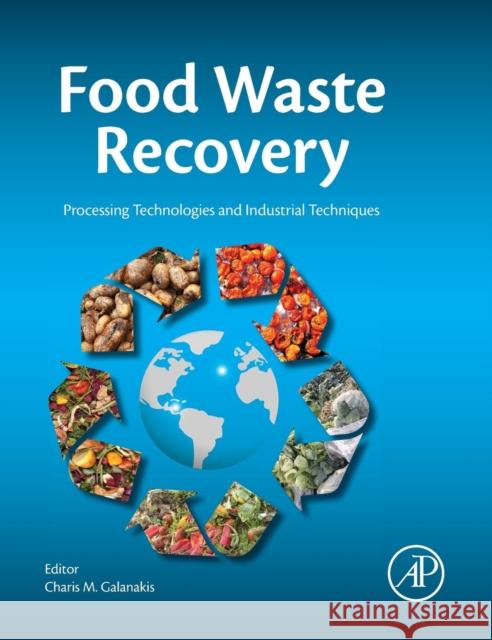
Food Waste Recovery: Processing Technologies and Industrial Techniques Galanakis, Charis M. 9780128003510 Elsevier Science - książkaWidoczna okładka, to zdjęcie poglądowe, a rzeczywista szata graficzna może różnić się od prezentowanej.

Food Waste Recovery: Processing Technologies and Industrial Techniques

ISBN-13: 9780128003510 / Angielski / Twarda / 2015 / 412 str.

Galanakis, Charis M.
cena 461,44
(netto: 439,47 VAT:  5%)

Najniższa cena z 30 dni: 458,60
Termin realizacji zamówienia:
ok. 30 dni roboczych
Dostawa w 2026 r.

Darmowa dostawa!

Food Waste Recovery Processing Technologies and Industrial Techniques acts as a guide to recover valuable components of food by-products and recycle them inside the food chain, in an economic and sustainable way. The book investigates all the relevant recovery issues and compares different techniques to help you advance your research and develop new applications. Strong coverage of the different technologies is included, while keeping a balance between the characteristics of current conventional and emerging technologies. This is an essential reference for research outcomes.

  • Presents a holistic methodology (the so-called "5-Stages Universal Recovery Process") and a general approach (the so-called "Universal Recovery Strategy") to ensure optimized management of the available technologies and recapture of different high added-value compounds from any waste source
  • Includes characteristics, safety and cost issues of conventional and emerging technologies, the benefits of their application in industry, and commercialized applications of real market products
  • Demonstrates all aspects of the recovery process such as preservation of the substrate, yield optimization, preservation of functionality of the target compounds during processing, and more


Kategorie:
Technologie
Kategorie BISAC:
Science > Life Sciences - General
Technology & Engineering > Food Science - General
Wydawca:
Elsevier Science
Język:
Angielski
ISBN-13:
9780128003510
Rok wydania:
2015
Ilość stron:
412
Waga:
1.01 kg
Wymiary:
23.62 x 19.3 x 2.54
Oprawa:
Twarda
Wolumenów:
01

"This is a "must-have” book and should be used in every food science curriculum. This book would also be an excellent reference book for companies in the food industry or even the food value chain, from primary production through to the retail sector." --FST

"The information provided in Food Waste Recovery is very well organized and offers a comprehensive access to the information scattered in many technical and scientific publications. The books makes easy to find the potential of a specific waste or how to recover a molecule of economic interest with different technologies. One of the most innovative and interesting parts of the book is dedicated to emerging technologies such as radio-frequency drying, electroosmotic drying, the use of low temperature plasma, high hydrostatic pressure, ultrasounds, pulsed electrical fields or magnetic fields and the applications and implementations in different food sectors beyond the applications at laboratory or pilot stages. Definitely, the book is a "must have" for all those working with food waste recovery." --Aintzane Esturo, Technical Manager, SGF International e.V., Germany

"There is no doubt that with rising populations, food wastage is of ever growing significance. We are now at a point that it is no longer sufficient to simply reduce the amount of industrial or supply chain waste, whether agricultural or processing by-product, but to eliminate it. To achieve such targets, the inherent value; nutritional or functional, must be recovered from any waste stream. This requires a deep knowledge of the potential of such waste material, which in turn can drive the innovation process to realise that value. Food Waste Recovery edited by Dr. Charis Galankis provides the detailed insight needed to address these challenges head on. With detailed reviews of food wastage sources, potential value of waste streams and the traditional, innovative and emerging extraction and recovery technology, this book achieves the editors vision of producing an essential reference tool for food and drink professionals tackling the increasingly important issue of food waste." --Steve Osborn B.Sc. (hons), M.Phil., C.SCI., FIFST, Principal consultant - Food and Beverage, The Aurora Ceres Partnership Ltd.

"This book successfully captures the current outlook with regard to food waste valorisation, compiling the collaborative contributions of academic institutions and commercial organisations. Encompassing a breadth of separation and extraction technologies, both conventional and emerging, the book provides rich insight into the techniques which could either be employed in isolation or regarded as building blocks in a comprehensive biorefinery. Food Waste Recovery represents a much-needed toolkit, increasing the prospect of recovering high added-value compounds from organic byproducts. Moreover, it serves as a bridge between academia and industry, a vital handbook for anyone wanting to develop a food waste recovery application. Crucially, the book places priority on the ethical responsibility to maximise the efficient recovery of bioresources against the backdrop of ever-increasing pressure on natural resources due to climate change and rising populations. Thus, food waste valorisation is presented not simply as a commercial teaser; rather it is regarded as a vital activity as part of a coordinated strategy to ensure a sustainable food supply. Fundamentally, Dr. Galanakis has succeeded in drawing together accounts of the key technologies which will form the basis of any future biorefinery and this compilation marks a milestone in the journey towards that destination." --Andrew Gadd, Link2Energy, Industrial Symbiosis Services Medium

"There were times in human history where we had no access to information because it was unavailable. Now, we have an overload of information and it is a time taking process for each of us to identify our sources. Food Waste Recovery makes it easier for those who are looking for the latest latest information and knowledge on processing food wastes in industrial settings. The book has expanded my knowledge about the variety of chemicals that can be recovered from food wastes and their final markets. Chapter 4, The Universal Recovery Strategy provides a good framework for approaching value recovery out of food waste. The framework can also be applied to recovery of food and organic waste in cities. This strategy will be more valuable when it is adopted widely, and researchers and decision makers expand on it according to their requirements. Given my background in engineering and consulting, I found Chapter 14 especially useful. It lays out the cost and safety issues of emerging and conventional technologies, which can be a good starting point for further research and decision making." --Ranjith Annepu, Co-Founder, be Waste Wise, New York City

"Food Waste Recovery edited by Dr. Charis Galanakis, does not just cover the issues of sustainability, valorisation and waste recovery in modern food processing, but also discusses extensively the issues of land and water use. Chapter 2 provides an excellent and comprehensive summary of the different types of waste derived from both plant and animal origin. Pre-treatments of food waste, conventional processing methods to extract materials of interest as well as new/updated methods are given a good synopsis in Chapters 4 and 5. I can also thoroughly recommend the good analysis of more recent extraction techniques discussed in Chapter 6 and Section III, which, although not unique, are interesting reminders of the challenges faced in the context of food waste. Overall, this is an excellent book, dealing with the aftermath of today's heavily industrialized food production and processing, and provides a good overview of the ways to reduce and control the resultant inherent wastage." --Muyiwa Akintoye, PhD, Research & Development, Quorn Foods Ltd.

Preface

Section 1: Introduction

1. Food waste management, valorisation & sustainability in the food industry

2. Classification & target compounds

3. Development of a universal recovery strategy

Section 2: Conventional Techniques

4. Conventional macroscopic pre-treatment

5. Conventional macro- & micro-molecules separation

6. Conventional extraction

7. Conventional purification & isolation

8. Conventional product formation

Section 3: Emerging Technologies

9. Emerging macroscopic pre-treatment

10. Emerging macro- and micro-molecules separation

11. Emerging extraction

12. Emerging purification & isolation

13. Emerging product formation techniques

Section 4: Commercialization Aspects & Applications

14. Cost and safety issues of emerging technologies against conventional techniques

15. Patented & commercialized applications

16. Recovery and applications of enzymes from food wastes

Dr. Galanakis is an interdisciplinary scientist. He is the research and innovation director of Galanakis Laboratories (Chania, Greece) and the coordinator of the Food Waste Recovery Group of the ISEKI-Food Association (Vienna, Austria). He serves as an expert evaluator and monitor of international and regional funded programs and proposals, whereas he is an editorial board member and subject editor of Food and Bioproducts Processing and Food Research International. He has edited nine books and published ~100 articles


Udostępnij

Facebook - konto krainaksiazek.pl


Opinie o Krainaksiazek.pl na Opineo.pl

Partner Mybenefit

Krainaksiazek.pl w programie rzetelna firma Krainaksiaze.pl - płatności przez paypal

Czytaj nas na:

Facebook - krainaksiazek.pl
  • książki na zamówienie
  • granty
  • książka na prezent
  • kontakt
  • pomoc
  • opinie
  • regulamin
  • polityka prywatności

Zobacz:

  • Księgarnia czeska

  • Wydawnictwo Książkowe Klimaty

1997-2025 DolnySlask.com Agencja Internetowa

© 1997-2022 krainaksiazek.pl
     
KONTAKT | REGULAMIN | POLITYKA PRYWATNOŚCI | USTAWIENIA PRYWATNOŚCI
Zobacz: Księgarnia Czeska | Wydawnictwo Książkowe Klimaty | Mapa strony | Lista autorów
KrainaKsiazek.PL - Księgarnia Internetowa

Polityka prywatnosci - link
Krainaksiazek.pl - płatnośc Przelewy24
Przechowalnia Przechowalnia






