• Wyszukiwanie zaawansowane
  • Kategorie
  • Kategorie BISAC
  • Książki na zamówienie
  • Promocje
  • Granty
  • Książka na prezent
  • Opinie
  • Pomoc
  • Załóż konto
  • Zaloguj się

Food Materials Science: Principles and Practice » książka


zaloguj się | załóż konto
Logo Krainaksiazek.pl

koszyk

konto

szukaj
topmenu
Księgarnia internetowa
Szukaj
Książki na zamówienie
Promocje
Granty
Książka na prezent
Moje konto
Pomoc
 
 
Wyszukiwanie zaawansowane
Pusty koszyk
Bezpłatna dostawa dla zamówień powyżej 20 złBezpłatna dostawa dla zamówień powyżej 20 zł

Kategorie główne

• Nauka
 [2949965]
• Literatura piękna
 [1857847]

  więcej...
• Turystyka
 [70818]
• Informatyka
 [151303]
• Komiksy
 [35733]
• Encyklopedie
 [23180]
• Dziecięca
 [617748]
• Hobby
 [139972]
• AudioBooki
 [1650]
• Literatura faktu
 [228361]
• Muzyka CD
 [398]
• Słowniki
 [2862]
• Inne
 [444732]
• Kalendarze
 [1620]
• Podręczniki
 [167233]
• Poradniki
 [482388]
• Religia
 [509867]
• Czasopisma
 [533]
• Sport
 [61361]
• Sztuka
 [243125]
• CD, DVD, Video
 [3451]
• Technologie
 [219309]
• Zdrowie
 [101347]
• Książkowe Klimaty
 [123]
• Zabawki
 [2362]
• Puzzle, gry
 [3791]
• Literatura w języku ukraińskim
 [253]
• Art. papiernicze i szkolne
 [7933]
Kategorie szczegółowe BISAC

Food Materials Science: Principles and Practice

ISBN-13: 9781461498285 / Angielski / Miękka / 2014 / 616 str.
Jose Miguel Aguilera (Pontificia Univers;Peter J Lillford
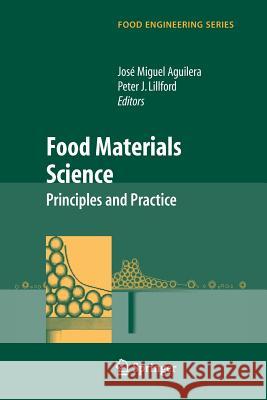
Food Materials Science: Principles and Practice Aguilera, José Miguel 9781461498285 Springer - książkaWidoczna okładka, to zdjęcie poglądowe, a rzeczywista szata graficzna może różnić się od prezentowanej.

Food Materials Science: Principles and Practice

ISBN-13: 9781461498285 / Angielski / Miękka / 2014 / 616 str.

Jose Miguel Aguilera (Pontificia Univers;Peter J Lillford
cena 806,99 zł
(netto: 768,56 VAT:  5%)

Najniższa cena z 30 dni: 771,08 zł
Termin realizacji zamówienia:
ok. 22 dni roboczych
Bez gwarancji dostawy przed świętami

Darmowa dostawa!
inne wydania

Food Materials Science provides the science behind structuring processes for foods and applications in food product design. The first in its field, the book is an invaluable reference. The creation of added value from raw food materials is a legitimate aspiration of the modern food industry. Adding value to foods requires knowledge of what the consumer wants and creating products that satisfy the demand. Quality, convenience and safety are the major drivers of the modern food industry. Food manufacture is about producing billions of units of standardized products which must be cheap, nutritious, safe and appealing to the consumer's taste. Food products are complex multicomponent and structured edible materials that nevertheless must comply with the laws of physics and fundamentals of engineering sciences. In the last 20 years the design of food products with specific functionalities has advanced significantly by the application of scientific knowledge from disciplines such as polymer physics, colloidal and mesoscopic physics, materials science and new imaging and probing techniques borrowed from chemistry, biology and medicine. Our knowledge of the relationship between microstructure, processing, and macroscopic properties continues to increase as the science of food materials advances at a fast pace. This book is intended to those interested in viewing food technology as a way to preserve, transform and create structures in foods and the related materials science aspects of it. It attempts to present a unified vision of what today is considered to be food materials science and some derived applications. The book may be used as a text in a course in food materials science at the senior or graduate level or as a supplement text in an advanced food technology course. It will also serve as a reference book for professionals in the food industry.


Kategorie:
Nauka, Chemia
Kategorie BISAC:
Technology & Engineering > Food Science - General
Science > Chemia - Fizyczna
Wydawca:
Springer
Język:
Angielski
ISBN-13:
9781461498285
Rok wydania:
2014
Wydanie:
2008
Ilość stron:
616
Waga:
0.86 kg
Wymiary:
23.39 x 15.6 x 3.23
Oprawa:
Miękka
Wolumenów:
01
Dodatkowe informacje:
Wydanie ilustrowane

Aus den Rezensionen:

"Bereits in ihrem Vorwort definieren die ... Herausgeber ganz klar, mit welcher Zielstellung sie an die Gestaltung des vorliegenden Buches herangegangen sind ... Trotz der großen Zahl der beteiligten Autoren und der naturgemäß kapitelübergreifenden Inhalte ist es den Herausgebern gelungen, Redundanzen auf einem erfreulich niedrigen Niveau zu halten. Obzwar sich die einzelnen Kapitel bezüglich Aufbau und Grafischer Ausgestaltung deutlich unterscheiden, kann das Werk ... uneingeschränkt allen empfohlen werden, die sich in irgendeiner Form intensiver mit physikalischen Eigenschaften von Lebensmitteln auseinandersetzen oder dies wollen." (Prof. Dr. Harald Rohm, in: Lebensmitteltechnik, 2008, Vol. 40, Issue 11, S. 78)

Fundamentals.- Why Food Materials Science?.- The Composite Structure of Biological Tissue Used for Food.- Food Polymers.- The Crystalline State.- The Glassy State.- Rubber Elasticity and Wheat Gluten Proteins.- State Diagrams of Food Materials.- Nanotechnology in Food Materials Research.- Assembly of Structures in Foods.- Solid Food Foams.- Probing Food Structure.- Structuring Operations.- Structure–Property Relationships in Foods.- Structuring Water by Gelation.- Bubble-Containing Foods.- Emulsions: Principles and Preparation.- Processing of Food Powders.- Fat Crystal Networks.- Extrusion.- Polyphasic Food Systems.- Structuring Dairy Products by Means of Processing and Matrix Design.- Structured Cereal Products.- Structured Meat Products.- Structured Chocolate Products.- Edible Moisture Barriers for Food Product Stabilization.- Encapsulation of Bioactives.

Foods are unique among materials of our daily life in that they are ingested and become part of our body. This book describes the science and procedure behind the materials in foods that impart their desirable properties. The first part explains those physicochemical aspects that intervene in the organization of food components from the molecular level to actual products and the methods used to probe into foods at different length scales. The second part presents how food structures are assembled during processing in order to achieve desirable and recognizable properties. The last section shows specific examples of how structures of familiar products are obtained by processing and describes some new developments. This book is ideal as a text for a course in food materials science at the senior or graduate level, or as a supplemental text in an advanced food technology course. It can also serve as a reference book for professionals in the food industry.

Food Materials Science provides the science behind structuring processes for foods and applications in food product design. The first in its field, the book is an invaluable reference.

The creation of added value from raw food materials is a legitimate aspiration of the modern food industry. Adding value to foods requires knowledge of what the consumer wants and creating products that satisfy the demand. Quality, convenience and safety are the major drivers of the modern food industry.

Food manufacture is about producing billions of units of standardized products which must be cheap, nutritious, safe and appealing to the consumer’s taste. Food products are complex multicomponent and structured edible materials that nevertheless must comply with the laws of physics and fundamentals of engineering sciences. In the last 20 years the design of food products with specific functionalities has advanced significantly by the application of scientific knowledge from disciplines such as polymer physics, colloidal and mesoscopic physics, materials science and new imaging and probing techniques borrowed from chemistry, biology and medicine. Our knowledge of the relationship between microstructure, processing, and macroscopic properties continues to increase as the science of food materials advances at a fast pace.

This book is intended to those interested in viewing food technology as a way to preserve, transform and create structures in foods and the related materials science aspects of it. It attempts to present a unified vision of what today is considered to be food materials science and some derived applications. The book may be used as a text in a course in food materials science at the senior or graduate level or as a supplement text in an advanced food technology course. It will also serve as a reference book for professionals in the food industry.

 

About the Editors

José Miguel Aguilera, is a professor in the Department of Chemical Engineering and Bioprocesses at the Universidad Católica de Chile, Santiago, Chile

Peter J. Lillford, is a professor in the Department of Biology at the University of York, Heslington, York, UK


Udostępnij

Facebook - konto krainaksiazek.pl


Opinie o Krainaksiazek.pl na Opineo.pl

Partner Mybenefit

Krainaksiazek.pl w programie rzetelna firma Krainaksiaze.pl - płatności przez paypal

Czytaj nas na:

Facebook - krainaksiazek.pl
  • książki na zamówienie
  • granty
  • książka na prezent
  • kontakt
  • pomoc
  • opinie
  • regulamin
  • polityka prywatności

Zobacz:

  • Księgarnia czeska

  • Wydawnictwo Książkowe Klimaty

1997-2025 DolnySlask.com Agencja Internetowa

© 1997-2022 krainaksiazek.pl
     
KONTAKT | REGULAMIN | POLITYKA PRYWATNOŚCI | USTAWIENIA PRYWATNOŚCI
Zobacz: Księgarnia Czeska | Wydawnictwo Książkowe Klimaty | Mapa strony | Lista autorów
KrainaKsiazek.PL - Księgarnia Internetowa

Polityka prywatnosci - link
Krainaksiazek.pl - płatnośc Przelewy24
Przechowalnia Przechowalnia





