• Wyszukiwanie zaawansowane
  • Kategorie
  • Kategorie BISAC
  • Książki na zamówienie
  • Promocje
  • Granty
  • Książka na prezent
  • Opinie
  • Pomoc
  • Załóż konto
  • Zaloguj się

Food Industry and the Environment: Practical Issues and Cost Implications » książka


zaloguj się | załóż konto
Logo Krainaksiazek.pl

koszyk

konto

szukaj
topmenu
Księgarnia internetowa
Szukaj
Książki na zamówienie
Promocje
Granty
Książka na prezent
Moje konto
Pomoc
 
 
Wyszukiwanie zaawansowane
Pusty koszyk
Bezpłatna dostawa dla zamówień powyżej 20 złBezpłatna dostawa dla zamówień powyżej 20 zł

Kategorie główne

• Nauka
 [2952079]
• Literatura piękna
 [1850969]

  więcej...
• Turystyka
 [71058]
• Informatyka
 [151066]
• Komiksy
 [35579]
• Encyklopedie
 [23181]
• Dziecięca
 [620496]
• Hobby
 [139036]
• AudioBooki
 [1646]
• Literatura faktu
 [228729]
• Muzyka CD
 [379]
• Słowniki
 [2932]
• Inne
 [445708]
• Kalendarze
 [1409]
• Podręczniki
 [164793]
• Poradniki
 [480107]
• Religia
 [510956]
• Czasopisma
 [511]
• Sport
 [61267]
• Sztuka
 [243299]
• CD, DVD, Video
 [3411]
• Technologie
 [219640]
• Zdrowie
 [100984]
• Książkowe Klimaty
 [124]
• Zabawki
 [2281]
• Puzzle, gry
 [3363]
• Literatura w języku ukraińskim
 [258]
• Art. papiernicze i szkolne
 [8020]
Kategorie szczegółowe BISAC

Food Industry and the Environment: Practical Issues and Cost Implications

ISBN-13: 9781461358725 / Angielski / Miękka / 2013 / 405 str.
Dalzall, J. M.
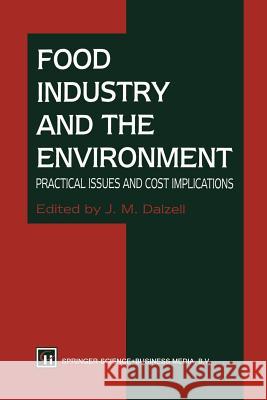
Food Industry and the Environment: Practical Issues and Cost Implications Dalzall, J. M. 9781461358725 Springer - książkaWidoczna okładka, to zdjęcie poglądowe, a rzeczywista szata graficzna może różnić się od prezentowanej.

Food Industry and the Environment: Practical Issues and Cost Implications

ISBN-13: 9781461358725 / Angielski / Miękka / 2013 / 405 str.

Dalzall, J. M.
cena 201,24
(netto: 191,66 VAT:  5%)

Najniższa cena z 30 dni: 192,74
Termin realizacji zamówienia:
ok. 22 dni roboczych.

Darmowa dostawa!

All areas of industry are facing increasing pressure from governments and consumers to be more environmentally aware. The food industry is no exception, and an increasing number of companies have made the decision to implement an environmental policy. These organisations will benefit from this book, which has been written to provide a broad but detailed introduction to the topic of environmental issues and their cost implica- tions to the food industry. Throughout the text the authors have approached the subject from a practical angle, and have borne in mind the environmental, production or site manager who is grappling with the problem of how to implement such a policy. This book begins by considering the raw materials that are used in the food industry, whether derived from animals, fruit and vegetables, or the products of genetic engineering, as may increasingly be the case in the future. Environmental and cost considerations of food processing opera- tions are then examined, encompassing energy conservation and the con- trol of air, noise and water pollution; all topics that are uppermost in the priorities of the environmental manager. The finished food product also has an impact on its environment, and so the storage, distribution and packaging of foods, post food factory, is discussed in detail. Finally, the principles involved in management accounting for food industry environ- mental issues are highlighted. All the authors of this book are respected experts in their chosen field, each of whom could have written a complete book on their subject.


Kategorie:
Technologie
Kategorie BISAC:
Science > Environmental Science (see also Chemistry - Environmental)
Technology & Engineering > Food Science - General
Business & Economics > Industries - General
Wydawca:
Springer
Język:
Angielski
ISBN-13:
9781461358725
Rok wydania:
2013
Wydanie:
1994
Ilość stron:
405
Waga:
0.59 kg
Wymiary:
23.39 x 15.6 x 2.21
Oprawa:
Miękka
Wolumenów:
01

Editorial introduction.- J.M. DALZELL.- 1 Food from animals: environmental issues and implications.- 1.1 Introduction.- 1.2 Disposal of animal excreta.- 1.3 Energetic efficiency.- 1.4 Environmental influences upon perceptions of quality in food from animals.- 1.4.1 Flavour.- 1.4.2 Fatness.- 1.4.3 Freedom from undesired characteristics.- 1.4.4 Animal welfare perceptions.- 1.5 Conclusion.- 2 Organic and non-organic agriculture.- 2.1 Background.- 2.2 What is organic farming?.- 2.3 Organic husbandry techniques.- 2.4 The environmental impact of agriculture.- 2.4.1 Pesticides.- 2.4.2 Nitrates.- 2.4.3 Wildlife.- 2.4.4 Soil erosion.- 2.4.5 Energy and non-renewable resources.- 2.5 Physical and financial performance of organic farms.- 2.5.1 Yields.- 2.5.2 Prices.- 2.5.3 Costs.- 2.5.4 Profitability.- 2.6 Standards for organic food and farming.- 2.6.1 EC regulations.- 2.6.2 Labelling.- 2.6.3 Other schemes.- 2.7 Future trends.- 2.7.1 Towards a sustainable agriculture.- 2.7.2 Environment first : a new concept for agriculture ?.- Further reading.- References.- 3 The environmental implications of genetic engineering in the food industry.- 3.1 Introduction.- 3.2 The regulatory climate.- 3.3 Consumer acceptability.- 3.4 A case study: the genetically engineered tomato.- 3.4.1 The techniques of genetic subtraction.- 3.4.2 Metabolic studies of the recombinant tomato.- 3.4.3 Field trials of the recombinant tomato.- 3.4.4 Ethylene production in recombinant tomatoes.- 3.4.5 The engineering of processing tomatoes.- 3.4.6 Regulatory approval of the recombinant tomato.- 3.4.7 Legal dispute.- 3.5 A case study: chymosin produced by genetic engineering.- 3.5.1 The biosynthesis of mammalian chymosin.- 3.5.2 The choice of host organism.- 3.5.3 Construction of the genetically engineered K. lactis.- 3.5.4 Production of chymosin.- 3.5.5 Safety of production.- 3.5.6 The chemical and functional properties of chymosin produced by the genetically engineered K. Lactis.- 3.5.7 Safety of recombinant chymosin.- 3.5.8 Regulatory position of MAXIREN.- 3.6 A case study: the genetic engineering of a food-grade organism.- 3.6.1 Construction of a yeast strain with altered maltose fermentation.- 3.6.2 Performance of the genetically modified baker's yeast.- 3.6.3 Survival of the genetically modified yeast in the environment.- 3.6.4 Risk of genetic transfer.- 3.6.5 Consumer safety.- 3.6.6 Regulatory position of the genetically modified baker's yeast.- 3.7 Conclusions and future prospects.- Acknowledgements.- References.- 4 Energy conservation and the cost benefits to the food industry.- 4.1 Introduction.- 4.2 Energy monitoring and targeting.- 4.2.1 Types of system.- 4.2.2 System implementation.- 4.2.3 Case study.- 4.3 Steam/hot water systems.- 4.3.1 The heating medium.- 4.3.2 Hot water.- 4.3.3 Thermal fluids.- 4.3.4 Steam.- 4.3.5 Raising steam.- 4.3.6 Steam distribution and pressure.- 4.3.7 Pipework.- 4.3.8 Drain points and condensate.- 4.3.9 Feedwater Treatment And Blowdown.- 4.3.10 Improving energy efficiency: what to do first.- 4.4 Refrigeration.- 4.4.1 Refrigeration cycles.- 4.4.2 Auxiliary equipment.- 4.4.3 Coefficient of performance.- 4.4.4 Factors affecting efficiency.- 4.4.5 Calculating annual costs.- 4.4.6 Case study: cooling from too high a temperature.- 4.4.7 Other issues.- 4.5 Combined heat and power.- 4.5.1 Combined heat and power (CHP) plant.- 4.5.2 Suitability for CHP.- 4.5.3 Case study.- 4.6 Further information.- 5 Noise and air pollution in the food industry: sources, control and cost implications.- 1 Noise pollution.- 5.1 Sources.- 5.2 Effects on health.- 5.3 Legislation.- 5.3.1 Noise at work.- 5.3.2 Neighbourhood noise.- 5.4 Methods of measurement.- 5.5 Methods of reduction.- 5.5.1 Ear defenders.- 5.5.2 Reduction of noise at source.- 5.5.3 Noise enclosures.- 5.5.4 Reduction of reverberation.- 5.5.5 Reduction of the time exposure.- 5.5.6 Reduction of noise to neighbours.- 2 Air pollution.- 5.6 Air pollution sources and effects.- 5.6.1 Introduction.- 5.6.2 General effects of emissions.- 5.7 Legislation affecting emissions into the air.- 5.7.1 Introduction.- 5.7.2 Legal framework.- 5.7.3 Responsibilities for enforcement.- 5.7.4 Air pollution control standards.- 5.7.5 Best available techniques not entailing excessive cost.- 5.7.6 Establishing the level of control required.- 5.7.7 Best practicable environmental option (BPEO).- 5.7.8 Development planning control.- 5.8 Emissions, effects and controls.- 5.8.1 Introduction.- 5.8.2 Combustion process emissions.- 5.8.3 Particulate matter emissions from processing.- 5.8.4 Chemical emissions from food'processing.- 5.8.5 Emission of volatile organic compounds.- 5.9 Monitoring of air pollutants.- 5.9.1 Introduction.- 5.9.2 Emission monitoring.- 5.9.3 Ambient air monitoring.- 5.10 Odours: sources, nature and effects.- 5.10.1 Introduction.- 5.10.2 Odour sources.- 5.10.3 Effects of odour emissions.- 5.11 Legislation relating to odour emissions.- 5.12 Control of odour emissions.- 5.12.1 Introduction.- 5.12.2 Control techniques.- 5.12.3 Dispersion of odours.- 5.13 Monitoring of odours.- 6 Water pollution in the food industry: sources, control and cost implications.- 6.1 Introduction.- 6.2 Controls.- 6.2.1 Legislation.- 6.2.2 International commissions and conventions.- 6.2.3 National policies.- 6.3 Costs.- 6.3.1 Costs of disposal.- 6.3.2 Consents to discharge.- 6.3.3 Waste audits.- 6.3.4 Waste minimisation.- 6.3.5 Calculating the costs.- 6.3.6 Case studies.- 6.4 The characteristics and analysis of waste.- 6.4.1 Wastewater composition.- 6.4.2 Microbiological characteristics.- 6.4.3 Biological indicators.- 6.4.4 Measuring treatability.- 6.4.5 Sector review.- 6.4.6 Conclusions.- 6.5 Pre-treatments.- 6.5.1 Preliminary treatment.- 6.5.2 Primary treatment.- 6.5.3 Chemical treatment.- 6.5.4 Nutrients.- 6.5.5 Conclusions.- 6.6 Aerobic biological treatment.- 6.6.1 Introduction.- 6.6.2 Percolating filters.- 6.6.3 Activated sludge.- 6.7 Anaerobic biological treatment.- 6.7.1 Types of anaerobic digester.- 6.7.2 Materials of construction.- 6.8 Sludge treatment.- 6.8.1 Sludge thickening.- 6.8.2 The design of thickeners.- 6.8.3 Sludge treatment.- 6.8.4 Sludge disposal.- 6.9 Conclusions.- References.- 7 Cooling and temperature controlled storage and distribution systems.- 7.1 Introduction.- 7.2 Refrigeration.- 7.2.1 Cryogenic refrigeration.- 7.2.2 Energy use.- 7.2.3 Energy costs and the food industry.- 7.3 Global warming and the ozone layer.- 7.3.1 Global warming.- 7.3.2 The ozone layer.- 7.3.3 What can we do about it?.- 7.3.4 CFCs and HCFCs.- 7.3.5 ‘Replacement’ refrigerants.- 7.3.6 Ammonia as a ‘replacement’ refrigerant.- 7.3.7 Ammonia and the environment.- 7.3.8 Conclusions.- 7.4 Refrigerated transport systems.- 7.4.1 New legislation.- 8 Packaging options.- 8.1 Introduction.- 8.2 Functions of packaging.- 8.2.1 Protection.- 8.2.2 Communication.- 8.2.3 Utility.- 8.2.4 Combination of functions.- 8.3 Package selection.- 8.4 Wood.- 8.5 Paper and paperboard.- 8.5.1 Raw materials.- 8.5.2 Energy.- 8.5.3 Other environmental impacts.- 8.6 Aluminium.- 8.6.1 Raw materials.- 8.6.2 Energy.- 8.6.3 Other environmental impacts.- 8.7 Steel.- 8.7.1 Raw materials.- 8.7.2 Energy.- 8.7.3 Other environmental impacts.- 8.8 Glass.- 8.8.1 Raw materials.- 8.8.2 Energy.- 8.8.3 Other environmental impacts.- 8.8.4 Reuse of glass containers.- 8.9 Plastics.- 8.9.1 Raw materials.- 8.9.2 Energy.- 8.9.3 Other environmental impacts.- 8.9.4 High density polyethylene (HDPE).- 8.9.5 Linear low density polyethylene (LLDPE).- 8.9.6 Low density polyethylene (LDPE).- 8.9.7 Polypropylene (PP).- 8.9.8 Polystyrene (PS).- 8.9.9 Polyvinyl chloride (PVC).- 8.9.10 Polyethylene terephthalate (PET).- 8.10 Effects of transportation.- 8.11 Packaging trends.- References.- 9 Disposal of used packaging.- 9.1 Introduction.- 9.2 Collection of used packaging.- 9.3 Identification of materials for collection and sorting.- 9.4 Landfill.- 9.5 Composting.- 9.6 Incineration.- 9.7 Reuse of packaging.- 9.8 Recycling.- 9.8.1 Recycling paper packaging.- 9.8.2 Recycling aluminium.- 9.8.3 Recycling of steel and tinplate.- 9.8.4 Recycling of glass.- 9.8.5 Recycling plastics packaging.- 9.9 Multi-layer materials.- 9.10 Biodegradable plastics.- 9.11 The way ahead.- References.- 10 Management accounting for food industry environmental issues.- 10.1 Lessons from history: the rise and fall of management accounting and energy management.- 10.1.1 Management accounting.- 10.1.2 Energy management.- 10.1.3 Complementarity in energy management and management accounting.- 10.2 Classes of management information.- 10.3 Theory and empiricism in interpretation of measurements.- 10.3.1 Relating energy to production and the weather.- 10.3.2 Linear regression.- 10.4 Interpreting time series information: CUSUM.- 10.4.1 CUSUM as the basis of control.- 10.5 Variants in energy use pattern for buildings and processes.- 10.5.1 Variants of pattern of energy against production.- 10.5.2 Variants of pattern of energy against degree days.- 10.5.3 Measures of production.- 10.6 Relating energy use to efficiency.- 10.7 Budget management.- 10.7.1 Prescriptive and flexible budgets.- 10.7.2 Capital return budgets.- 10.8 The financial appraisal of energy saving and environmental protection measures.- 10.8.1 Investment priorities.- 10.9 Environmental auditing.- 10.10 Conclusions.- References.


Udostępnij

Facebook - konto krainaksiazek.pl


Opinie o Krainaksiazek.pl na Opineo.pl

Partner Mybenefit

Krainaksiazek.pl w programie rzetelna firma Krainaksiaze.pl - płatności przez paypal

Czytaj nas na:

Facebook - krainaksiazek.pl
  • książki na zamówienie
  • granty
  • książka na prezent
  • kontakt
  • pomoc
  • opinie
  • regulamin
  • polityka prywatności

Zobacz:

  • Księgarnia czeska

  • Wydawnictwo Książkowe Klimaty

1997-2026 DolnySlask.com Agencja Internetowa

© 1997-2022 krainaksiazek.pl
     
KONTAKT | REGULAMIN | POLITYKA PRYWATNOŚCI | USTAWIENIA PRYWATNOŚCI
Zobacz: Księgarnia Czeska | Wydawnictwo Książkowe Klimaty | Mapa strony | Lista autorów
KrainaKsiazek.PL - Księgarnia Internetowa

Polityka prywatnosci - link
Krainaksiazek.pl - płatnośc Przelewy24
Przechowalnia Przechowalnia






