• Wyszukiwanie zaawansowane
  • Kategorie
  • Kategorie BISAC
  • Książki na zamówienie
  • Promocje
  • Granty
  • Książka na prezent
  • Opinie
  • Pomoc
  • Załóż konto
  • Zaloguj się

Chemical Reaction Kinetics: Concepts, Methods and Case Studies » książka


zaloguj się | załóż konto
Logo Krainaksiazek.pl

koszyk

konto

szukaj
topmenu
Księgarnia internetowa
Szukaj
Książki na zamówienie
Promocje
Granty
Książka na prezent
Moje konto
Pomoc
 
 
Wyszukiwanie zaawansowane
Pusty koszyk
Bezpłatna dostawa dla zamówień powyżej 20 złBezpłatna dostawa dla zamówień powyżej 20 zł

Kategorie główne

• Nauka
 [2952079]
• Literatura piękna
 [1850969]

  więcej...
• Turystyka
 [71058]
• Informatyka
 [151066]
• Komiksy
 [35579]
• Encyklopedie
 [23181]
• Dziecięca
 [620496]
• Hobby
 [139036]
• AudioBooki
 [1646]
• Literatura faktu
 [228729]
• Muzyka CD
 [379]
• Słowniki
 [2932]
• Inne
 [445708]
• Kalendarze
 [1409]
• Podręczniki
 [164793]
• Poradniki
 [480107]
• Religia
 [510956]
• Czasopisma
 [511]
• Sport
 [61267]
• Sztuka
 [243299]
• CD, DVD, Video
 [3411]
• Technologie
 [219640]
• Zdrowie
 [100984]
• Książkowe Klimaty
 [124]
• Zabawki
 [2281]
• Puzzle, gry
 [3363]
• Literatura w języku ukraińskim
 [258]
• Art. papiernicze i szkolne
 [8020]
Kategorie szczegółowe BISAC

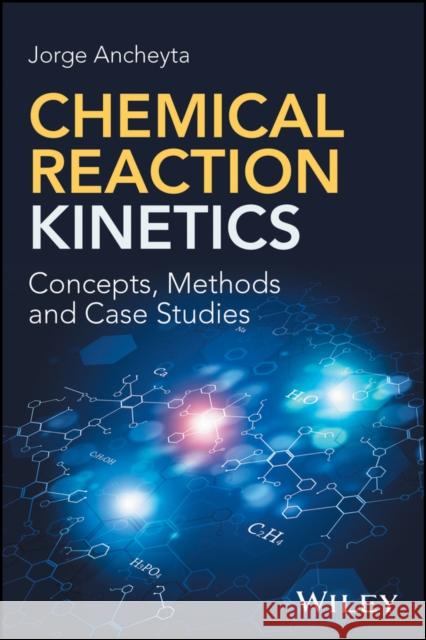
Chemical Reaction Kinetics: Concepts, Methods and Case Studies

ISBN-13: 9781119226642 / Angielski / Twarda / 2017 / 304 str.
Ancheyta, Jorge
Chemical Reaction Kinetics: Concepts, Methods and Case Studies Ancheyta, Jorge 9781119226642 John Wiley & Sons - książkaWidoczna okładka, to zdjęcie poglądowe, a rzeczywista szata graficzna może różnić się od prezentowanej.

Chemical Reaction Kinetics: Concepts, Methods and Case Studies

ISBN-13: 9781119226642 / Angielski / Twarda / 2017 / 304 str.

Ancheyta, Jorge
cena 395,10
(netto: 376,29 VAT:  5%)

Najniższa cena z 30 dni: 391,06
Termin realizacji zamówienia:
ok. 30 dni roboczych
Dostawa w 2026 r.

Darmowa dostawa!

Chemical Reaction Kinetics: Concepts, Methods and Case Studies focuses on fundamental aspects of homogeneous reaction kinetics, with emphasis on the mathematical treatment of experimental data and interpretation of the results. It describes basic concepts of reaction kinetics, the parameters to measure the progress of chemical reactions, the variables that affect the reaction rates, and the ideal reactor performance and equations. Mathematical methods to determine reaction kinetic parameters are described in detail with the help of examples and worked step-by-step solutions. Both analytical and numerical solutions are exemplified.

Following an introductory chapter on the basic concepts of stoichiometry, thermodynamics and chemical kinetics, the textbook then goes on to discuss reaction kinetics and methods for the study of irreversible reactions with one, two and three components, reversible reactions and complex reactions. The final chapter addresses reaction mechanisms, enzymatic reactions, data reconciliation, parameters and examples of industrial reaction kinetics. Throughout the book the industrial case studies are presented with step-by-step solutions, and further problems are proposed at the end of each chapter. Chemical Reaction Kinetics: Concepts, Methods and Case Studies will provide students with a fundamental understanding of the basic principles of chemical kinetics for homogeneous catalysis, and be an essential reference for chemical and process engineers, catalysis researchers, and professionals involved in developing kinetic models.

Chemical Reaction Kinetics: Concepts, Methods and Case Studies focuses on fundamental aspects of homogeneous reaction kinetics, with emphasis on the mathematical treatment of experimental data and interpretation of the results.


Kategorie:
Nauka, Chemia
Kategorie BISAC:
Science > Chemia - Fizyczna
Wydawca:
John Wiley & Sons
Język:
Angielski
ISBN-13:
9781119226642
Rok wydania:
2017
Ilość stron:
304
Waga:
0.53 kg
Wymiary:
16.1 x 23.7 x 1.9
Oprawa:
Twarda
Wolumenów:
01
Dodatkowe informacje:
Bibliografia

Preface

Chapter 1. Fundamentals of chemical reaction kinetics

1.1. Concepts of stoichiometry

1.1.1. Stoichiometric number and coefficient

1.1.2. Molecularity

1.1.3. Reaction extent

1.1.4. Molar conversion

1.1.5. Types of feed composition in a chemical reaction

1.1.6. Limiting reactant

1.1.7. Molar balance in a chemical reaction

1.1.8. Relationship between conversion and physical properties of the reacting system

1.2. Reacting systems

1.2.1. Mole fraction, weight fraction and molar concentration

1.2.2. Partial pressure

1.2.3. Isothermal systems at constant density

1.2.4. Isothermal systems at variable density

1.2.5. General case of reacting systems

1.2.6. Kinetic point of view of the chemical equilibrium

1.3. Concepts of chemical kinetics

1.3.1. Rate of homogeneous reactions

1.3.2. Power law

1.3.3. Elemental and non–elemental reactions

1.3.4. Comments on the concepts of molecularity and reaction order

1.3.5. Dependency of k with temperature

1.4. Description of ideal reactors

1.4.1. Batch reactor

1.4.2. Continuous reactors

Chapter 2. Irreversible reactions of one component

2.1. Integral method

2.1.1. Reactions of zero order

2.1.2. Reactions of first order

2.1.3. Reaction of second order

2.1.4. Reactions of nth order

2.2. Differential method

2.2.1. Numerical differentiation

2.2.2. Graphical differentiation

2.3. Method of total pressure

2.3.1. Reactions of zero order

2.3.2. Reactions of first order

2.3.3. Reactions of second order

2.3.4. Reactions of nth order

2.3.5. Differential method with data of total pressure

2.4. Method of the half–life time

2.4.1. Reactions of zero order

2.4.2. Reactions of first order

2.4.3. Reaction of second order

2.4.4. Reaction of nth order

2.4.5. Direct method to calculate k and n with data of t1/2

2.4.6. Extension of the method of half–life time (t1/2) to any fractional life time (t1/m)

2.4.7. Calculation of activation energy with data of half–life time

2.4.8. Some observations of the method of half–life time

Chapter 3. Irreversible reactions with two or three components

3.1. Irreversible reactions with two components

3.1.1. Integral method

3.1.2. Differential method

3.1.3. Method of initial reaction rates

3.2. Irreversible reactions between three components

Chapter 4. Reversible reactions

4.1. Reversible reactions of first order

4.2. Reversible reactions of second order

4.3. Reversible reactions with combined orders

Chapter 5. Complex reactions

5.1. Yield and selectivity

5.2. Simultaneous or parallel irreversible reactions

5.2.1. Simultaneous reactions with the same order

5.2.2. Simultaneous reactions with combined orders

5.3. Consecutive or in series irreversible reactions

5.3.1. Consecutive reactions with the same order

5.3.2. Consecutive reactions with combined orders

Chapter 6. Special topics in kinetic modeling

6.1. Data reconciliation

6.1.1. Data reconciliation method

6.1.2. Results and discussion

6.1.3. Conclusions

6.2. Methodology for sensitivity analysis of parameters

6.2.1. Description of the method

6.2.2. Results and discussion

6.2.3. Conclusions

6.3. Methods for determining rate coefficients in enzymatic catalyzed reactions

6.3.1. The model of Michaelis–Menten

6.3.2. Methods to determine the rate coefficients of the Michaelis–Menten equation

6.3.3. Application of the methods

6.3.4. Discussion of results

6.3.5. Conclusions

6.4. A simple method for estimating gasoline, gas and coke yields in FCC processes

6.4.1. Introduction

6.4.2. Methodology

6.4.3. Results and discussion

6.4.4 Conclusions

6.5. Estimation of activation energies during hydrodesulfurization of middle distillates

6.5.1. Introduction

6.5.2. Experimental

6.5.3. Results and discussion

6.5.4. Conclusions

Problems

References

Nomenclature

Jorge Ancheyta, is Manager of Products for Transformation of the Crude Oil at the Mexican Petroleum Institute (IMP). He also has been a Professor in the School of Chemical Engineering and Extractive Industries at the National Polytechnic Institute of Mexico (ESIQIE–IPN) since 1992. Dr. Ancheyta works on the development and application of petroleum refining catalysts, kinetic and reactor models, and process technologies mainly in catalytic cracking, catalytic reforming, middle distillate hydrotreating and heavy oils upgrading.

A practical approach to chemical reaction kinetics from basic concepts to laboratory methods featuring numerous real–world examples and case studies.

This book focuses on fundamental aspects of reaction kinetics with an emphasis on mathematical methods for analyzing experimental data and interpreting results. It describes basic concepts of reaction kinetics, parameters for measuring the progress of chemical reactions, variables that affect reaction rates, and ideal reactor performance. Mathematical methods for determining reaction kinetic parameters are described in detail with the help of real–world examples and fully–worked step–by–step solutions. Both analytical and numerical solutions are exemplified.

The book begins with an introduction to the basic concepts of stoichiometry, thermodynamics, and chemical kinetics. This is followed by chapters featuring in–depth discussions of reaction kinetics; methods for studying irreversible reactions with one, two and three components; reversible reactions; and complex reactions. In the concluding chapters the author addresses reaction mechanisms, enzymatic reactions, data reconciliation, parameters, and examples of industrial reaction kinetics. Throughout the book industrial case studies are presented with step–by–step solutions, and further problems are provided at the end of each chapter.

  • Takes a practical approach to chemical reaction kinetics, basic concepts and methods
  • Features numerous illustrative case studies based on the author′s extensive experience in the industry
  • Provides essential information for chemical and process engineers, catalysis researchers, and professionals involved in developing kinetic models
  • Functions as a student textbook on the basic principles of chemical kinetics for homogeneous catalysis
  • Describes mathematical methods to determine reaction kinetic parameters with the help of industrial case studies, examples, and step–by–step solutions

Chemical Reaction Kinetics is a valuable working resource for academic researchers, scientists, engineers, and catalyst manufacturers interested in kinetic modeling, parameter estimation, catalyst evaluation, process development, reactor modeling, and process simulation. It is also an ideal textbook for undergraduate and graduate–level courses in chemical kinetics, homogeneous catalysis, chemical reaction engineering, petrochemical engineering, and biotechnology.


Udostępnij

Facebook - konto krainaksiazek.pl


Opinie o Krainaksiazek.pl na Opineo.pl

Partner Mybenefit

Krainaksiazek.pl w programie rzetelna firma Krainaksiaze.pl - płatności przez paypal

Czytaj nas na:

Facebook - krainaksiazek.pl
  • książki na zamówienie
  • granty
  • książka na prezent
  • kontakt
  • pomoc
  • opinie
  • regulamin
  • polityka prywatności

Zobacz:

  • Księgarnia czeska

  • Wydawnictwo Książkowe Klimaty

1997-2025 DolnySlask.com Agencja Internetowa

© 1997-2022 krainaksiazek.pl
     
KONTAKT | REGULAMIN | POLITYKA PRYWATNOŚCI | USTAWIENIA PRYWATNOŚCI
Zobacz: Księgarnia Czeska | Wydawnictwo Książkowe Klimaty | Mapa strony | Lista autorów
KrainaKsiazek.PL - Księgarnia Internetowa

Polityka prywatnosci - link
Krainaksiazek.pl - płatnośc Przelewy24
Przechowalnia Przechowalnia





