• Wyszukiwanie zaawansowane
  • Kategorie
  • Kategorie BISAC
  • Książki na zamówienie
  • Promocje
  • Granty
  • Książka na prezent
  • Opinie
  • Pomoc
  • Załóż konto
  • Zaloguj się

Chemical Ligation: Tools for Biomolecule Synthesis and Modification » książka


zaloguj się | załóż konto
Logo Krainaksiazek.pl

koszyk

konto

szukaj
topmenu
Księgarnia internetowa
Szukaj
Książki na zamówienie
Promocje
Granty
Książka na prezent
Moje konto
Pomoc
 
 
Wyszukiwanie zaawansowane
Pusty koszyk
Bezpłatna dostawa dla zamówień powyżej 20 złBezpłatna dostawa dla zamówień powyżej 20 zł

Kategorie główne

• Nauka
 [2944077]
• Literatura piękna
 [1814251]

  więcej...
• Turystyka
 [70679]
• Informatyka
 [151074]
• Komiksy
 [35590]
• Encyklopedie
 [23169]
• Dziecięca
 [611005]
• Hobby
 [136031]
• AudioBooki
 [1718]
• Literatura faktu
 [225599]
• Muzyka CD
 [379]
• Słowniki
 [2916]
• Inne
 [443741]
• Kalendarze
 [1187]
• Podręczniki
 [166463]
• Poradniki
 [469211]
• Religia
 [506887]
• Czasopisma
 [481]
• Sport
 [61343]
• Sztuka
 [242115]
• CD, DVD, Video
 [3348]
• Technologie
 [219293]
• Zdrowie
 [98602]
• Książkowe Klimaty
 [124]
• Zabawki
 [2385]
• Puzzle, gry
 [3504]
• Literatura w języku ukraińskim
 [260]
• Art. papiernicze i szkolne
 [7151]
Kategorie szczegółowe BISAC

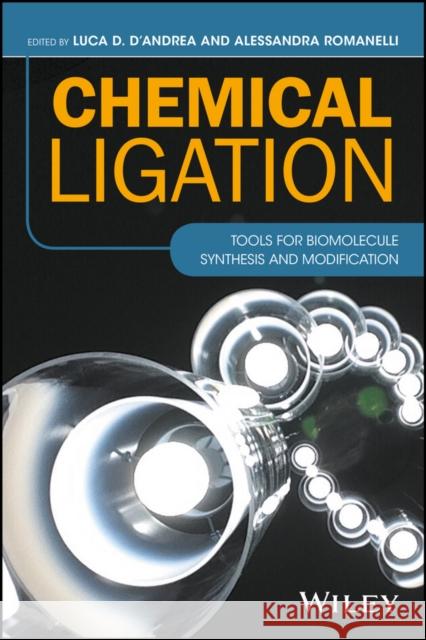
Chemical Ligation: Tools for Biomolecule Synthesis and Modification

ISBN-13: 9781119044109 / Angielski / Twarda / 2017 / 576 str.
Luca D. D′Andrea; Alessandra Romanelli
Chemical Ligation: Tools for Biomolecule Synthesis and Modification Romanelli, Alessandra 9781119044109 John Wiley & Sons - książkaWidoczna okładka, to zdjęcie poglądowe, a rzeczywista szata graficzna może różnić się od prezentowanej.

Chemical Ligation: Tools for Biomolecule Synthesis and Modification

ISBN-13: 9781119044109 / Angielski / Twarda / 2017 / 576 str.

Luca D. D′Andrea; Alessandra Romanelli
cena 871,02
(netto: 829,54 VAT:  5%)

Najniższa cena z 30 dni: 860,38
Termin realizacji zamówienia:
ok. 30 dni roboczych.

Darmowa dostawa!

Presenting a wide array of information on chemical ligation - one of the more powerful tools for protein and peptide synthesis - this book helps readers understand key methodologies and applications that protein therapeutic synthesis, drug discovery, and molecular imaging.

- Moves from fundamental to applied aspects, so that novice readers can follow the entire book and apply these reactions in the lab
- Presents a wide array of information on chemical ligation reactions, otherwise scattered across the literature, into one source
- Features comprehensive and multidisciplinary coverage that goes from basics to advanced topics
- Helps researchers choose the right chemical ligation technique for their needs

Presenting a wide array of information on chemical ligation one of the more powerful tools for protein and peptide synthesis this book helps readers understand key methodologies and applications that include protein therapeutic synthesis, drug discovery, and molecular imaging.


Kategorie:
Nauka, Chemia
Kategorie BISAC:
Science > Biochemia
Science > Biologia molekularna
Science > Chemia - Organiczna
Wydawca:
John Wiley & Sons
Język:
Angielski
ISBN-13:
9781119044109
Rok wydania:
2017
Ilość stron:
576
Waga:
0.95 kg
Wymiary:
23.88 x 14.99 x 3.56
Oprawa:
Twarda
Wolumenów:
01
Dodatkowe informacje:
Bibliografia
Wydanie ilustrowane

List of Figures xiii

List of Plates xxiii

List of Contributors xxix

Preface xxxiii

1 Introduction to Chemical Ligation Reactions 1
Lucia De Rosa, Alessandra Romanelli, and Luca Domenico D Andrea

1.1 Introduction 1

1.2 Chemical Ligation Chemistries 6

1.3 Imine Ligations 7

1.4 Serine/Threonine Ligation (STL) 21

1.5 Thioether Ligation 24

1.6 Thioester Ligation 25

1.7 Ketoacid Hydroxylamine (KAHA) Ligation 49

1.8 Staudinger Ligation 52

1.9 Azide Alkyne Cycloaddition 57

1.10 Diels Alder Ligation 61

References 64

2 Protein Chemical Synthesis by SEA Ligation 89
Oleg Melnyk, Claire Simonneau, and Jérôme Vicogne

2.1 Introduction 89

2.2 Essential Chemical Properties of SEA Group 93

2.3 Protein Total Synthesis Using SEA Chemistry SEAon/off Concept 97

2.4 Chemical Synthesis of HGF/SF Subdomains for Deciphering the Functioning of HGF/SF–MET System 106

2.5 Conclusion 114

References 114

3 Development of Serine/Threonine Ligation and Its Applications 125
Tianlu Li and Xuechen Li

3.1 Introduction 125

3.2 Serine/Threonine Ligation (STL) 130

3.3 Application of STL in Protein Synthesis 140

3.4 Conclusion and Outlook 154

References 154

4 Synthesis of Proteins by Native Chemical Ligation Desulfurization Strategies 161
Bhavesh Premdjee and Richard J. Payne

4.1 Introduction 161

4.2 Ligation Desulfurization and Early Applications 162

4.3 Beyond Native Chemical Ligation at Cysteine The Development of Thiolated Amino Acids and Their Application in Protein Synthesis 174

4.4 Ligation Deselenization in the Chemical Synthesis of Proteins 211

4.5 Conclusions and Future Directions 216

References 218

5 Synthesis of Chemokines by Chemical Ligation 223
Nydia Panitz and Annette G. Beck Sickinger

5.1 Introduction The Chemokine Chemokine Receptor Multifunctional System 223

5.2 Synthesis of Chemokines by Native Chemical Ligation 224

5.3 Synthesis of Chemokines by Alternative Chemical Ligation 231

5.4 Semisynthesis of Chemokines by Expressed Protein Ligation 233

5.5 Prospects 241

References 243

6 Chemical Synthesis of Glycoproteins by the Thioester Method 251
Hironobu Hojo

6.1 Introduction 251

6.2 Ligation Methods and Strategy of Glycoprotein Synthesis 252

6.3 The Synthesis of the Extracellular Ig Domain of Emmprin 254

6.4 Synthesis of Basal Structure of MUC2 256

6.5 N Alkylcysteine Assisted Thioesterification Method and Dendrimer Synthesis 257

6.6 Synthesis of TIM 3 260

6.7 Resynthesis of Emmprin Ig Domain 262

6.8 Conclusion 264

References 264

7 Membrane Proteins: Chemical Synthesis and Ligation 269
Marc Dittman and Martin Engelhard

7.1 Introduction 269

7.2 Methods for the Synthesis and Purification of Membrane Proteins 270

7.3 Ligation and Refolding 273

7.4 Illustrative Examples 276

References 280

8 Chemoselective Modification of Proteins 285
Xi Chen, Stephanie Voss, and Yao–Wen Wu

8.1 Chemical Protein Synthesis 285

8.2 Chemoselective and Bioorthogonal Reactions 287

8.3 Site–Selective Protein Modification Approaches 307

References 322

9 Stable, Versatile Conjugation Chemistries for Modifying Aldehyde–Containing Biomolecules 339
Aaron E. Albers, Penelope M. Drake and David Rabuka

9.1 Introduction 339

9.2 Aldehyde as a Bioorthogonal Chemical Handle for Conjugation 339

9.3 Aldehyde Conjugation Chemistries 340

9.4 The Pictet Spengler Ligation 341

9.5 The Hydrazinyl–Iso–Pictet Spengler (HIPS) Ligation 341

9.6 The Trapped–Knoevenagel (thioPz) Ligation 343

9.7 Applications Antibody Drug Conjugates 346

9.8 Next–Generation HIPS Chemistry AzaHIPS 348

9.9 Applications Protein Engineering 349

9.10 Applications Protein Labeling 349

9.11 Conclusions 351

References 351

10 Thioamide Labeling of Proteins through a Combination of Semisynthetic Methods 355
Christopher R. Walters, John J. Ferrie, and E. James Petersson

10.1 Introduction 355

10.2 Thioamide Synthesis 356

10.3 Thioamide Incorporation into Peptides 357

10.4 Synthesis of Full Sized Proteins Containing Thioamides 360

10.5 Applications 368

10.6 Conclusions 381

Acknowledgments 381

References 382

11 Macrocyclic Organo–Peptide Hybrids by Intein–Mediated Ligation: Synthesis and Applications 391
John R. Frost and Rudi Fasan

11.1 Introduction 391

11.2 Macrocyclic Organo–Peptide Hybrids as Natural–Product–Inspired Macrocycles 396

11.3 Application of MOrPHs for Targeting –Helix–Mediated Protein Protein Interactions 406

11.4 Conclusions 410

References 410

12 Protein Ligation by HINT Domains 421
Hideo Iwaï and A. Sesilja Aranko

12.1 Introduction 421

12.2 Protein Ligation by Protein Splicing 423

12.3 Naturally Occurring and Artificially Split Inteins for Protein Ligation 424

12.4 Conditional Protein Splicing 427

12.5 Inter– and Intramolecular Protein Splicing 429

12.6 Protein Ligation by Other HINT Domains 430

12.7 Bottleneck of Protein Ligation by PTS 432

12.8 Comparison with Other Enzymatic Ligation Methods 432

12.9 Perspective of Protein Ligation by HINT Domains 437

12.10 Conclusions and Future Perspectives 438

Acknowledgment 438

References 438

13 Chemical Ligation for Molecular Imaging 447
Aurélien Godinat, Hacer Karatas, Ghyslain Budin, and Elena A. Dubikovskaya

13.1 Introduction 447

13.2 Chemical Ligation 448

13.3 Conclusion 470

References 473

14 Native Chemical Ligation in Structural Biology 485
Lucia De Rosa, Alessandra Romanelli, and Luca Domenico D Andrea

14.1 Introduction 485

14.2 Protein (Semi)synthesis for Molecular Structure Determination 486

14.3 Protein (Semi)Synthesis for Understanding Protein Folding, Stability, and Interactions 494

14.4 Protein (Semi)Synthesis in Enzyme Chemistry 501 References 506

Index 517

Luca D. D′Andrea, PhD, is Research Scientist at the Institute of Biostructures and Bioimaging, CNR Naples, Italy. His scientific interests are in the field of peptide and protein chemistry. His research activity focuses on design, synthesis, and structural characterization of peptide/proteins as therapeutic/diagnostic agents.

Alessandra Romanelli, PhD, is assistant professor of General Chemistry at Department of Pharmacy, University of Naples "Federico II", Italy. She actively works in the field of peptides and peptide–based molecules (such as peptide nucleic acids) as tools for chemical biology.

Chemical biology deals with the use and development of chemical tools to solve biological problems, and chemical ligation fits within this paradigm as a set of techniques used for creating long peptide or protein chains. The practices involved represent a powerful enhancement of traditional solid–phase peptide synthesis allowing the chemical preparation of proteins, biomolecule synthesis, protein labeling or immobilization, and preparation of proteins with unnatural amino acids. These molecular tools are useful for understanding biological systems and preparing novel bio– and nanomaterials or synthetizing bioactive molecules.

Until recently restricted to use by specialized scientists, chemical ligation methods are now in widespread use across interdisciplinary research groups and to different scientific areas. There is a clear need for a single–source resource and reference about these techniques and that is where Chemical Ligation: Tools for Biomolecule Synthesis and Modification comes in.

Presenting a wide array of information on chemical ligation, this book guides readers between different chemical ligation methodologies and applications from the basics to more recent and sophisticated applications. The chapters move from the fundamental to applied aspects, so that novice readers can follow the entire book and apply these reactions in the laboratory.

The authors reserve attention for synthetic aspects, so the book also serves as a valuable reference for experimental work. Additionally, a selection of outstanding applications including protein therapeutic synthesis, drug discovery, and molecular imaging provides an overview of chemical ligation′s potential and get other scientists involved bringing new ideas and applications.


Udostępnij

Facebook - konto krainaksiazek.pl


Opinie o Krainaksiazek.pl na Opineo.pl

Partner Mybenefit

Krainaksiazek.pl w programie rzetelna firma Krainaksiaze.pl - płatności przez paypal

Czytaj nas na:

Facebook - krainaksiazek.pl
  • książki na zamówienie
  • granty
  • książka na prezent
  • kontakt
  • pomoc
  • opinie
  • regulamin
  • polityka prywatności

Zobacz:

  • Księgarnia czeska

  • Wydawnictwo Książkowe Klimaty

1997-2026 DolnySlask.com Agencja Internetowa

© 1997-2022 krainaksiazek.pl
     
KONTAKT | REGULAMIN | POLITYKA PRYWATNOŚCI | USTAWIENIA PRYWATNOŚCI
Zobacz: Księgarnia Czeska | Wydawnictwo Książkowe Klimaty | Mapa strony | Lista autorów
KrainaKsiazek.PL - Księgarnia Internetowa

Polityka prywatnosci - link
Krainaksiazek.pl - płatnośc Przelewy24
Przechowalnia Przechowalnia






