• Wyszukiwanie zaawansowane
  • Kategorie
  • Kategorie BISAC
  • Książki na zamówienie
  • Promocje
  • Granty
  • Książka na prezent
  • Opinie
  • Pomoc
  • Załóż konto
  • Zaloguj się

Bioprocessing Technology for Production of Biopharmaceuticals and Bioproducts » książka


zaloguj się | załóż konto
Logo Krainaksiazek.pl

koszyk

konto

szukaj
topmenu
Księgarnia internetowa
Szukaj
Książki na zamówienie
Promocje
Granty
Książka na prezent
Moje konto
Pomoc
 
 
Wyszukiwanie zaawansowane
Pusty koszyk
Bezpłatna dostawa dla zamówień powyżej 20 złBezpłatna dostawa dla zamówień powyżej 20 zł

Kategorie główne

• Nauka
 [2950560]
• Literatura piękna
 [1849509]

  więcej...
• Turystyka
 [71097]
• Informatyka
 [151150]
• Komiksy
 [35848]
• Encyklopedie
 [23178]
• Dziecięca
 [617388]
• Hobby
 [139064]
• AudioBooki
 [1657]
• Literatura faktu
 [228597]
• Muzyka CD
 [383]
• Słowniki
 [2855]
• Inne
 [445295]
• Kalendarze
 [1464]
• Podręczniki
 [167547]
• Poradniki
 [480102]
• Religia
 [510749]
• Czasopisma
 [516]
• Sport
 [61293]
• Sztuka
 [243352]
• CD, DVD, Video
 [3414]
• Technologie
 [219456]
• Zdrowie
 [101002]
• Książkowe Klimaty
 [124]
• Zabawki
 [2311]
• Puzzle, gry
 [3459]
• Literatura w języku ukraińskim
 [254]
• Art. papiernicze i szkolne
 [8079]
Kategorie szczegółowe BISAC

Bioprocessing Technology for Production of Biopharmaceuticals and Bioproducts

ISBN-13: 9781118361986 / Angielski / Twarda / 2018 / 288 str.
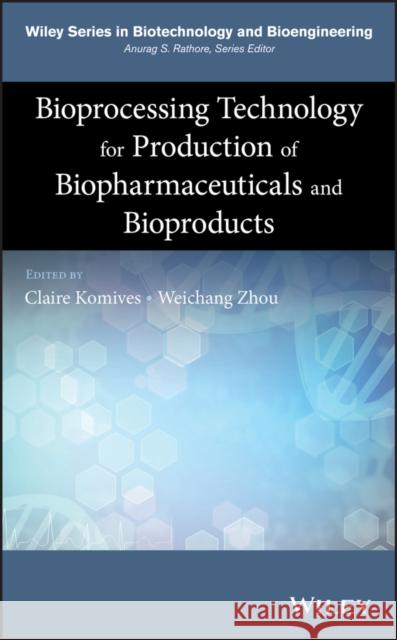
W. Zhou
Bioprocessing Technology for Production of Biopharmaceuticals and Bioproducts Zhou, W. 9781118361986 John Wiley & Sons - książkaWidoczna okładka, to zdjęcie poglądowe, a rzeczywista szata graficzna może różnić się od prezentowanej.

Bioprocessing Technology for Production of Biopharmaceuticals and Bioproducts

ISBN-13: 9781118361986 / Angielski / Twarda / 2018 / 288 str.

W. Zhou
cena 613,37
(netto: 584,16 VAT:  5%)

Najniższa cena z 30 dni: 609,59
Termin realizacji zamówienia:
ok. 30 dni roboczych
Dostawa w 2026 r.

Darmowa dostawa!

In the wake of rapid advances in genetic technologies, new products continue to be developed to help improve human health and quality of life. Summarizing state-of-the art bioprocessing methods, Novel Bioprocessing Technology for Production of Biopharmaceuticals and Bioproducts presents a concise exploration of the latest developments in bioprocessing for applications in both the biopharmaceutical and biochemical industries. Including case study reviews of six milestone byproducts, the authors provide industrial and academic researchers and development scientists and students with a wide selection of host strain types and a review disruptive bioprocess technologies.

In the wake of rapid advances in genetic technologies, new products continue to be developed to help improve human health and quality of life.


Kategorie:
Nauka, Chemia
Kategorie BISAC:
Science > Biochemia
Medical > Farmacja
Science > Biotechnology
Wydawca:
John Wiley & Sons
Seria wydawnicza:
Wiley Series in Biotechnology and Bioengineering
Język:
Angielski
ISBN-13:
9781118361986
Rok wydania:
2018
Ilość stron:
288
Waga:
0.60 kg
Wymiary:
23.5 x 15.2 x 1.9
Oprawa:
Twarda
Wolumenów:
01
Dodatkowe informacje:
Bibliografia
Wydanie ilustrowane

List of Contributors xiPart I Case Study 11 Bacillus and the Story of Protein Secretion and Production 3Giulia Barbieri, Anthony Calabria, Gopal Chotani, and Eugenio Ferrari1.1 Bacillus as a Production Host: Introduction and Historical Account 31.2 The Building of a Production Strain: Genetic Tools for B. subtilis Manipulation 51.2.1 Promoters 51.2.2 Vectors for Building a Production Strain 61.2.3 B. subtilis Competent Cell Transformation 71.2.4 Protoplasts-Mediated Manipulations 91.2.5 Genetics by Electroporation 91.3 B. subtilis Secretion Systemand Heterologous Protein Production 91.3.1 Bacillus Fermentation and Recovery of Industrial Enzyme 111.3.2 Fermentation Stoichiometry 121.3.3 Fermentor Kinetics and Outputs 141.3.4 Downstream Processing 171.4 Summary 21References 212 New Expression Systems for GPCRs 29Dimitra Gialama, Fragiskos N. Kolisis, and Georgios Skretas2.1 Introduction 292.2 Recombinant GPCR Production - Traditional Approaches for Achieving High-Level Production 392.3 Engineered Expression Systems for GPCR Production 422.3.1 Bacteria 422.3.2 Yeasts 482.3.3 Insect Cells 512.3.4 Mammalian Cells 542.3.5 Transgenic Animals 542.3.6 Cell-Free Systems 562.4 Conclusion 57References 583 Glycosylation 71Maureen Spearman, Erika Lattová, Hélène Perreault, andMichael Butler3.1 Introduction 713.2 Types of Glycosylation 723.2.1 N-linked Glycans 723.2.2 O-linked Glycans 743.3 Factors Affecting Glycosylation 763.3.1 Nutrient Depletion 763.3.2 Fed-batch Cultures and Supplements 793.3.3 Specific Culture Supplements 803.3.4 Ammonia 823.3.5 pH 823.3.6 Oxygen 833.3.7 Host Cell Systems 833.3.8 Other Factors 853.4 Modification of Glycosylation 863.4.1 siRNA and Gene Knockout/Knockin 863.4.2 Glycoprotein Processing Inhibitors and In Vitro Modification of Glycans 883.5 Glycosylation Analysis 893.5.1 Release of Glycans from Glycoproteins 903.5.2 Derivatization of Glycans 913.6 Methods of Analysis 913.6.1 Lectin Arrays 913.6.2 Liquid Chromatography 933.6.2.1 HILIC Analysis 933.6.2.2 Reversed Phase (RP) and Porous Graphitic Carbon (PGC) Chromatography 953.6.2.3 Weak Anion Exchange (WAX) HPLC Analysis 963.6.2.4 High pH Anion Exchange Chromatography with Pulsed Amperometric Detection (HPAEC-PAD) 963.6.3 Capillary Electrophoresis (CE) 973.6.4 Fluorophore-assisted Carbohydrate Electrophoresis (FACE) and CGE-LIF 993.6.5 Mass Spectrometry (MS) 1003.6.5.1 Ionization 1003.6.5.2 Derivatization Techniques Used for MS Analysis of Glycans 1023.6.5.3 Fragmentation of Carbohydrates 1033.7 Conclusion 109References 109Part II Bioreactors 1314 Bioreactors for StemCell and Mammalian Cell Cultivation 133Ana Fernandes-Platzgummer, Sara M. Badenes, Cláudia L. da Silva, and JoaquimM. S. Cabral4.1 Overview of (Mammalian and Stem) Cell Culture Engineering 1334.1.1 Cell Products for Therapeutics 1344.1.2 Cell as a Product: Stem Cells 1364.2 Bioprocess Characterization 1404.2.1 Cell Cultivation Methods 1404.2.2 Cell Metabolism 1414.2.3 Culture Medium Design 1434.2.4 Culture Parameters 1444.2.5 Culture Modes 1454.3 Cell Culture Systems 1474.3.1 Static Culture Systems 1474.3.2 Roller Bottles 1504.3.3 Spinner Flask 1504.3.4 Airlift Bioreactor 1514.3.5 Fixed/Fluidized-Bed Bioreactor 1524.3.6 Wave Bioreactor 1524.3.7 Rotating-Wall Vessel Bioreactor 1544.3.8 Stirred Tank Bioreactor 1554.3.8.1 Agitation/Shear Stress 1564.4 Cell Culture Modeling 1574.5 Case Studies 1594.5.1 Antibody Production in Bioreactor Systems 1594.5.2 mESC Expansion on Microcarriers in a Stirred Tank Bioreactor 1614.6 Concluding Remarks 162List of Symbols 163References 1645 Model-Based Technologies Enabling Optimal Bioreactor Performance 175Rimvydas Simutis, Marco Jenzsch, and Andreas Lübbert5.1 Introduction 1755.2 Basics 1765.2.1 Balances 1765.2.2 Model Identification 1775.2.3 Model-Based Process Optimization 1785.3 Examples 1805.3.1 Model-Based State Estimation 1805.3.1.1 Static Model Approach 1805.3.1.2 Dynamic Alternatives 1835.3.2 Optimizing Open Loop-Controlled Cultivations 1845.3.2.1 Robust Cultivation Profiles 1845.3.2.2 Evolutionary Modeling Approach 1885.3.3 Optimization by Model-Aided Feedback Control 1905.3.3.1 Improving the Basic Control 1905.3.3.2 Optimizing the Amount of Soluble Product 1905.3.4 CO2-Removal in Large-Scale Cell Cultures 1945.4 Conclusion 197References 1986 Monitoring and Control of Bioreactor: Basic Concepts and Recent Advances 201James Gomes, Viki Chopda, and Anurag S. Rathore6.1 Introduction 2016.2 Challenges in Bioprocess Control 2026.2.1 Process Dynamics and Modeling 2026.2.2 Limits of Hardware and Software and Their Integration 2036.2.3 Regulatory Aspects 2046.3 Basic Elements of Bioprocess Control 2056.3.1 Bioprocess Monitoring 2056.3.2 Parameter Estimators 2056.3.3 Bioprocess Modeling 2066.4 Current Practices in Bioprocess Control 2086.4.1 PID Control 2086.4.2 Model-Based Control 2096.4.3 Adaptive Control 2116.4.4 Nonlinear Control 2146.5 Intelligent Control Systems 2176.5.1 Fuzzy Control 2176.5.2 Neural Control 2196.5.3 Statistical Process Control 2226.5.4 Integrated and Plant-Wide Bioprocess Control 2246.5.5 Metabolic Control 2256.6 Summary 2266.7 Future Perspectives 227Acknowledgments 227References 227Part III Host Strain Technologies 2397 Metabolic Engineering for Biocatalyst Robustness to Organic Inhibitors 241Liam Royce and Laura R. Jarboe7.1 Introduction 2417.2 Mechanisms of Inhibition 2437.3 Mechanisms of Tolerance 2457.4 Membrane Engineering 2467.5 Evolutionary and Metagenomic Strategies for Increasing Tolerance 2517.6 Reverse Engineering of Improved Strains 2547.7 Concluding Remarks 255Acknowledgments 255References 255Index 267

Claire Komives, PhD, is a Professor in the Chemical and Materials Engineering Department at San Jose State University.  Her research interests focus on the development of low cost snake antivenom compounds. 

Weichang Zhou, PhD, is Chief Technology Officer, Biologics Development & Manufacturing at WuXi Biologics. He has previously worked at Genzyme Corporation and Merck Research Laboratories.

A guide to the latest developments in bioprocessing that can be applied in both the biopharmaceutical and biochemical industries

Bioprocessing Technology for Production of Biopharmaceuticals and Bioproducts offers a review of some current developments in bioprocessing and puts an emphasis on the effective tools and methods. With contributions from noted experts in the field, the text contains a review of six enabling technologies that cover a broad range of scientific and engineering topics. The authors include information about the history of the process and technologies used in the development of a selection of biopharmaceuticals and bioproducts.

As the authors explain, the development of new processing methods and the improvement of traditional reactors and host strains has led to recent advances in manufacturing sciences. Given these new developments, the book explores the engineering methods that can be used for large–scale applications. Bioprocessing Technology for Production of Biopharmaceuticals and Bioproducts contains the information needed to better understand both the reactor technology as well as the characteristics and specific needs of the host strains.  Host strains include primarily mammalian cells, and bacteria. This important guide:

  • Contains a concise summary of the state–of–the–art bioprocessing methods 
  • Reviews the broad spectrum of applications to a variety of life science industries 
  • Includes illustrative case studies that review six milestone bio–products 
  • Explores of a wide selection of host strain types 
  • Contains information on disruptive bioprocess technologies 

Written for industrial and academic researchers and development scientists in the life sciences industry, Bioprocessing Technology for Production of Biopharmaceuticals and Bioproducts is a guide to the tools, approaches, and useful developments in bioprocessing.


Udostępnij

Facebook - konto krainaksiazek.pl


Opinie o Krainaksiazek.pl na Opineo.pl

Partner Mybenefit

Krainaksiazek.pl w programie rzetelna firma Krainaksiaze.pl - płatności przez paypal

Czytaj nas na:

Facebook - krainaksiazek.pl
  • książki na zamówienie
  • granty
  • książka na prezent
  • kontakt
  • pomoc
  • opinie
  • regulamin
  • polityka prywatności

Zobacz:

  • Księgarnia czeska

  • Wydawnictwo Książkowe Klimaty

1997-2025 DolnySlask.com Agencja Internetowa

© 1997-2022 krainaksiazek.pl
     
KONTAKT | REGULAMIN | POLITYKA PRYWATNOŚCI | USTAWIENIA PRYWATNOŚCI
Zobacz: Księgarnia Czeska | Wydawnictwo Książkowe Klimaty | Mapa strony | Lista autorów
KrainaKsiazek.PL - Księgarnia Internetowa

Polityka prywatnosci - link
Krainaksiazek.pl - płatnośc Przelewy24
Przechowalnia Przechowalnia






