• Wyszukiwanie zaawansowane
  • Kategorie
  • Kategorie BISAC
  • Książki na zamówienie
  • Promocje
  • Granty
  • Książka na prezent
  • Opinie
  • Pomoc
  • Załóż konto
  • Zaloguj się

Bioinorganic Photochemistry » książka

zaloguj się | załóż konto
Logo Krainaksiazek.pl

koszyk

konto

szukaj
topmenu
Księgarnia internetowa
Szukaj
Książki na zamówienie
Promocje
Granty
Książka na prezent
Moje konto
Pomoc
 
 
Wyszukiwanie zaawansowane
Pusty koszyk
Bezpłatna dostawa dla zamówień powyżej 20 złBezpłatna dostawa dla zamówień powyżej 20 zł

Kategorie główne

• Nauka
 [2946350]
• Literatura piękna
 [1816154]

  więcej...
• Turystyka
 [70666]
• Informatyka
 [151172]
• Komiksy
 [35576]
• Encyklopedie
 [23172]
• Dziecięca
 [611458]
• Hobby
 [135995]
• AudioBooki
 [1726]
• Literatura faktu
 [225763]
• Muzyka CD
 [378]
• Słowniki
 [2917]
• Inne
 [444280]
• Kalendarze
 [1179]
• Podręczniki
 [166508]
• Poradniki
 [469467]
• Religia
 [507199]
• Czasopisma
 [496]
• Sport
 [61352]
• Sztuka
 [242330]
• CD, DVD, Video
 [3348]
• Technologie
 [219391]
• Zdrowie
 [98638]
• Książkowe Klimaty
 [124]
• Zabawki
 [2382]
• Puzzle, gry
 [3525]
• Literatura w języku ukraińskim
 [259]
• Art. papiernicze i szkolne
 [7107]
Kategorie szczegółowe BISAC

Bioinorganic Photochemistry

ISBN-13: 9781405161725 / Angielski / Twarda / 2009 / 398 str.
Grazyna Stochel
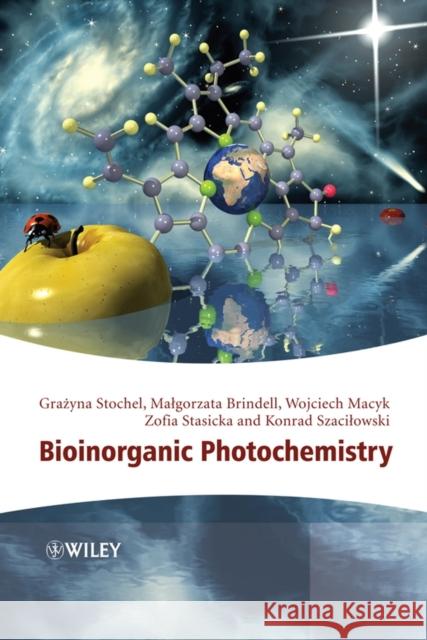
Bioinorganic Photochemistry Grazyna Stochel 9781405161725 John Wiley & Sons - książkaWidoczna okładka, to zdjęcie poglądowe, a rzeczywista szata graficzna może różnić się od prezentowanej.

Bioinorganic Photochemistry

ISBN-13: 9781405161725 / Angielski / Twarda / 2009 / 398 str.

Grazyna Stochel
cena 809,15
(netto: 770,62 VAT:  5%)

Najniższa cena z 30 dni: 799,27
Termin realizacji zamówienia:
ok. 30 dni roboczych.

Darmowa dostawa!

Bioinorganic photochemistry is a rapidly evolving field integrating inorganic photochemistry with biological, medical and environmental sciences. The interactions of light with inorganic species in natural systems, and the applications in artificial systems of medical or environmental importance, form the basis of this challenging inter-disciplinary research area. Bioinorganic Photochemistry provides a comprehensive overview of the concepts and reactions fundamental to the field, illustrating important applications in biological, medical and environmental sciences. Topics covered include:

  • Cosmic and environmental photochemistry
  • Photochemistry of biologically relevant nanoassemblies
  • Molecular aspects of photosynthesis
  • Photoinduced electron transfer in biosystems
  • Modern therapeutic strategies in photomedicine
The book concludes with an outlook for the future of environmental protection, discussing emerging techniques in the field of pollution abatement, and the potential for bioinorganic photochemistry as a pathway to developing cheap, environmentally friendly sources of energy. Written as an authoritative guide for researchers involved in the development of bioinorganic photochemical processes, Bioinorganic Photochemistry is also accessible to scientists new to the field, and will be a key reference source for advanced courses in inorganic, and bioinorganic chemistry.

Kategorie:
Nauka, Chemia
Kategorie BISAC:
Science > Biochemia
Science > Chemia - Nieorganiczna
Wydawca:
John Wiley & Sons
Język:
Angielski
ISBN-13:
9781405161725
Rok wydania:
2009
Ilość stron:
398
Waga:
0.99 kg
Wymiary:
24.89 x 17.27 x 2.54
Oprawa:
Twarda
Wolumenów:
01
Dodatkowe informacje:
Bibliografia
Wydanie ilustrowane

"Overall Bioinorganic Photochemistry presents a broad, qualitative overview of photochemical topics largely focused on the interface of inorganic chemistry with biological, medical, and environmental issues. The book will be of interest to those working in the field who are interested in surveying how photochemistry is applied in a variety of biologically relevant areas." ( Journal of the American Chemistry Society, October 2009)

Part I. Introduction 1. Philosophy of bioinorganic photochemistry

Part II. Fundamentals

2. Light and matter

2.1. Nature of light

2.2. Accessible light sources

2.3. Interaction between light and matter

3. Formation and properties of electronic excited states

3.1. Wave mechanics and quantum numbers

3.2. Electronic excitation

4. Photophysical deactivation of electronic excited states

4.1. Spontaneous deactivation

4.2. Quenching

4.3. Coordination and organometallic compounds

5. Kinetics of the excited–state decay

6. Photochemical reactions

6.1.Photochemical reaction channels

6.2. Intramolecular photoreactions

6.3. Intermolecular photoreactions

6.4. The coordination compound specificity

6.5. Photosensitization

6.6. Homogeneous photocatalysis

7. Photochemistry and photophysics of supramolecular systems and nanoassemblies

7.1. From molecules through clusters to crystals

7.2. Metallic nanoparticles: metals in the embryonic state

7.3. Formation and decay of the excited states of semiconductors

Part III. Natural photoprocesses involving inorganic compounds

8. From interstellar space to planetary atmospheres

8.1. Homogeneous systems: From interstellar space to planetary atmospheres and primitive soup models

8.2. Heterogeneous photochemistry in ice phases

9. Solar radiation and terrestrial environment

9.1. Solar radiation

9.2. Atmospheric photochemistry

9.3. Photochemistry in hydrosphere and lithosphere

9.4. Photochemical self–cleaning in the environment

10. Heretogeneous (photo)catalysis and biogenesis on Earth

10.1. (Photo)catalysis on chalcogenide semiconductors

10.2. Photocatalytic nitrogen fixation

10.3. Photocatalytic carbon dioxide fixation

10.4. Fossils of prebiotic catalysts: metal clusters in active centres of metalloenzymes

11. Foundation and evolution of photosynthesis

11.1. Photosynthetic structures

11.2. Oxygenic photosynthesis

11.3. Light harvesting antennas (LHC)

11.4. Electron transfer pathways in PSII and PSI

11.5. Oxygen evolving complex, OEC

Part IV. Photochemistry and photophysics in bioinspired systems. Studies and modeling

12. Photoenzymes

12.1. Natural photoenzymes

12.2. Modified natural proteins/enzymes

12.3. Artificial photoenzymes

12.4. Towards mimicking the photosynthetic processes

13. Photoinduced electron transfer in proteins

13.1. Photochemical methodology

13.2. Biochemical applications

14. Nucleic acids photocleavage and charge transport

14.1. Mechanisms and strategies for advanced metallophotocleavers

14.2. Photoinduced DNA–mediated charge transport

Part V. Towards applications

15. Light and biomatter (molecules, cells and tissues)

16. Fluorescent and chromogenic sensing and labeling

16.1. Cations as targets in biochemical sensing

16.2. Fluorescent and chromogenic sensing of anions

16.3. Optical detection of neutral molecules

16.4. Nanoparticles in biochemical sensing and labeling

17. Therapeutic strategies

17.1. Photobiostimulation

17.2. Photoactivation of drugs

17.3. Photodynamic therapy

17.4. Nanomedicine methods

18. Photodynamic inactivation

19. Photodelivery and phototargeting

20. Phototoxicity and photoprotection

20.1. Chemical and physical photoprotection

20.2. Inorganic sunscreens

21. Photocatalysis in the environmental protection

21.1. Development of homo– and heterogeneous methods

21.2. Homogeneous photocatalysis

21.2. Heterogeneous systems

21.3.New ideas in pollution abatement

Dr Grazyna Stochel, Deputy Dean, Faculty of Chemistry, Jagiellonian University, Cracow, Poland

The majority of enzymes in living cells rely on the presence of a central metal ion or ions, and similarly about 30% of all proteins are metalloproteins, where metals ions sit at the heart of an organic protein matrix. These metal ions are critical to the structure, stability and function of the protein or enzyme, to the point that without them, many biological processes would not be possible.

Bioinorganic photochemistry seeks to understand the interaction of these enzymes and proteins with light, and represents a significant challenge to chemists in many areas. For example, the most familiar reaction in this area is photosynthesis, with the development of artificial photosynthesis a significant challenge for chemists. An improved understanding of bioinorganic photochemistry also offers the hope of developing improved photodynamic therapies and photocatalytic reactions.

Bioinorganic photochemistry provides a thorough overview of this important and exciting area of research, covering the fundamental principles and concepts, and illustrating the applications in biological, medical, and environmental science.

Written as an authoritative guide all those involved in the investigation or development of bioinorganic photochemical processes, the book will also be a key reference source for advanced courses in inorganic chemistry.


Udostępnij

Facebook - konto krainaksiazek.pl


Opinie o Krainaksiazek.pl na Opineo.pl

Partner Mybenefit

Krainaksiazek.pl w programie rzetelna firma Krainaksiaze.pl - płatności przez paypal

Czytaj nas na:

Facebook - krainaksiazek.pl
  • książki na zamówienie
  • granty
  • książka na prezent
  • kontakt
  • pomoc
  • opinie
  • regulamin
  • polityka prywatności

Zobacz:

  • Księgarnia czeska

  • Wydawnictwo Książkowe Klimaty

1997-2026 DolnySlask.com Agencja Internetowa

© 1997-2022 krainaksiazek.pl
     
KONTAKT | REGULAMIN | POLITYKA PRYWATNOŚCI | USTAWIENIA PRYWATNOŚCI
Zobacz: Księgarnia Czeska | Wydawnictwo Książkowe Klimaty | Mapa strony | Lista autorów
KrainaKsiazek.PL - Księgarnia Internetowa

Polityka prywatnosci - link
Krainaksiazek.pl - płatnośc Przelewy24
Przechowalnia Przechowalnia








