• Wyszukiwanie zaawansowane
  • Kategorie
  • Kategorie BISAC
  • Książki na zamówienie
  • Promocje
  • Granty
  • Książka na prezent
  • Opinie
  • Pomoc
  • Załóż konto
  • Zaloguj się

Biochemistry of Dioxygen » książka


zaloguj się | załóż konto
Logo Krainaksiazek.pl

koszyk

konto

szukaj
topmenu
Księgarnia internetowa
Szukaj
Książki na zamówienie
Promocje
Granty
Książka na prezent
Moje konto
Pomoc
 
 
Wyszukiwanie zaawansowane
Pusty koszyk
Bezpłatna dostawa dla zamówień powyżej 20 złBezpłatna dostawa dla zamówień powyżej 20 zł

Kategorie główne

• Nauka
 [2946600]
• Literatura piękna
 [1856966]

  więcej...
• Turystyka
 [72221]
• Informatyka
 [151456]
• Komiksy
 [35826]
• Encyklopedie
 [23190]
• Dziecięca
 [619653]
• Hobby
 [140543]
• AudioBooki
 [1577]
• Literatura faktu
 [228355]
• Muzyka CD
 [410]
• Słowniki
 [2874]
• Inne
 [445822]
• Kalendarze
 [1744]
• Podręczniki
 [167141]
• Poradniki
 [482898]
• Religia
 [510455]
• Czasopisma
 [526]
• Sport
 [61590]
• Sztuka
 [243598]
• CD, DVD, Video
 [3423]
• Technologie
 [219201]
• Zdrowie
 [101638]
• Książkowe Klimaty
 [124]
• Zabawki
 [2473]
• Puzzle, gry
 [3898]
• Literatura w języku ukraińskim
 [254]
• Art. papiernicze i szkolne
 [8170]
Kategorie szczegółowe BISAC

Biochemistry of Dioxygen

ISBN-13: 9781461295013 / Angielski / Miękka / 2011 / 300 str.
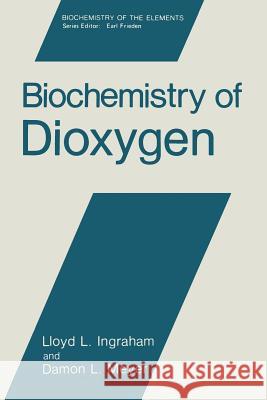
Lloyd L. Ingraham; Damon L. Meyer; Lloyd L. Ingraham
Biochemistry of Dioxygen Lloyd L Damon L Lloyd L. Ingraham 9781461295013 Springer - książkaWidoczna okładka, to zdjęcie poglądowe, a rzeczywista szata graficzna może różnić się od prezentowanej.

Biochemistry of Dioxygen

ISBN-13: 9781461295013 / Angielski / Miękka / 2011 / 300 str.

Lloyd L. Ingraham; Damon L. Meyer; Lloyd L. Ingraham
cena 403,47 zł
(netto: 384,26 VAT:  5%)

Najniższa cena z 30 dni: 385,52 zł
Termin realizacji zamówienia:
ok. 22 dni roboczych
Bez gwarancji dostawy przed świętami

Darmowa dostawa!

This book is written for the research biochemist who needs to know more about the particular field of dioxygen metabolism, whether this be for designing lectures for a graduate level course or for his or her own research needs. We hope researchers in a given area of dioxygen metabolism will gain knowledge of related fields of dioxygen metabolism. We have decided to use the term dioxygen to distinguish molecular oxygen from divalent oxygen in water and organic compounds, dioxygen being a simpler term than molecular oxygen. We do not intend to review the metabolism of all compounds that contain oxygen, since this would include all of biochemistry. An understanding of dioxygen chemistry is essential to the discussion of the biochemistry of dioxygen. While this statement could be made about any biochemical constituent, the chemistry of dioxygen is so unusual that interpre- tations without detailed chemical background are futile. Prediction of dioxygen reaction products by analogy with other oxidants is impossible. The partial reduction products of dioxygen, superoxide ion and peroxides, develop naturally in the chemistry of dioxygen. It would be difficult to discuss dioxygen biochemistry without first discussing these partial reduction products.


Kategorie:
Nauka, Chemia
Kategorie BISAC:
Gardening > General
Science > Biochemia
Science > Chemia - Fizyczna
Wydawca:
Springer
Seria wydawnicza:
Biochemistry of the Elements
Język:
Angielski
ISBN-13:
9781461295013
Rok wydania:
2011
Wydanie:
Softcover Repri
Numer serii:
000186252
Ilość stron:
300
Waga:
0.47 kg
Wymiary:
23.5 x 15.5
Oprawa:
Miękka
Wolumenów:
01
Dodatkowe informacje:
Wydanie ilustrowane

1. Introduction.- 1.1 Chemical Reactions of Dioxygen.- 1.2 Biological Reactions of Dioxygen.- 1.3 Reduction Products of Dioxygen.- 1.4 Dioxygen Enzymes.- 1.5 Oxygen-17 Nuclear Magnetic Resonance Spectroscopy of Oxygen.- References.- 2. Ground-State Dioxygen.- 2.1 Properties of Dioxygen.- 2.2 Reactions of Dioxygen.- 2.3 Chain Reactions of Dioxygen.- 2.4 Examples of Dioxygen Chain Reactions.- References.- 3. Singlet Dioxygen.- 3.1 Physical Properties and Generation.- 3.2 Detection of Singlet Dioxygen.- 3.3 Organic Reactions of Singlet Dioxygen.- 3.4 Singlet Dioxygen-Tocopherol Reaction.- 3.5 Metathesis.- 3.6 Phototaxis.- 3.7 Singlet Sigma Dioxygen.- Summary.- References.- 4. Superoxide Ion.- 4.1 Properties, Sources, and Stability.- 4.2 Detection of Superoxide Ion.- 4.3 Haber-Weiss Reaction.- 4.4 Detection of -OH Radicals.- 4.5 Reactions of Superoxide Ion with Organic Compounds.- 4.6 Superoxide Dismutase.- References.- 5. Dialkyl Peroxides.- 5.1 Introduction.- 5.2 Naturally Occurring Dialkyl Peroxides other than Prostaglandin Intermediates.- 5.3 Prostaglandin.- References.- 6. Catalases and Peroxidases.- 6.1 Catalase.- 6.2 Peroxidase.- 6.3 Mechanisms of Catalase and Peroxidase.- 6.4 Chloroperoxidase.- 6.5 Glutathione Peroxidase.- References.- 7. Dioxygen as a Terminal Oxidant and the Formation of Dioxygen.- 7.1 Fitness of Dioxygen as a Terminal Oxidant.- 7.2 Formation of Dioxygen.- References.- 8. Metal-Dioxygen Complexes.- 8.1 Metal-Dioxygen Bonding.- 8.2 Activation of Dioxygen.- 8.3 Classification of Metal-Dioxygen Complexes.- 8.4 Bonding vs. Oxidation.- References.- 9. Biological Iron Dioxygen Carriers.- 9.1 Hemoglobin and Myoglobin.- 9.2 Hemoglobin Models.- 9.3 Hemerythrin.- References.- 10. Hemocyanin: A Biological Copper Dioxygen Carrier.- 10.1 General Properties.- 10.2 Hemocyanin Models.- References.- 11. Oxidases.- 11.1 Introduction.- 11.2 Laccase.- 11.3 Ceruloplasmin.- 11.4 Ascorbic Acid Oxidase.- 11.5 Amine Oxidases.- 11.5.1 Monoamine Oxidase—Copper Enzyme.- 11.5.2 Monoamine Oxidase—Flavin Enzyme.- 11.5.3 Diamine Oxidase.- 11.6 Galactose Oxidase.- 11.7 Cytochrome Oxidase.- 11.8 Xanthine Oxidase.- 11.9 D-Amino Acid Oxidase.- 11.10 Glucose Oxidase.- 11.11 Lactate Oxidase.- References.- 12. Flavin Monooxygenases.- 12.1 Introduction.- 12.2 Salicylate Hydroxylase.- 12.3 m-Hydroxybenzoate Hydroxylase.- 12.4 m-Hydroxybenzoate 4-Hydroxylase.- 12.5 p-Hydroxybenzoate Hydroxylase.- 12.6 Melilotic Hydroxylase.- 12.7 Phenol Hydroxylase.- 12.8 Orcinol Hydroxylase.- 12.9 Kynurenine 3-Hydroxylase.- 12.10 Imidazoylacetate Monooxygenase.- 12.11 Amine Oxidase.- 12.12 p-Cresol Methyl Hydroxylase.- 12.13 Mechanisms of Hydroxylation.- 12.14 Baeyer-Villiger Enzymes.- 12.15 Lactic Monooxygenase.- 12.16 Lysine Monooxygenase.- 12.17 Arginine Monooxygenase.- 12.18 Oxalic Acid Oxidase.- 12.19 Mechanism of Oxidative Decarboxylation.- References.- 13. Pterin Monooxygenases.- 13.1 Introduction.- 13.2 Phenylalanine Hydroxylase.- 13.3 Tyrosine Hydroxylase.- References.- 14. Copper Hydroxylases.- 14.1 Tyrosine.- 14.2 Dopamine-?-Hydroxylase.- References.- 15. Cytochrome P-450.- 15.1 Properties.- 15.2 Reaction Mechanisms.- 15.3 Model Studies.- 15.4 Oxides and Amine Dealkylation.- References.- 16. Other Iron Monooxygenases.- 16.1 Heme Oxidation.- 16.2 Tryptophan Side-Chain Oxidation.- 16.3 Indolyl-l,3-alkane ?-Hydroxylase.- References.- 17. Ribulose Bisphosphate Oxygenase.- 17.1 Introduction.- 17.2 Chemical Analysis.- 17.3 Effectors and Inhibitors.- 17.4 Reaction Mechanism.- References.- 18. Dioxygenases.- 18.1 Lipoxygenase.- 18.2 Lipoxygenase Mechanism.- 18.3 Other Lipoxygenases.- 18.4 Prostaglandin Synthetase.- 18.5 Pyrrolases.- 18.6 Tryptophan Dioxygenase.- 18.7 Indoleamine 2,3-Dioxygenase.- 18.8 Intradiol and Extradiol Pyrrolases.- 18.8.1 Intradiol Pyrrolases.- 18.8.2 Extradiol Pyrrolases.- 18.9 ?-Keto-Acid-Dependent Hydroxylases.- 18.10 2-Methyl-3-hydroxy-5-carboxy-pyridine Dioxygenase.- 18.11 Quercetinase.- 18.12 Benzene Dioxygenase.- References.- 19. Bioluminescence.- 19.1 General Concepts.- 19.2 Firefly Bioluminescence.- 19.3 Cypridina Bioluminescence.- 19.4 Bacterial Bioluminescence.- 19.5 Limpet Bioluminescence.- 19.6 Centipede Bioluminescence.- References.- 20. Dioxygen Toxicity.- 20.1 Introduction.- 20.2 Superoxide Toxicity.- 20.3 Measurement of Lipid Oxidation.- 20.4 Cytotoxic Compounds.- 20.5 Beneficial Functions of Dioxygen.- References.- 21. Further Chemistry of Singlet Dioxygen.- 21.1 A Word of Explanation.- 21.2 Reaction of Singlet Dioxygen with Olefins to Form Allylic Hydroperoxides.- 21.3 Concerted Cyclic Transition State Hypothesis in Allylic Hydroperoxides.- 21.4 Perepoxide Hypothesis.- 21.5 Diradical Hypothesis.- 21.6 An Alternative Hypothesis for Allylic Hydroperoxide Formation.- 21.7 Reaction of Singlet Dioxygen with ?,?-Unsaturated Diketones.- 21.8 Reaction of Singlet Dioxygen with Strained Acetylene.- References.


Udostępnij

Facebook - konto krainaksiazek.pl


Opinie o Krainaksiazek.pl na Opineo.pl

Partner Mybenefit

Krainaksiazek.pl w programie rzetelna firma Krainaksiaze.pl - płatności przez paypal

Czytaj nas na:

Facebook - krainaksiazek.pl
  • książki na zamówienie
  • granty
  • książka na prezent
  • kontakt
  • pomoc
  • opinie
  • regulamin
  • polityka prywatności

Zobacz:

  • Księgarnia czeska

  • Wydawnictwo Książkowe Klimaty

1997-2025 DolnySlask.com Agencja Internetowa

© 1997-2022 krainaksiazek.pl
     
KONTAKT | REGULAMIN | POLITYKA PRYWATNOŚCI | USTAWIENIA PRYWATNOŚCI
Zobacz: Księgarnia Czeska | Wydawnictwo Książkowe Klimaty | Mapa strony | Lista autorów
KrainaKsiazek.PL - Księgarnia Internetowa

Polityka prywatnosci - link
Krainaksiazek.pl - płatnośc Przelewy24
Przechowalnia Przechowalnia






