• Wyszukiwanie zaawansowane
  • Kategorie
  • Kategorie BISAC
  • Książki na zamówienie
  • Promocje
  • Granty
  • Książka na prezent
  • Opinie
  • Pomoc
  • Załóż konto
  • Zaloguj się

Supercritical Fluid Processing of Food and Biomaterials » książka


zaloguj się | załóż konto
Logo Krainaksiazek.pl

koszyk

konto

szukaj
topmenu
Księgarnia internetowa
Szukaj
Książki na zamówienie
Promocje
Granty
Książka na prezent
Moje konto
Pomoc
 
 
Wyszukiwanie zaawansowane
Pusty koszyk
Bezpłatna dostawa dla zamówień powyżej 20 złBezpłatna dostawa dla zamówień powyżej 20 zł

Kategorie główne

• Nauka
 [2944077]
• Literatura piękna
 [1814251]

  więcej...
• Turystyka
 [70679]
• Informatyka
 [151074]
• Komiksy
 [35590]
• Encyklopedie
 [23169]
• Dziecięca
 [611005]
• Hobby
 [136031]
• AudioBooki
 [1718]
• Literatura faktu
 [225599]
• Muzyka CD
 [379]
• Słowniki
 [2916]
• Inne
 [443741]
• Kalendarze
 [1187]
• Podręczniki
 [166463]
• Poradniki
 [469211]
• Religia
 [506887]
• Czasopisma
 [481]
• Sport
 [61343]
• Sztuka
 [242115]
• CD, DVD, Video
 [3348]
• Technologie
 [219293]
• Zdrowie
 [98602]
• Książkowe Klimaty
 [124]
• Zabawki
 [2385]
• Puzzle, gry
 [3504]
• Literatura w języku ukraińskim
 [260]
• Art. papiernicze i szkolne
 [7151]
Kategorie szczegółowe BISAC

Supercritical Fluid Processing of Food and Biomaterials

ISBN-13: 9781461359074 / Angielski / Miękka / 2011 / 257 str.
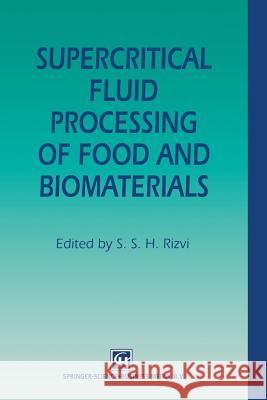
S. S. H. Rizvi
Supercritical Fluid Processing of Food and Biomaterials S. S. H. Rizvi 9781461359074 Springer - książkaWidoczna okładka, to zdjęcie poglądowe, a rzeczywista szata graficzna może różnić się od prezentowanej.

Supercritical Fluid Processing of Food and Biomaterials

ISBN-13: 9781461359074 / Angielski / Miękka / 2011 / 257 str.

S. S. H. Rizvi
cena 201,24
(netto: 191,66 VAT:  5%)

Najniższa cena z 30 dni: 192,74
Termin realizacji zamówienia:
ok. 22 dni roboczych.

Darmowa dostawa!

The need for understanding the fundamentals of supercritical fluid processing and their applications to ever-widening ranges of materials and conditions continues to expand. There has been much interest in the use of supercritical fluids as solvents in bioprocessing of food and related materials. Admittedly, a few successful applications of supercritical fluids could be cited but these are minuscule in comparison with the potential applications as yet undeveloped and unexploited. This volume is based on the papers presented at the symposium on Super- critical fluid processing of biomaterials: Basics of process design and applications organized during the 8th World Congress of Food Science and Technology held in Toronto, Sept. 29-0ct. 4, 1991. The coverage represents the breadth of interest in this field around the world. I am indeed indebted to the authors who so willingly brought their work to the symposium and provided revised manuscripts of their papers for publication. I would also like to acknowledge the assistance of Professor M. LeMaguer of the University of Guelph for co-chairing the symposium., The organization and successful completion of the symposium and the production of this volume is due to the assistance of the Technical Program Committee of the Congress and the cooperation of many people. I express my appreciation to them all. S. S. H.


Kategorie:
Technologie
Kategorie BISAC:
Technology & Engineering > Food Science - General
Cooking > General
Wydawca:
Springer
Język:
Angielski
ISBN-13:
9781461359074
Rok wydania:
2011
Wydanie:
Softcover Repri
Ilość stron:
257
Waga:
0.39 kg
Wymiary:
23.39 x 15.6 x 1.47
Oprawa:
Miękka
Wolumenów:
01

1 Fundamentals of processing with supercritical fluids.- Abstract.- 1.1 Introduction.- 1.2 Phase equilibrium and solubility.- 1.2.1 Measurement.- 1.2.2 Theory.- 1.3 Mass transfer operation and economics.- 1.3.1 Theory.- 1.3.2 Scale-up.- 1.3.3 Economics.- 1.4 Biochemical reactions in supercritical fluids.- References.- 2 Carbon dioxide as a supercritical solvent in fatty acid refining: theory and practice.- Abstract.- 2.1 Introduction.- 2.2 Phase equilibria.- 2.3 A case study.- 2.4 Mass transfer.- 2.5 Continuous multistage simulation.- 2.6 Conclusions.- Acknowledgements.- References.- 3 Mass transfer phenomena in supercritical carbon dioxide extraction for production of spice essential oils.- Abstract.- 3.1 Introduction.- 3.2 Theory.- 3.3 Materials and methods.- 3.4 Results and discussion.- References.- 4 Biochemical reactions in supercritical fluids.- Abstract.- 4.1 Introduction.- 4.2 Acidolysis reaction.- 4.3 Materials and methods.- 4.3.1 Reactor.- 4.3.2 Reaction conditions.- 4.3.3 Materials.- 4.3.4 Analysis.- 4.4 Results and discussion.- 4.4.1 Steady state.- 4.4.2 Effect of water.- 4.4.3 Effect of temperature and pressure.- 4.5 Conclusions.- Acknowledgements.- References.- 5 Use of semi-preparative supercritical chromatography for the separation and isolation of flavor and food constituents.- Abstract.- 5.1 Introduction.- 5.2 Materials and methods.- 5.3 Results and discussion.- 5.4 Conclusion.- References.- 6 Separation of oil from fried chips by a supercritical extraction process: an overview of bench-scale test experience and process economics.- Abstract.- 6.1 Introduction.- 6.2 Background.- 6.2.1 High-value, low-volume product.- 6.2.2 Intermediate-value, intermediate-volume product.- 6.2.3 Low-value, high-volume product.- 6.3 Laboratory-scale study of LOWCA process.- 6.3.1 Experimental.- 6.3.2 Apparatus.- 6.3.3 Procedure.- 6.4 Results and discussion.- 6.4.1 Effect of extraction time.- 6.4.2 Effect of pressure.- 6.4.3 Effect of temperature.- 6.4.4 Effect of type of feedstock.- 6.4.5 Effect of CO2 flow rate.- 6.4.6 Physical characteristics of oil-reduced chips and extracted oil.- 6.5 Conceptual design and cost study of LOWCA process.- 6.5.1 LOWCA process flowsheet.- 6.5.2 Cost estimate.- 6.5.3 Estimation of price for LOWCA-processed chips.- 6.5.4 Economic analysis.- 6.6 Technology penetration issues.- 6.7 Conclusions.- Acknowledgements.- References.- 7 Selecting a pump for supercritical fluid service.- Abstract.- 7.1 Introduction.- 7.2 Fluid criteria.- 7.2.1 Lubricity.- 7.2.2 Thermodynamic and thermophysical properties.- 7.2.3 Materials compatibility.- 7.3 Process criteria.- 7.3.1 Flow rate.- 7.3.2 Discharge pressure.- 7.3.3 Differential pressure.- 7.3.4 Net positive suction head.- 7.3.5 Safety and operability.- 7.4 Pump types.- 7.4.1 Positive displacement reciprocating pumps.- 7.4.2 Centrifugal pumps.- 7.5 Applications and selections.- 8 Natural antioxidants produced by supercritical extraction.- Abstract.- 8.1 Introduction.- 8.2 Traditional antioxidants.- 8.2.1 Synthetic antioxidants.- 8.2.2 Natural antioxidants.- 8.3 Spice antioxidant compounds.- 8.4 Extraction of spice antioxidants.- 8.5 Supercritical extraction.- 8.6 Labex™ spice oleoresin SC™.- 8.7 Analytical.- 8.8 Summary.- References.- 9 Separation of ethanol/water solution with supercritical CO2 in the presence of a membrane.- Abstract.- 9.1 Introduction.- 9.2 Materials and methods.- 9.3 Results and discussion.- 9.4 Conclusions.- Nomenclature.- References.- 10 Supercritical fluid fractionation of butter oil.- Abstract.- 10.1 Introduction.- 10.2 Materials and methods.- 10.2.1 Apparatus.- 10.2.2 Analytical methods.- 10.3 Results.- 10.3.1 Influence of process parameters on extraction yield.- 10.3.2 Fractionation of triglycerides.- 10.3.3 Reduction in cholesterol content.- 10.3.4 Melting properties of extraction products.- 10.4 Conclusion.- References.- 11 Supercritical carbon dioxide processing of orange juice: effects on pectinesterase, microbiology and quality attributes.- Abstract.- 11.1 Introduction.- 11.1.1 Conventional applications of SC-CO2 to citrus processing.- 11.1.2 Unconventional applications of SC-CO2 to citrus processing.- 11.2 Materials and methods.- 11.2.1 Orange juice.- 11.2.2 Experimental design.- 11.2.3 Supercritical equipment.- 11.2.4 Thermal inactivation of PE.- 11.2.5 Combined thermal and supercritical inactivation of PE.- 11.2.6 Pectinesterase activity determination.- 11.2.7 Effect of storage on PE and cloud of SC-CO2 treated orange juice.- 11.2.8 pH and °Brix measurement.- 11.2.9 Cloud measurement.- 11.2.10 Ascorbic acid and total acidity measurement.- 11.2.11 Color measurement.- 11.2.12 Microbiological studies.- 11.2.13 Sensory evaluations.- 11.3 Results and discussion.- 11.3.1 Thermal inactivation of PE.- 11.3.2 Combined thermal and supercritical inactivation of PE.- 11.3.3 Effect of SC-CO2 on PE activity and cloud stability during storage at 4.4°C.- 11.3.4 Effect of SC-CO2 on pH and total soluble solids (°Brix).- 11.3.5 Effect of SC-CO2 on cloud.- 11.3.6 Effect of SC-CO2 on total acidity and ascorbic acid.- 11.3.7 Effect of SC-CO2 on color.- 11.3.8 Effects on total microbial plate count.- 11.3.9 Sensory evaluation tests.- 11.4 Summary and conclusions.- Acknowledgements.- References.- 12 Supercritical fluid carbon dioxide technology for extraction of spices and other high value bio-active compounds.- Abstract.- 12.1 Introduction.- 12.2 Pepper oil.- 12.3 Pepper oleoresin.- 12.4 Ginger oil.- 12.5 Ginger oleoresin.- 12.6 Jasmine absolute.- 12.7 Bio-active compounds.- 12.7.1 Fatty alcohols from saponified rice bran wax.- 12.7.2 Down stream processing in bio-technological applications.- 12.7.3 Vanilla absolute.- 12.8 Summary.- References.- 13 Extraction of oil from evening primrose seed with supercritical carbon dioxide.- Abstract.- 13.1 Introduction.- 13.2 Experiments.- 13.2.1 Materials.- 13.2.2 Apparatus and procedures for measuring solubility.- 13.2.3 Apparatus and procedures for extraction.- 13.3 Results and discussion.- 13.3.1 Solubility of evening primrose oil in compressed carbon dioxide.- 13.3.2 Extraction of oil from evening primrose seed.- 13.3.3 Prediction of extraction rate.- 13.3.4 Comparison with n-hexane extraction.- 13.4 Conclusions.- Nomenclature.- References.- 14 High pressure extraction of organics from water.- Abstract.- 14.1 Introduction.- 14.2 Apparatus and methods.- 14.3 High pressure extraction of water solutions.- 14.4 Results and discussion.- 14.4.1 Supercritical extraction of pesticides from water.- 14.4.2 Ethanol/water/CO2.- 14.4.3 Propanol/water/CO2.- 14.5 Conclusion.- Nomenclature.- References.- 15 Production of low-fat and low-cholesterol foodstuffs or biological products by supercritical CO2 extraction: processes and applications.- Abstract.- 15.1 Introduction.- 15.2 General process.- 15.3 Food products: defatting applications.- 15.4 Food products: defatting and decholesterol applications.- 15.5 Biological products: decholesterol applications.- References.- 16 Fractionation of beef tallow with supercritical CO2.- Abstract.- 16.1 Introduction.- 16.2 Materials and experimental methods.- 16.2.1 Supercritical fluid extraction (SFE).- 16.2.2 Determination of cholesterol content.- 16.2.3 Determination of fatty acid content.- 16.2.4 Differential scanning calorimetry of lipid samples.- 16.3 Results and discussion.- 16.3.1 Single-pass SFE.- 16.3.2 Use of the multiple separators.- 16.4 Conclusions.- Acknowledgements.- References.- 17 Supercritical CO2 extraction of oil from a seaweed, Palmaria palmata.- Abstract.- 17.1 Introduction.- 17.2 Materials and methods.- 17.2.1 Material.- 17.2.2 Extraction system.- 17.2.3 Extraction procedure.- 17.2.4 Analysis of extract.- 17.3 Results and discussion.- 17.4 Conclusion.- Acknowledgements.- References.- 18 Commercial feasibility of supercritical extraction plant for making reduced-calorie peanuts.- Abstract.- 18.1 Introduction.- 18.2 Market potential for reduced-calorie peanuts.- 18.3 Plant and process design criteria.- 18.3.1 Design considerations.- 18.3.2 The extraction process.- 18.4 Commercial viability.- 18.4.1 Basic assumptions.- 18.4.2 Capacity and cost assumptions.- 18.4.3 Policy assumptions.- 18.4.4 Cost and revenue assumptions.- 18.4.5 Measures of profitability.- 18.5 Results of feasibility analysis.- 18.5.1 Base case scenario.- 18.5.2 Sensitivity analysis.- 18.5.3 Considerations for plant location.- 18.6 Economic considerations.- 18.7 Conclusions.- Appendix: Measures of profitability.- References.- 19 In situ monitoring of selective extraction of a mixture of higher fatty acids with supercritical carbon dioxide.- Abstract.- 19.1 Introduction.- 19.2 Materials and methods.- 19.2.1 SFE SFC/FTIR system.- 19.2.2 IR flow cell.- 19.2.3 Chemicals.- 19.3 Results and discussion.- 19.3.1 IR spectra for SC-CO2.- 19.3.2 Solubilities determined spectroscopically.- 19.3.3 In situ observation of separation behavior.- 19.3.4 Correlation by model.- References.

Rizvi, S. S. H. Rizvi is Professor of Food Process Engineering at ... więcej >


Udostępnij

Facebook - konto krainaksiazek.pl


Opinie o Krainaksiazek.pl na Opineo.pl

Partner Mybenefit

Krainaksiazek.pl w programie rzetelna firma Krainaksiaze.pl - płatności przez paypal

Czytaj nas na:

Facebook - krainaksiazek.pl
  • książki na zamówienie
  • granty
  • książka na prezent
  • kontakt
  • pomoc
  • opinie
  • regulamin
  • polityka prywatności

Zobacz:

  • Księgarnia czeska

  • Wydawnictwo Książkowe Klimaty

1997-2026 DolnySlask.com Agencja Internetowa

© 1997-2022 krainaksiazek.pl
     
KONTAKT | REGULAMIN | POLITYKA PRYWATNOŚCI | USTAWIENIA PRYWATNOŚCI
Zobacz: Księgarnia Czeska | Wydawnictwo Książkowe Klimaty | Mapa strony | Lista autorów
KrainaKsiazek.PL - Księgarnia Internetowa

Polityka prywatnosci - link
Krainaksiazek.pl - płatnośc Przelewy24
Przechowalnia Przechowalnia





