• Wyszukiwanie zaawansowane
  • Kategorie
  • Kategorie BISAC
  • Książki na zamówienie
  • Promocje
  • Granty
  • Książka na prezent
  • Opinie
  • Pomoc
  • Załóż konto
  • Zaloguj się

Use of Hydrocolloids to Control Food Appearance, Flavor, Texture, and Nutrition » książka


zaloguj się | załóż konto
Logo Krainaksiazek.pl

koszyk

konto

szukaj
topmenu
Księgarnia internetowa
Szukaj
Książki na zamówienie
Promocje
Granty
Książka na prezent
Moje konto
Pomoc
 
 
Wyszukiwanie zaawansowane
Pusty koszyk
Bezpłatna dostawa dla zamówień powyżej 20 złBezpłatna dostawa dla zamówień powyżej 20 zł

Kategorie główne

• Nauka
 [2952079]
• Literatura piękna
 [1850969]

  więcej...
• Turystyka
 [71058]
• Informatyka
 [151066]
• Komiksy
 [35579]
• Encyklopedie
 [23181]
• Dziecięca
 [620496]
• Hobby
 [139036]
• AudioBooki
 [1646]
• Literatura faktu
 [228729]
• Muzyka CD
 [379]
• Słowniki
 [2932]
• Inne
 [445708]
• Kalendarze
 [1409]
• Podręczniki
 [164793]
• Poradniki
 [480107]
• Religia
 [510956]
• Czasopisma
 [511]
• Sport
 [61267]
• Sztuka
 [243299]
• CD, DVD, Video
 [3411]
• Technologie
 [219640]
• Zdrowie
 [100984]
• Książkowe Klimaty
 [124]
• Zabawki
 [2281]
• Puzzle, gry
 [3363]
• Literatura w języku ukraińskim
 [258]
• Art. papiernicze i szkolne
 [8020]
Kategorie szczegółowe BISAC

Use of Hydrocolloids to Control Food Appearance, Flavor, Texture, and Nutrition

ISBN-13: 9781119700821 / Angielski / Twarda / 2023 / 320 str.
Amos Nussinovitch; Madoka Hirashima
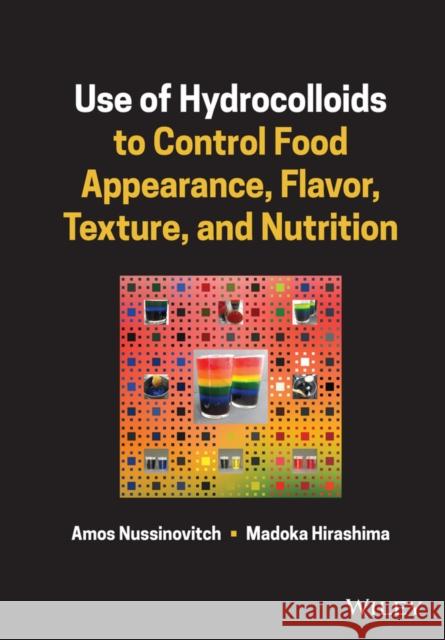
Use of Hydrocolloids to Control Food Appearance, Flavor, Texture, and Nutrition Amos Nussinovitch Madoka Hirashima 9781119700821 Wiley - książkaWidoczna okładka, to zdjęcie poglądowe, a rzeczywista szata graficzna może różnić się od prezentowanej.

Use of Hydrocolloids to Control Food Appearance, Flavor, Texture, and Nutrition

ISBN-13: 9781119700821 / Angielski / Twarda / 2023 / 320 str.

Amos Nussinovitch; Madoka Hirashima
cena 823,20
(netto: 784,00 VAT:  5%)

Najniższa cena z 30 dni: 813,12
Termin realizacji zamówienia:
ok. 30 dni roboczych.

Darmowa dostawa!

Use of Hydrocolloids to Control Food Appearance, Flavor, Texture, and Nutrition A thoroughly up-to-date and forward-looking presentation of the use of hydrocolloids in food In Use of Hydrocolloids to Control Food Appearance, Flavor, Texture, and Nutrition, a team of distinguished food researchers combines comprehensive and authoritative discussions on the conventional use of hydrocolloids to influence shape, structure and organoleptic properties of foods with exciting and emerging areas of innovation, such as texturing for 3D printing and enhancement of food nutrition. The book explores the four principal quality factors of food: appearance, flavor, texture and nutrition, and introduces students and food technologists to the myriad uses of hydrocolloids. It also presents illustrations of relevant commercial food products that rely on hydrocolloids for their appeal, as well as recipes exemplifying the unique abilities of particular hydrocolloids. Readers will also find: A thorough introduction to the use of hydrocolloids to control food size and shape, including the manipulation of select geometrical properties of foods A comprehensive exploration of the use of hydrocolloids to modulate food color and gloss, including the psychological impact of those properties Practical discussions pertaining to the modification of food taste and odor using hydrocolloids A thorough description of the ways in which hydrocolloids are used to improve crispy, crunchy and crackly foods Perfect for food scientists working in product development and food engineers, Use of Hydrocolloids to Control Food Appearance, Flavor, Texture, and Nutrition is sure to earn a place in the libraries of research chefs, as well as food chemists, food microbiologists and food technologists.


Kategorie:
Nauka, Biologia i przyroda
Kategorie BISAC:
Technology & Engineering > Food Science - General
Wydawca:
Wiley
Język:
Angielski
ISBN-13:
9781119700821
Rok wydania:
2023
Dostępne języki:
Ilość stron:
320
Waga:
0.78 kg
Wymiary:
24.8 x 18.0 x 2.22
Oprawa:
Twarda
Dodatkowe informacje:
Bibliografia

Preface xiiiAcknowledgments xxiAbout the Authors xxiii1 Use of Hydrocolloids to Control Food Size and Shape 11.1 Introduction 11.2 The Attractive Shape of Foods 11.2.1 Triangular and Prism- Shaped Foods 11.2.2 Rectangular and Cube- Shaped Foods 41.2.3 Circular and Spherical- Shaped Foods 41.3 Selected Geometrical Properties of Foods 61.3.1 Size 61.3.2 Characterization of Size 61.3.3 Size Reduction 71.3.4 Energy Requirements for Size Reduction of Solid Materials 81.4 Size Enlargement and Reduction Processes 101.4.1 Definition of Forming and Its Aims 101.4.2 Confectionery Molders 101.4.3 Pie- Casing Formers 101.4.4 Hydrocolloids in Food Fillings 111.4.5 Cutting and Shaping Spherical Edible Products 121.5 Shape - Definition and Implications 121.5.1 Shape of a Food Commodity 121.5.2 Roundness and Sphericity 121.5.3 Average Projected Area and Sphericity of Hydrocolloid Beads 141.5.4 How Are Gels Shaped? 151.5.5 Silicone Molds to Modify Gel Shapes and Sizes 161.6 Miscellaneous Shapes and Sizes of Edible Hydrocolloid Products 171.6.1 Edible Hydrocolloid Gel Beads 171.6.2 Parameters to Be Considered Upon Formation of Beads Through Capillary Jet Breakage 181.6.3 Bead Shape and Its Improvement 201.6.4 Shape and Size of Hydrocolloid Beads and Their Estimation 231.7 Assorted Specially Shaped and Sized Hydrocolloid Foods 231.7.1 Ham Consommé with Alginate Melon Beads 231.7.2 Extruded Gel Noodles 241.7.3 Cold Gels 241.7.4 Knot Foie 241.7.5 Shapes of Gummy Worms 251.7.6 Gel Films 251.8 Foods for the Elderly 261.8.1 Effects of Hydrocolloid Addition on the Mastication of Minced Foods 271.8.2 Hydrocolloids for the Design of Food for the Elderly 271.9 Demonstrating the Use of Hydrocolloids in Controlling Food Size and Shape 281.9.1 Agar Spaghetti 311.9.2 Commercial Experimental Set to Produce Artificial Salmon Roe 32References 322 Use of Hydrocolloids to Modulate Food Color and Gloss 402.1 Introduction 402.2 Appearance of Objects 402.3 Optical Properties 412.4 Color 422.4.1 Color of Food Commodities 422.4.2 Expressing Color Numerically 422.4.3 The Kubelka-Munk Concept 472.5 Gloss 482.5.1 General Approach 482.5.2 What Is Gloss and Why Is It Measured? 482.5.3 Gloss Units and What Differences in Gloss Can Be Detected by Humans 492.5.4 How Gloss Is Measured and Glossmeter Types 502.6 On the Psychological Impact of Food Color and Gloss 512.7 Where and When Are Hydrocolloids Utilized to Modulate Food Color and Gloss? 512.7.1 Color of Fruit Leathers and Bars 512.7.2 Gloss and Transparency of Edible Films 542.7.3 High- Gloss Edible Coating 552.7.4 Gloss and Transparency of HPMC Films Containing Surfactants as Affected by Their Microstructure 552.7.5 Hydrocolloids in Forming Properties of Cocoa Syrups 562.7.6 Color of Deep- Fat- Fried Products 562.7.7 Spray- Dried Products 582.7.8 Interaction of Anthocyanins with Food Hydrocolloids 592.8 Demonstrating the Use of Hydrocolloids to Prepare Colored and Glossy Products/ Recipes 602.8.1 Teriyaki Fish with Pullulan 632.8.2 Neutral Mirror Glaze (nappage neutre) 64References 653 Use of Hydrocolloids to Modify Food Taste and Odor 743.1 Introduction 743.2 Flavor Perception: Aroma, Taste, and Volatile Compounds 743.3 Flavor of Hydrocolloid- Supplemented Value- Added Foods 783.3.1 Low- Fat Cheddar Cheese 783.3.2 Wholegrain Sorghum Bread 793.3.3 Fish Fingers 803.3.4 Meat Analogs 803.3.5 Spreads 813.3.6 Protein Beverages 813.4 Interactions of Flavor Compounds with Different Food Ingredients 823.4.1 Interactions Between Proteins and Flavor Compounds 823.4.2 Interactions Between Starch and Flavor Compounds 833.4.3 Interactions Between Hydrocolloids and Flavor Compounds 843.5 Effect of Hydrocolloids on Sensory Properties of Selected Model Systems and Beverages 863.6 Influence of Hydrocolloids on the Release of Volatile Flavor Compounds 883.7 Gels and Flavor 903.7.1 Hydrocolloid Gels and Flavor Release 903.7.2 Phase- Separated Gels and Aroma Release 913.8 The Influence of Flavor Molecules on the Behavior of Hydrocolloids 923.9 Demonstrating the Use of Hydrocolloids in Modifying Food Taste/Odor 923.9.1 Fried Chicken with Methylcellulose (MC) 953.9.2 Gluten- Free Bread with Hydroxypropyl Methylcellulose (HPMC) 96References 974 Use of Hydrocolloids to Control Food Viscosity 1074.1 Viscosity of Fluids 1074.1.1 The Field of Flow and Viscosity 1074.1.2 Laminar Flow and Turbulent Flow 1084.2 Important and Useful Definitions 1114.2.1 Dynamic Viscosity and Fluidity 1114.2.2 Kinematic Viscosity 1114.2.3 Relative Viscosity 1114.3 Flow Equations 1124.3.1 Definitions of Apparent Viscosity, Shear Stress, and Shear Rate 1124.3.2 The General Equation for Viscosity 1124.3.3 The Power Equation 1134.3.4 The Herschel- Bulkley Model 1134.3.5 Casson Equation 1144.4 Thickening and Viscosity- Forming Abilities of Hydrocolloids - A General Approach 1154.5 Hydrocolloids as Viscosity Formers in Foods 1164.6 Time Dependence of Hydrocolloid Solutions 1214.7 Fluid Gels 1244.8 Demonstrating the Use of Hydrocolloids to Control Viscosity in Foods 1264.8.1 Creamy Italian Dressing 1284.8.2 French Dressing 128References 1295 Use of Hydrocolloids to Improve the Texture of Crispy, Crunchy, and Crackly Foods 1365.1 Introduction 1365.2 Definitions of Crispness and Crunchiness 1365.3 Dependence of Crunchiness and Crispness on Moisture and Oil Content 1375.4 Mechanical, Acoustical, and Temporal Aspects of Crunchiness and Crispness 1405.5 Crackly Foods 1425.6 Methods for Improving the Texture of Crispy and Crunchy Foods Using Hydrocolloids 1465.6.1 Vacuum Frying 1465.6.2 Coating and Batter 1485.7 Enhancement of Food Acoustic Properties Using Various Hydrocolloids 1495.7.1 Contribution of Inulin to Crispness of Biscuits, Pizza, and Wafers 1495.7.2 Crispness of Banana Chips 1495.7.3 Specialty Starches as Functional Ingredients 1505.7.4 Specialty Starches in Snack Foods 1515.7.5 Protein- Rich Extruded Snack 1525.8 Demonstrating the Preparation of Crunchy Products 1545.8.1 Baked Tortilla Chips 1565.8.2 Commercial Fabricated Potato Chips 1575.8.3 Commercial Fabricated Fried Potato 157References 1576 Use of Hydrocolloids to Improve the Texture of Hard and Chewy Foods 1666.1 Texture Definitions 1666.1.1 Hardness 1666.1.2 Chewiness 1676.1.3 Juiciness 1676.2 Use of Hydrocolloids to Improve Bread Texture 1686.3 Dairy Products 1716.3.1 Dairy Foods 1716.3.2 Cheeses 1726.3.3 Functionality of Selected Hydrocolloids on Texture of Ice Cream 1726.4 Fish Products 1746.5 Further Contributions of Hydrocolloids to Textural Improvement 1756.6 Other Miscellaneous Applications 1766.6.1 Rice Starch Pastes 1766.6.2 Rice Starch-Polysaccharide and Other Mixed Gels 1776.6.3 Hydrocolloid Effects on Pea Starch 1786.7 Demonstrating the Use of Hydrocolloids in Creating/Controlling Food Hardness and Chewiness 1796.7.1 Agar Jelly, Seiryu 1826.7.2 Low- Concentration Carrageenan Jelly, mizu- Shingen mochi 183References 1837 Use of Hydrocolloids to Control the Texture of Multilayered Food Products 1927.1 Introduction 1927.2 Multilayered Hydrocolloid- Based Foodstuffs 1927.2.1 Confectionery Products 1927.2.2 Cream- Filled Multilayered Food Products 1947.2.3 Gelled Multilayered Food Products 1957.2.4 Multilayered Films 1977.2.5 Nano- Multilayer Coatings 1987.2.6 Multilayered Liposomes and Capsules 1997.2.7 Multilayered Particles 1997.3 Methods to Estimate Properties of Multilayered Products 2007.3.1 Assessment of Stiffness and Compressive Deformability of Multilayered Texturized Fruit and Gels 2007.3.2 Calculating the Stress-Strain Relationships of a Layered Array of Cellular Solids 2027.3.3 Other Techniques to Assess Multilayered Products 2057.4 Current Systems and Methods to Prepare Multilayered Products 2057.4.1 Extrusion and Coextrusion 2057.4.2 Injection Molding 2077.4.3 3D- Printing and Layered Products 2087.4.4 Multilayered Emulsions 2087.5 Further Matters Related to Multilayered Products 2097.5.1 Natural Food- Grade Emulsifiers and Interfacial Layers 2097.5.2 Multilayer Adsorption 2107.5.3 Gelled Double- Layered Emulsions 2107.6 Complications Related to Multilayered and Colored Products 2117.7 Future Potential Biotechnological Uses of Multilayered Gels 2157.8 Demonstrating the Use of Hydrocolloids to Prepare Multilayered Products/ Recipes 2167.8.1 Multilayered Gelatin Jelly 2197.8.2 Beer- Like Jelly 219References 2208 Hydrocolloids to Control the Texture of Three- Dimensional (3D)-Printed Foods 2308.1 Introduction 2308.2 A Brief History of 3D Printing 2308.3 3D Printing of Foods 2318.3.1 3D Options in Foods 2318.3.2 Special Personalized Foods for the Elderly 2338.4 3D- Printed Food Products 2348.4.1 Printed Sugar Products 2348.4.2 Chocolate 2358.4.3 Pastes, Pizza, Cookies, and Meat 2368.5 Production of Snacks 2378.5.1 Cereal- Based 3D Snacks 2378.5.2 Fruit Snacks 2388.6 Printability of Food Additives 2388.6.1 Issues Related to 3D Food Printing 2388.6.2 Printability of Hydrocolloids 2388.6.3 Protein Products Applicable for 3D Printing 2398.6.4 The Effect of 3D Printing on Lipids 2408.7 Infill Percentage and Pattern 2418.8 Modifying Food Texture to Suit Personal and Other Requirements by 3D Printing Technology 2428.9 Hydrocolloids in 3D Printing 2438.10 3D Printing of Hydrocolloid Foods Served in Restaurants 2448.11 3D Printing and Laser Cooking 2488.12 Novel Application for 4D Food Printing 248References 2499 Use of Hydrocolloids to Control Food Nutrition 2559.1 Nutritional Applications of Natural Hydrocolloids 2559.2 Types of Dietary Fibers 2569.3 Dietary Fiber as a Versatile Food Component 2579.4 Food Enriched in ß- Glucans 2589.5 Cereal Polysaccharides as the Foundation for Useful Ingredients in the Reformulation of Meat Products 2599.6 Health Claims of Hydrocolloids 2619.7 Miscellaneous Cases of Nutritional and Health Benefits 2629.7.1 Health Benefits of Lactic Acid Bacteria (LAB) Exopolysaccharides (EPSs) 2629.7.2 Fat Replacers 2649.7.3 Benefits of Dietary Fermentable Fibers for Chronic Kidney Disease (CKD) 2659.8 Demonstrating the Use of Hydrocolloids in Controlling Nutrition 2669.8.1 Keto Bread Rolls with Inulin 269References 270Index 279

Amos Nussinovitch leads a group of researchers working on the theoretical and practical aspects of hydrocolloids in the Biochemistry and Food Science Department of the Robert H. Smith Faculty of Agriculture, Food and Environment of the Hebrew University of Jerusalem, Israel.Madoka Hirashima teaches cooking and cooking science in Home Economics Education in the Faculty of Education at Mie University in Tsu, Mie Prefecture, Japan.

Nussinovitch, Amos Amos Nussinovitch, Director of the Department of B... więcej >


Udostępnij

Facebook - konto krainaksiazek.pl


Opinie o Krainaksiazek.pl na Opineo.pl

Partner Mybenefit

Krainaksiazek.pl w programie rzetelna firma Krainaksiaze.pl - płatności przez paypal

Czytaj nas na:

Facebook - krainaksiazek.pl
  • książki na zamówienie
  • granty
  • książka na prezent
  • kontakt
  • pomoc
  • opinie
  • regulamin
  • polityka prywatności

Zobacz:

  • Księgarnia czeska

  • Wydawnictwo Książkowe Klimaty

1997-2025 DolnySlask.com Agencja Internetowa

© 1997-2022 krainaksiazek.pl
     
KONTAKT | REGULAMIN | POLITYKA PRYWATNOŚCI | USTAWIENIA PRYWATNOŚCI
Zobacz: Księgarnia Czeska | Wydawnictwo Książkowe Klimaty | Mapa strony | Lista autorów
KrainaKsiazek.PL - Księgarnia Internetowa

Polityka prywatnosci - link
Krainaksiazek.pl - płatnośc Przelewy24
Przechowalnia Przechowalnia





