• Wyszukiwanie zaawansowane
  • Kategorie
  • Kategorie BISAC
  • Książki na zamówienie
  • Promocje
  • Granty
  • Książka na prezent
  • Opinie
  • Pomoc
  • Załóż konto
  • Zaloguj się

Quantitative Methods in Proteomics » książka


zaloguj się | załóż konto
Logo Krainaksiazek.pl

koszyk

konto

szukaj
topmenu
Księgarnia internetowa
Szukaj
Książki na zamówienie
Promocje
Granty
Książka na prezent
Moje konto
Pomoc
 
 
Wyszukiwanie zaawansowane
Pusty koszyk
Bezpłatna dostawa dla zamówień powyżej 40 złBezpłatna dostawa dla zamówień powyżej 40 zł

Kategorie główne

• Nauka
 [3082669]
• Literatura piękna
 [1815279]

  więcej...
• Turystyka
 [52558]
• Informatyka
 [156281]
• Komiksy
 [36475]
• Encyklopedie
 [23167]
• Dziecięca
 [613277]
• Hobby
 [105022]
• AudioBooki
 [1527]
• Literatura faktu
 [194886]
• Muzyka CD
 [275]
• Słowniki
 [2945]
• Inne
 [440204]
• Kalendarze
 [541]
• Podręczniki
 [165980]
• Poradniki
 [422905]
• Religia
 [509675]
• Czasopisma
 [473]
• Sport
 [61151]
• Sztuka
 [248589]
• CD, DVD, Video
 [3353]
• Technologie
 [230496]
• Zdrowie
 [98648]
• Książkowe Klimaty
 [126]
• Zabawki
 [2521]
• Puzzle, gry
 [3467]
• Literatura w języku ukraińskim
 [276]
• Art. papiernicze i szkolne
 [6689]
Kategorie szczegółowe BISAC

Quantitative Methods in Proteomics

ISBN-13: 9781617798849 / Angielski / Twarda / 2012 / 539 str.
Katrin Marcus
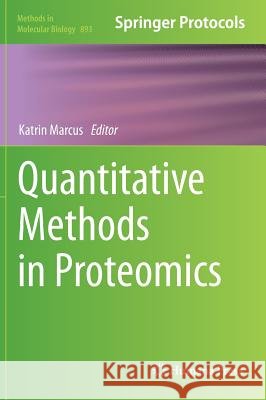
Quantitative Methods in Proteomics Katrin Marcus 9781617798849 Humana Press - książkaWidoczna okładka, to zdjęcie poglądowe, a rzeczywista szata graficzna może różnić się od prezentowanej.

Quantitative Methods in Proteomics

ISBN-13: 9781617798849 / Angielski / Twarda / 2012 / 539 str.

Katrin Marcus
cena 404,42
(netto: 385,16 VAT:  5%)

Najniższa cena z 30 dni: 385,52
Termin realizacji zamówienia:
ok. 16-18 dni roboczych.

Darmowa dostawa!

Protein modifications and changes made to them, as well as the quantities of expressed proteins, can define the various functional stages of the cell. Accordingly, perturbations can lead to various diseases and disorders. As a result, it has become paramount to be able to detect and monitor post-translational modifications and to measure the abundance of proteins within the cell with extreme sensitivity. While protein identification is an almost routine requirement nowadays, reliable techniques for quantifying unmodified proteins (including those that escape detection under standard conditions, such as protein isoforms and membrane proteins) is not routine. Quantitative Methods in Proteomics gives a detailed survey of topics and methods on the principles underlying modern protein analysis, from statistical issues when planning proteomics experiments, to gel-based and mass spectrometry-based applications. The quantification of post-translational modifications is also addressed, followed by the "hot" topics of software and data analysis, as well as various overview chapters which provide a comprehensive overview of existing methods in quantitative proteomics. Written in the successful Methods in Molecular Biology series format, chapters include introductions to their respective topics, lists of the necessary materials and reagents, step-by-step, readily reproducible protocols, and notes on troubleshooting and avoiding known pitfalls.Authoritative and easily accessible, Quantitative Methods in Proteomics serves as a comprehensive and competent overview of the important and still growing field of quantitative proteomics.


Kategorie:
Nauka, Biologia i przyroda
Kategorie BISAC:
Science > Biochemia
Science > Biologia molekularna
Wydawca:
Humana Press
Seria wydawnicza:
Methods in Molecular Biology
Język:
Angielski
ISBN-13:
9781617798849
Rok wydania:
2012
Wydanie:
2012
Numer serii:
000014950
Ilość stron:
539
Waga:
1.24 kg
Wymiary:
25.4 x 17.8
Oprawa:
Twarda
Wolumenów:
01
Dodatkowe informacje:
Wydanie ilustrowane

Part I. Planning a Proteomic Experiment


1. Important Issues in Planning a Proteomics Experiment – Statistical Considerations of Quantitative Proteomic Data

            Katharina Podwojski, Christian Stephan, and Martin Eisenacher


Part II. Quantitative Proteomics: Gel-Based Methods


2. The Whereabouts of 2D Gels in Quantitative Proteomics

            Thierry Rabilloud


3. Proteome Analysis with Classical 2D-PAGE

            Caroline May, Frederic Brosseron, Kathy Pfeiffer, Helmut E. Meyer, and Katrin Marcus


4. Fast and Sentitive Coomassie Staining in Quantitative Proteomics

            Nadine Dyballa and Sabine Metzger


5. Silver Staining of 2D Electrophoresis Gels

            Thierry Rabilloud


6. Differential Proteome Analysis using 2D-DIGE

            Caroline May, Frederic Brosseron, Piotr Chartowski, Helmut E. Meyer, and Katrin Marcus


Part III. Quantitative Proteomics: MS-Based Methods


7. Quantitative Mass Spectrometry-Based Proteomics: An Overview

            Miroslav Nikolov, Carla Schmidt, and Henning Urlaub


8. Robust Workflow for iTRAQ-Based Peptide and Protein Quantification

            Florian Beck, Julia Maria Burkhart, Joergt Geiger, René Peiman Zahedi, and Albert Sickmann


9. Relative Protein Quantification by MS/MS Using the Tandem Mass Tag Technology

            Loïc Dayon and Jean-Charles Sanchez


10. A Rapid Approach for Isobaric Peptide Termini Labeling (Rapid-IPTL)

            Christian J. Koehler, Margnus Ø. Arntzen, Achim Treumann, and Bernd Thiede


11. ICPL – Isotope Coded Protein Label

            Josef Kellermann and Friedrich Lottspeich


12. Hydroponic Isotope Labeling of Entire Plants (HILEP) and High Performance Mass Spectrometry For Quantitative Plant Proteomics

            Laurence V. Bindschedler, Davinia J.S. Mills, and Rainer Cramer


13. In Vivo Quantitative Proteome Profiling: Planning and Evaluation of SILAC Experiments

            Marieluise Kirchner and Matthias Selbach


14. SILAC for the Study of Mammalian Cell Lines and Yeast Protein Complexes

            Heike Piechura, Silke Oeljeklaus, and Bettina Warscheid


15. Post-Digestion 18O Exchange/Labeling for Quantitative Shotgun Proteomics of Membrane Proteins

            Xiaoying Ye, Brian T. Luke, Donald J. Johann Jr, King C. Chan, DaRue A. Prieto, Akira Ono, Timothy D. Veenstra, and Josip Blonder


16. Application of Label Free Proteomics for Differential Analysis of Lung Carcinoma Cell Line A549

            Barbara Sitek, Daniel Waldera, Gereon Poschmann, Helmut E. Meyer, and Kai Stühler


17. Absolute Quantification (AQUA) of Proteins Using Standard Peptides and Multiple Reaction Monitoring (MRM)

            Carla Schmidt and Henning Urlaub


18. Absolute Multiplexed Protein Quantification Using QconCAT Technology

            Philip J. Brownridge, Victoria M. Harman, Deborah M. Simpson, and Robert K. Beynon


19. A Practical Guide to the FLEXIQuant Method

            Sasha Singh, Marc Kirchner, Judith Steen, and Hanno Steen


20. Label-Free Protein Quantitation Using Weighted Spectral Counting

            Christine Vogel and Edward M. Marcotte


Part IV. Specific Methods – Detection and Quantification of Post-Translational Modifications


21. Discovering the Phosphoproteome of the Hydrophobic Cytochrome c Oxidase Membrane Protein Complex

            Stefan Helling, Maik Hüttemann, Bernhard Kadenbach, Rabia Ramzan, Sebastian Vogt, and Katrin Marcus


22. Assay – A Quantitative Mass Spectrometry-Based Approach for Kinase Client Screening and Activity Analysis

            Yadong Huang and Jay J. Thelen


23. Robust and High-Throughput Sample Preparation for (Semi-)Quantitative Analysis of N-Glycosylation Profiles from Plasma Samples

            L. Renee Ruhaak, Carolin Huhn, Carolien A. M. Koeleman, André M. Deelder, and Manfred Wuhrer


24. Quantitative Redox Proteomics – The NOxICAT Method

            Claudia Lindemann and Lars I. Leichert


25. Quantitative Analysis of S-Nitrosylated Proteins

            Federico Torta and Angela Bachi


26. Analysis of Ubiquitinated Proteome by Quantitative Mass Spectrometry

            Chan Hyun Na and Junmin Peng


27. Identification of Endogenous SUMO1 Accepter Sites by Mass Spectrometry

            He-Hsuan Hsiao, Erick Meulmeester, and Henning Urlaub


Part V. Data Analysis, Software Tools


28. Search and Decoy: the Automatic Identification of Mass Spectra

            Martin Eisenacher, Michael Kohl, Michael Turewicz, Markus-Hermann Koch, Julian Uszkoreit, and Christian Stephan


29. Software Tools for MS-Based Quantitative Proteomics – A Brief Overview

            Simone Lemeer, Hannes Hahne, Fiona Pachl, and Bernhard Kuster


30. iTRAQ Data Interpretation

            Marc Vaudel, Julia Maria Burkhart, René Peiman Zahedi, Lennart Martens, and Albert Sickmann


31. MSQuant: A Platform for Stable Isotope-Based Quantitative Proteomics

            Joost W. Gouw and Jeroen Krijgsveld

Protein modifications and changes made to them, as well as the quantities of expressed proteins, can define the various functional stages of the cell. Accordingly, perturbations can lead to various diseases and disorders. As a result, it has become paramount to be able to detect and monitor post-translational modifications and to measure the abundance of proteins within the cell with extreme sensitivity. While protein identification is an almost routine requirement nowadays, reliable techniques for quantifying unmodified proteins (including those that escape detection under standard conditions, such as protein isoforms and membrane proteins) is not routine. Quantitative Methods in Proteomics gives a detailed survey of topics and methods on the principles underlying modern protein analysis, from statistical issues when planning proteomics experiments, to gel-based and mass spectrometry-based applications. The quantification of post-translational modifications is also addressed, followed by the “hot” topics of software and data analysis, as well as various overview chapters which provide a comprehensive overview of existing methods in quantitative proteomics. Written in the successful Methods in Molecular Biology™ series format, chapters include introductions to their respective topics, lists of the necessary materials and reagents, step-by-step, readily reproducible protocols, and notes on troubleshooting and avoiding known pitfalls.


Authoritative and easily accessible, Quantitative Methods in Proteomics serves as a comprehensive and competent overview of the important and still growing field of quantitative proteomics.




Udostępnij

Facebook - konto krainaksiazek.pl


Opinie o Krainaksiazek.pl na Opineo.pl

Partner Mybenefit

Krainaksiazek.pl w programie rzetelna firma Krainaksiaze.pl - płatności przez paypal

Czytaj nas na:

Facebook - krainaksiazek.pl
  • książki na zamówienie
  • granty
  • książka na prezent
  • kontakt
  • pomoc
  • opinie
  • regulamin
  • polityka prywatności

Zobacz:

  • Księgarnia czeska

  • Wydawnictwo Książkowe Klimaty

1997-2026 DolnySlask.com Agencja Internetowa

© 1997-2022 krainaksiazek.pl
     
KONTAKT | REGULAMIN | POLITYKA PRYWATNOŚCI | USTAWIENIA PRYWATNOŚCI
Zobacz: Księgarnia Czeska | Wydawnictwo Książkowe Klimaty | Mapa strony | Lista autorów
KrainaKsiazek.PL - Księgarnia Internetowa

Polityka prywatnosci - link
Krainaksiazek.pl - płatnośc Przelewy24
Przechowalnia Przechowalnia



