Protect the Water World: Water Pollution Treatment and Related Biotechnology » książka





Protect the Water World: Water Pollution Treatment and Related Biotechnology
ISBN-13: 9783031921254 / Angielski / Miękka / 2026 / 312 str.
Protect the Water World: Water Pollution Treatment and Related Biotechnology
ISBN-13: 9783031921254 / Angielski / Miękka / 2026 / 312 str.
(netto: 914,90 VAT: 5%)
Najniższa cena z 30 dni: 960,65
ok. 16-18 dni roboczych.
Darmowa dostawa!
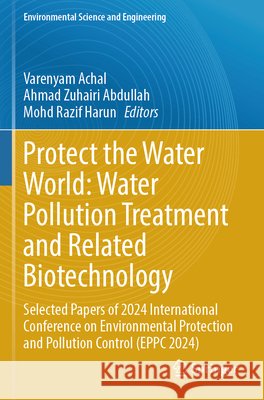
This book unveils the advancements in water pollution analysis and its biological treatment technology and provides valuable research and experience for engineers and scholars. On March 22, 2024, in the United Nations World Water Development Report, the theme of this year's conference, "Water for Promoting Prosperity and Peace," aligns with Global Water Partnerships' long-standing mission and vision of integrated water resources management. Currently, around half of the world's population faces severe water scarcity for at least part of the year, and a quarter of the global population experiences "extremely high" water stress. Meanwhile, global freshwater usage is growing at a rate slightly below 1% annually. Hence, the protection of water resources and pollution control, particularly the renewal and management of freshwater resources, deserve significant attention. Emerging pollutants of concern include per- and polyfluoroalkyl substances (PFAS), pharmaceuticals, hormones, industrial chemicals, detergents, cyanotoxins, and nanomaterials. High concentrations of antimicrobial agents have been found worldwide, originating from inadequately treated household wastewater, livestock, and aquaculture. Biological treatment technology for water pollution uses microorganisms to break down pollutants into harmless or less toxic substances, becoming an important means of addressing water pollution. Its advantages lie in low cost, adaptability, and the ability to effectively treat various organic pollutants, including hydrocarbons, pharmaceuticals, and pesticides. However, the effectiveness of this technology depends on the selection of appropriate microbial strains and the optimization of treatment conditions (such as temperature, pH, and nutrients). In the aspect of water pollution analysis, accurate detection of the types and concentrations of pollutants is a prerequisite for management and remediation. Modern instruments, such as gas chromatography-mass spectrometry (GC-MS) and liquid chromatography-mass spectrometry (LC-MS), can identify and quantify trace pollutants in complex water bodies. Additionally, new-generation sensing technologies and biological detection tools, like DNA microarrays and gene sequencing technologies, enable rapid detection of specific pollutants and reveal microbial community responses to pollutants. These technologies can effectively target and treat heavy industrial and chemical pollution, thereby protecting water environmental safety. This book aims to facilitate the exchange of scientific information among scholars from leading universities, research centers, and high-tech enterprises around the world. This book is highly beneficial to scholars, engineers, and researchers in the fields of environmental engineering and water pollution.




Czytaj nas na:
KrainaKsiazek.PL - Księgarnia Internetowa


