• Wyszukiwanie zaawansowane
  • Kategorie
  • Kategorie BISAC
  • Książki na zamówienie
  • Promocje
  • Granty
  • Książka na prezent
  • Opinie
  • Pomoc
  • Załóż konto
  • Zaloguj się

Molecular Recognition and Polymers: Control of Polymer Structure and Self-Assembly » książka


zaloguj się | załóż konto
Logo Krainaksiazek.pl

koszyk

konto

szukaj
topmenu
Księgarnia internetowa
Szukaj
Książki na zamówienie
Promocje
Granty
Książka na prezent
Moje konto
Pomoc
 
 
Wyszukiwanie zaawansowane
Pusty koszyk
Bezpłatna dostawa dla zamówień powyżej 40 złBezpłatna dostawa dla zamówień powyżej 40 zł

Kategorie główne

• Nauka
 [3084275]
• Literatura piękna
 [1809953]

  więcej...
• Turystyka
 [52027]
• Informatyka
 [156199]
• Komiksy
 [35973]
• Encyklopedie
 [23064]
• Dziecięca
 [610142]
• Hobby
 [103153]
• AudioBooki
 [1529]
• Literatura faktu
 [194613]
• Muzyka CD
 [277]
• Słowniki
 [2941]
• Inne
 [440174]
• Kalendarze
 [453]
• Podręczniki
 [165831]
• Poradniki
 [420511]
• Religia
 [508205]
• Czasopisma
 [470]
• Sport
 [61077]
• Sztuka
 [248418]
• CD, DVD, Video
 [3355]
• Technologie
 [230839]
• Zdrowie
 [98323]
• Książkowe Klimaty
 [126]
• Zabawki
 [2511]
• Puzzle, gry
 [3464]
• Literatura w języku ukraińskim
 [272]
• Art. papiernicze i szkolne
 [6677]
Kategorie szczegółowe BISAC

Molecular Recognition and Polymers: Control of Polymer Structure and Self-Assembly

ISBN-13: 9780470277386 / Angielski / Twarda / 2008 / 488 str.
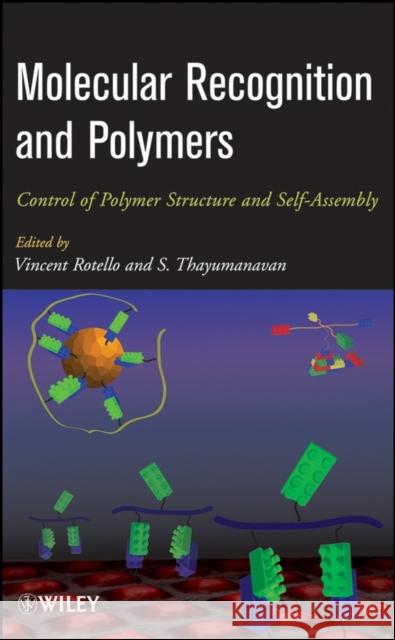
Vincent Rotello; Sankaran Thayumanavan; Vincent M. Rotello
Molecular Recognition and Polymers: Control of Polymer Structure and Self-Assembly Rotello, Vincent 9780470277386 John Wiley & Sons - książkaWidoczna okładka, to zdjęcie poglądowe, a rzeczywista szata graficzna może różnić się od prezentowanej.

Molecular Recognition and Polymers: Control of Polymer Structure and Self-Assembly

ISBN-13: 9780470277386 / Angielski / Twarda / 2008 / 488 str.

Vincent Rotello; Sankaran Thayumanavan; Vincent M. Rotello
cena 784,56
(netto: 747,20 VAT:  5%)

Najniższa cena z 30 dni: 768,72
Termin realizacji zamówienia:
ok. 30 dni roboczych.

Darmowa dostawa!

State-of-the-art techniques for tapping the vast potential of polymers

The use of specific non-covalent interactions to control polymer structure and properties is a rapidly emerging field with applications in diverse disciplines. Molecular Recognition and Polymers covers the fundamental aspects and applications of molecular recognition--in the creation of novel polymeric materials for use in drug delivery, sensors, tissue engineering, molecular imprinting, and other areas. This reference begins by explaining the fundamentals of supramolecular polymers; it progresses to cover polymer formation and self-assembly with a wide variety of examples, and then includes discussions of biomolecular recognition using polymers.

With chapters contributed by the foremost experts in their fields, this resource:

  • Provides an integrated resource for supramolecular chemistry, polymer science, and interfacial science
  • Covers advanced, state-of-the-art techniques used in the design and characterization of non-covalent interactions in polymers
  • Illustrates how to tailor the properties of polymeric materials for various applications
Stand-alone chapters address specific applications independently for easy reference. This is a premier resource for graduate students and researchers in polymer chemistry, supramolecular chemistry, materials science, and physical organic chemistry.

Kategorie:
Nauka, Chemia
Kategorie BISAC:
Science > Chemia - Organiczna
Science > Chemistry - Industrial & Technical
Wydawca:
John Wiley & Sons
Język:
Angielski
ISBN-13:
9780470277386
Rok wydania:
2008
Ilość stron:
488
Waga:
0.79 kg
Wymiary:
23.62 x 15.75 x 2.79
Oprawa:
Twarda
Wolumenów:
01
Dodatkowe informacje:
Wydanie ilustrowane

"This book is an excellent up–to–date source for scientists in the field, as well as for teachers and graduate students of advanced organic chemistry or material science. Industrial researchers might also find the thorough reviews of emerging field stimulating ... The book should serve as a very valuable source and reference in any institutional or personal library." ( Journal of the American Chemical Society, February 4, 2009)

Preface.

Acknowledgments.

List of Contributors.

List of Figures.

List of Tables.

Editor Biographies.

PART I: FUNDAMENTALS OF SUPRAMOLECULAR POLYMERS.

1. A Brief Introduction to Supramolecular Chemistry in a Polymer Context1 (Raymond J. Thibault and Vincent M. Rotello).

1.1 Introduction and Background.

1.2 Main–chain versus Side–chain Supramolecular Polymers.

References.

2. Molecular Recognition Using Amphiphilic Macromolecules (Malar A Azagarsamy, K. Krishnamoorthy, and S. Thayumanavan).

2.1 Introduction.

2.2 Amphiphilic Block Copolymers.

2.2.1 Non–Specific Interactions.

2.2.2 Specific Interactions.

2.3 Amphiphilic Homopolymers.

2.3.1 Container Properties.

2.4 Amphiphilic Dendrimers.

2.5 Conclusions.

2.6 Acknowledgements.

References.

3. Supramolecular Control of Mechanical Properties in Single Molecules, Interfaces and Macroscopic Materials (David M. Loveless, Farrell R. Kersey and Stephen L. Craig).

3.1 Introduction and Background.

3.2 Mechanical Properties of Linear Supramolecular Polymers.

3.3 Mechanical Properties of Supramolecular Polymer Networks.

3.4 Mechanical Properties in Supramolecular Polymers at Interfaces.

3.5 Mechanical Forces and Supramolecular Interactions.

3.6 Conclusions.

References.

PART II: POLYMER FORMATION AND SELF–ASSEMBLY.

4. Hydrogen Bond Functionalized Block Copolymers and Telechelic Oligomers (Brian D. Mather and Timothy E. Long).

4.1 Scientific Rationale and Perspective.

4.2 Hydrogen Bonding Interactions in Macromolecular Design.

4.2.1 Fundamentals of Hydrogen Bonding.

4.2.2 Performance Advantages of Hydrogen Bond Containing Polymers.

4.3 Hydrogen Bond Containing Block Copolymers.

4.4 Telechelic Hydrogen Bond Functional Polymers.

4.5 Combining Hydrogen Bonding with other Non–Covalent Interactions.

4.6 Reversible Attachment of Guest Molecules via Hydrogen Bonding.

4.7 Conclusions and Summary.

References.

5. NonCovalent Side Chain Modification (Kamlesh P. Nair and Marcus Weck).

5.1 Introduction.

5.2 Strategies Towards Noncovalent Side–Chain Functionalization of Polymeric Scaffolds.

5.3 Noncovalent Multifunctionalization of the Side–Chains of Polymeric Scaffolds.

5.4 Applications of Noncovalently Functionalized Side–Chain Copolymers.

5.5 Conclusions and Outlook.

5.6 Acknowledgements.

References.

6. Polymer–Mediated Assembly of Nanoparticles Using Engineered Interactions (Hung–Ting Chen, Yuval Ofir, and Vincent M. Rotello).

6.1 Introduction.

6.2 Design of Nanoparticles and Polymers.

6.3 Self–Assembly Polymer–particle Nanocomposites.

6.4 Conclusions and Outlook.

References.

7. Metallosupramolecular Polymers, Networks, and Gels (Blayne M. McKenzie and Stuart J. Rowan).

7.1 Introduction.

7.2 Metal–Ligand Binding Motifs.

7.3 Linear and Macrocyclic Main–Chain Metallo–Supramolecular Polymers.

7.4 Metallo–Supramolecular Networks and Gels.

7.5 Conclusion and Outlook.

References.

8. Polymeric Capsules: Catalysis and Drug Delivery (Brian P. Mason, Jeremy L. Steinbacher, and D. Tyler McQuade).

8.1 Introduction.

8.2 Methods of Encapsulation.

8.3 Catalyst Encapsulation.

8.4 Drug Delivery with Microcapsules.

8.5 Conclusion.

References.

9. Sequence–Specific Hydrogen–Bonded Units for Directed Association, Assembly and Ligation (Bing Gong).

9.1 Introduction.

9.2 General Design: Information–Storing Molecular Duplexes Based on the Recombination of H–Bond Donors and Acceptors.

9.3 Quadruply H–Bonded Duplexes with Sequence–Independent Stability.

9.4 Tuning Binding Strength by Varying the Number of Interstrand H–Bonds.

9.5 Probing Sequence–Specificity.

9.6 Unexpected Discovery: Duplexes Containing Folded Strands.

9.7 Directed Assembly: Formation of –sheets and Supramolecular Block Copolymers.

9.8 Integrating Non–covalent and Covalent Interactions: Directed Olefin Metathesis and Disulfide Bond Formation.

9.9 Conclusions and Future Perspective.

9.10 Acknowledgements.

References.

10. Bioinspired Supramolecular Design in Polymers for Advanced Mechanical Properties (Zhibin Guan).

10.1 Introduction.

10.2 Biomimetic Concept of Modular Polymer Design.

10.3 Results and Discussion.

10.4 Summary and Perspective.

10.5 Acknowledgements.

References.

11. The Structure and Self–Assembly of Amphiphilic Dendrimers in Water (Hui Shao and Jon R. Parquette).

11.1 Introduction.

11.2 Structure.

11.3 Self–Assembly and Aggregation.

11.4 Folded Amphiphilic Dendrimers.

11.5 Langmuir–Blodgett Monolayers.

11.6 Conclusion.

References.

PART III: BIOMOLECULAR RECOGNITION USING POLYMERS.

12. Colorimetric Sensing and Biosensing Using Functionalized Conjugated Polymers (Amit Basu).

12.1 Introduction.

12.2 Polydiacetylene.

12.3 Polythiophenes.

12.4 Other Materials.

12.5 Summary.

References.

13. Glycodendrimers and Other Macromolecules Bearing Multiple Carbohydrates (Mary J. Cloninger).

13.1 Introduction.

13.2 Dendrimers to Glycodendrimers.

13.3 Multivalency.

13.4 Heteromultivalent Carbohydrate Systems.

13.5 Comments Regarding the Synthesis of Heteromultivalent Carbohydrate Systems.

13.6 EPR Characterization of Heterogeneously Functionalized Dendrimers.

13.7 Conclusions and Outlook.

13.8 Acknowledgement.

References.

14. Supramolecular Polymerization of Peptides and Peptide Derivatives: Nanofibrous Materials (He Dong, Virany M. Yuwono, and Jeffrey D. Hartgerink).

14.1 Introduction.

14.2 Self–Assembly of Nanofibers Based on Alpha–Helices.

14.3 Nanofibers Self–Assembled from Beta–Sheets.

14.4 Collagen Mimetics.

14.5 Conclusions.

References.

15. Molecular Imprinting for Sensor Applications (Xiangyang Wu and Ken D. Shimizu).

15.1 Introduction to Sensing Platforms.

15.2 Synthesis of Molecularly Imprinted Polymers.

15.3 Recognition Properties of MIPs.

15.4 Polymer Formats and Morphologies.

15.5 Application of MIPs in Sensing.

15.6 Conclusions and Outlook.

References.

Index.

Vincent Rotello is the Goessmann Professor in the Department of Chemistry at the University of Massachusetts, Amherst. His research emphasizes achieving a fundamental understanding of supramolecular chemistry and applying it to issues in biology and nanoscience including delivery, sensing, and devices.

S. Thayumanavan is a Professor in the Department of Chemistry at the University of Massachusetts, Amherst. His research focuses on the design and synthesis of novel macromolecules (dendrimers and polymers) that have applications in chemistry, biology, and materials science. Examples of these applications include catalysis and transport, drug and gene delivery, and light harvesting and sensory materials.

State–of–the–art techniques for tapping the vast potential of polymers

The use of specific non–covalent interactions to control polymer structure and properties is a rapidly emerging field with applications in diverse disciplines. Molecular Recognition and Polymers covers the fundamental aspects and applications of molecular recognition in the creation of novel polymeric materials for use in drug delivery, sensors, tissue engineering, molecular imprinting, and other areas. This reference begins by explaining the fundamentals of supramolecular polymers; it progresses to cover polymer formation and self–assembly with a wide variety of examples, and then includes discussions of biomolecular recognition using polymers. With chapters contributed by the foremost experts in their fields, this resource:

  • Provides an integrated resource for supramolecular chemistry, polymer science, and interfacial science

  • Covers advanced, state–of–the–art techniques used in the design and characterization of non–covalent interactions in polymers

  • Illustrates how to tailor the properties of polymeric materials for various applications

Stand–alone chapters address specific applications independently for easy reference. This is a premier resource for graduate students and researchers in polymer chemistry, supramolecular chemistry, materials science, and physical organic chemistry.


Udostępnij

Facebook - konto krainaksiazek.pl


Opinie o Krainaksiazek.pl na Opineo.pl

Partner Mybenefit

Krainaksiazek.pl w programie rzetelna firma Krainaksiaze.pl - płatności przez paypal

Czytaj nas na:

Facebook - krainaksiazek.pl
  • książki na zamówienie
  • granty
  • książka na prezent
  • kontakt
  • pomoc
  • opinie
  • regulamin
  • polityka prywatności

Zobacz:

  • Księgarnia czeska

  • Wydawnictwo Książkowe Klimaty

1997-2026 DolnySlask.com Agencja Internetowa

© 1997-2022 krainaksiazek.pl
     
KONTAKT | REGULAMIN | POLITYKA PRYWATNOŚCI | USTAWIENIA PRYWATNOŚCI
Zobacz: Księgarnia Czeska | Wydawnictwo Książkowe Klimaty | Mapa strony | Lista autorów
KrainaKsiazek.PL - Księgarnia Internetowa

Polityka prywatnosci - link
Krainaksiazek.pl - płatnośc Przelewy24
Przechowalnia Przechowalnia





