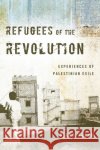
Some sixty-five years after 750,000 Palestinians fled or were expelled from their homeland, the popular conception of Palestinian refugees still emphasizes their fierce commitment to exercising their "right of return." Exile has come to seem a kind of historical amber, preserving refugees in a way of life that ended abruptly with "the catastrophe" of 1948 and their camps--inhabited now for four generations--as mere zones of waiting. While reducing refugees to symbols of steadfast single-mindedness has been politically expedient to both sides of the Arab-Israeli conflict it comes at a...
Some sixty-five years after 750,000 Palestinians fled or were expelled from their homeland, the popular conception of Palestinian refugees still em...
Some sixty-five years after 750,000 Palestinians fled or were expelled from their homeland, the popular conception of Palestinian refugees still emphasizes their fierce commitment to exercising their -right of return.- Exile has come to seem a kind of historical amber, preserving refugees in a way of life that ended abruptly with -the catastrophe- of 1948 and their camps--inhabited now for four generations--as mere zones of waiting. While reducing refugees to symbols of steadfast single-mindedness has been politically expedient to both sides of the Arab-Israeli conflict it comes at a...
Some sixty-five years after 750,000 Palestinians fled or were expelled from their homeland, the popular conception of Palestinian refugees still empha...
The Turkish Republic was founded simultaneously on the ideal of universal citizenship and on acts of extraordinary exclusionary violence. Today, nearly a century later, the claims of minority communities and the politics of pluralism continue to ignite explosive debate. The Reckoning of Pluralism centers on the case of Turkey's Alevi community, a sizeable Muslim minority in a Sunni majority state. Alevis have seen their loyalty to the state questioned and experienced sectarian hostility, and yet their community is also championed by state ideologues as bearers of the nation's...
The Turkish Republic was founded simultaneously on the ideal of universal citizenship and on acts of extraordinary exclusionary violence. Today, ne...
The Turkish Republic was founded simultaneously on the ideal of universal citizenship and on acts of extraordinary exclusionary violence. Today, nearly a century later, the claims of minority communities and the politics of pluralism continue to ignite explosive debate. The Reckoning of Pluralism centers on the case of Turkey's Alevi community, a sizeable Muslim minority in a Sunni majority state. Alevis have seen their loyalty to the state questioned and experienced sectarian hostility, and yet their community is also championed by state ideologues as bearers of the nation's folkloric...
The Turkish Republic was founded simultaneously on the ideal of universal citizenship and on acts of extraordinary exclusionary violence. Today, nearl...
Until the recent uprisings in the Middle East and North Africa, the resilience of authoritarian regimes seemed a fundamental feature of regional politics. While economic, political, and internal security policies are most often considered in discussions of regime maintenance, Laurie Brand introduces a new factor, that of national narratives. Portrayals of a country's founding, identity, and bases of unity can be a powerful strategy in sustaining a ruling elite. Brand argues that such official stories, which are used to reinforce the right to rule, justify policies, or combat opponents,...
Until the recent uprisings in the Middle East and North Africa, the resilience of authoritarian regimes seemed a fundamental feature of regional po...
Examines the ways that political leaderships in Egypt and Algeria have used national stories-about a state's origins, identity, and bases of unity-as part of broader strategies to assert and retain power in the face of political and economic crises.
Examines the ways that political leaderships in Egypt and Algeria have used national stories-about a state's origins, identity, and bases of unity-as ...
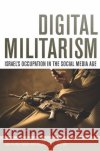
Israel's occupation has been transformed in the social media age. Over the last decade, military rule in the Palestinian territories grew more bloody and entrenched. In the same period, Israelis became some of the world's most active social media users. In Israel today, violent politics are interwoven with global networking practices, protocols, and aesthetics. Israeli soldiers carry smartphones into the field of military operations, sharing mobile uploads in real-time. Official Israeli military spokesmen announce wars on Twitter. And civilians encounter state violence first on their...
Israel's occupation has been transformed in the social media age. Over the last decade, military rule in the Palestinian territories grew more bloody ...
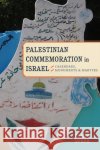
Collective memory transforms historical events into political myths. In this book, Tamir Sorek considers the development of collective memory and national commemoration among the Palestinian citizens of Israel. He charts the popular politicization of four key events--the Nakba, the 1956 Kafr Qasim Massacre, the 1976 Land Day, and the October 2000 killing of twelve Palestinian citizens in Israel--and investigates a range of commemorative sites, including memorial rallies, monuments, poetry, the education system, political summer camps, and individual historical remembrance. These sites have...
Collective memory transforms historical events into political myths. In this book, Tamir Sorek considers the development of collective memory and n...
Egypt came to govern Gaza as a result of a war, a failed effort to maintain Arab Palestine. Throughout the twenty years of its administration (1948-1967), Egyptian policing of Gaza concerned itself not only with crime and politics, but also with control of social and moral order. Through surveillance, interrogation, and a network of local informants, the police extended their reach across the public domain and into private life, seeing Palestinians as both security threats and vulnerable subjects who needed protection. Security practices produced suspicion and safety simultaneously.
...
Egypt came to govern Gaza as a result of a war, a failed effort to maintain Arab Palestine. Throughout the twenty years of its administration (1948...
Israel's occupation has been transformed in the social media age. Over the last decade, military rule in the Palestinian territories grew more bloody and entrenched. In the same period, Israelis became some of the world's most active social media users. In Israel today, violent politics are interwoven with global networking practices, protocols, and aesthetics. Israeli soldiers carry smartphones into the field of military operations, sharing mobile uploads in real-time. Official Israeli military spokesmen announce wars on Twitter. And civilians encounter state violence first on their...
Israel's occupation has been transformed in the social media age. Over the last decade, military rule in the Palestinian territories grew more bloody ...