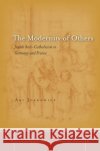
The most prominent story of nineteenth-century German and French Jewry has focused on Jewish adoption of liberal middle-class values. The Modernity of Others points to an equally powerful but largely unexplored aspect of modern Jewish history: the extent to which German and French Jews sought to become modern by criticizing the anti-modern positions of the Catholic Church. Drawing attention to the pervasiveness of anti-Catholic anticlericalism among Jewish thinkers and activists from the late eighteenth to the early twentieth century, the book turns the master narrative of Western and...
The most prominent story of nineteenth-century German and French Jewry has focused on Jewish adoption of liberal middle-class values. The Modernity...
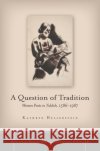
In A Question of Tradition, Kathryn Hellerstein explores the roles that women poets played in forming a modern Yiddish literary tradition. Women who wrote in Yiddish go largely unrecognized outside a rapidly diminishing Yiddish readership. Even in the heyday of Yiddish literature, they were regarded as marginal. But for over four centuries, women wrote and published Yiddish poems that addressed the crises of Jewish history--from the plague to the Holocaust--as well as the challenges and pleasures of daily life: prayer, art, friendship, nature, family, and love. Through close readings...
In A Question of Tradition, Kathryn Hellerstein explores the roles that women poets played in forming a modern Yiddish literary tradition. Wome...
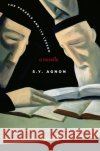
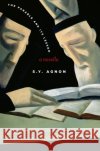
S.Y. Agnon was the greatest Hebrew writer of the twentieth century, and the only Hebrew writer to receive the Nobel Prize for literature. He devoted the last years of his life to writing a massive cycle of stories about Buczacz, the Galician town (now in Ukraine) in which he grew up. Yet when these stories were collected and published three years after Agnon's death, few took notice. Years passed before the brilliance and audacity of Agnon's late project could be appreciated.
The Parable and Its Lesson is one of the major stories from this work. Set shortly after the...
S.Y. Agnon was the greatest Hebrew writer of the twentieth century, and the only Hebrew writer to receive the Nobel Prize for literature. He devote...
S.Y. Agnon was the greatest Hebrew writer of the twentieth century, and the only Hebrew writer to receive the Nobel Prize for literature. He devoted the last years of his life to writing a massive cycle of stories about Buczacz, the Galician town (now in Ukraine) in which he grew up. Yet when these stories were collected and published three years after Agnon's death, few took notice. Years passed before the brilliance and audacity of Agnon's late project could be appreciated. The Parable and Its Lesson is one of the major stories from this work. Set shortly after the massacres of...
S.Y. Agnon was the greatest Hebrew writer of the twentieth century, and the only Hebrew writer to receive the Nobel Prize for literature. He devoted t...
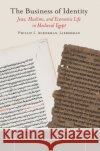
The Cairo Geniza is the largest and richest store of documentary evidence for the medieval Islamic world. This book seeks to revolutionize the way scholars use that treasure trove. Phillip I. Ackerman-Lieberman draws on legal documents from the Geniza to reconceive of life in the medieval Islamic marketplace. In place of the shared practices broadly understood by scholars to have transcended confessional boundaries, he reveals how Jewish merchants in Egypt employed distinctive trading practices. Highly influenced by Jewish law, these commercial practices served to manifest their Jewish...
The Cairo Geniza is the largest and richest store of documentary evidence for the medieval Islamic world. This book seeks to revolutionize the way sch...
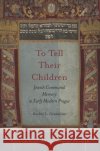
This book offers an examination of Jewish communal memory in Prague in the century and a half stretching from its position as cosmopolitan capital of the Holy Roman Empire (1583-1611) through Catholic reform and triumphalism in the later seventeenth century, to the eve of its encounter with Enlightenment in the early eighteenth. Rachel Greenblatt approaches the subject through the lens of the community's own stories--stories recovered from close readings of a wide range of documents as well as from gravestones and other treasured objects in which Prague's Jews recorded their history. On the...
This book offers an examination of Jewish communal memory in Prague in the century and a half stretching from its position as cosmopolitan capital of ...
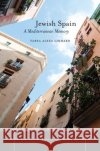
What is meant by "Jewish Spain"? The term itself encompasses a series of historical contradictions. No single part of Spain has ever been entirely Jewish. Yet discourses about Jews informed debates on Spanish identity formation long after their 1492 expulsion. The Mediterranean world witnessed a renewed interest in Spanish-speaking Jews in the twentieth century, and it has grappled with shifting attitudes on what it meant to be Jewish and Spanish throughout the century. At the heart of this book are explorations of the contradictions that appear in different forms of cultural memory: literary...
What is meant by "Jewish Spain"? The term itself encompasses a series of historical contradictions. No single part of Spain has ever been entirely Jew...
Jewish Pasts, German Fictions is the first comprehensive study of how German-Jewish writers used images from the Spanish-Jewish past to define their place in German culture and society. Jonathan Skolnik argues that Jewish historical fiction was a form of cultural memory that functioned as a parallel to the modern, demythologizing project of secular Jewish history writing. What did it imply for a minority to imagine its history in the majority language? Skolnik makes the case that the answer lies in the creation of a German-Jewish minority culture in which historical fiction played a...
Jewish Pasts, German Fictions is the first comprehensive study of how German-Jewish writers used images from the Spanish-Jewish past to define ...
The Mediterranean port of Livorno was home to one of the most prominent and privileged Jewish enclaves of early modern Europe. Focusing on Livornese Jewry, this book offers an alternative perspective on Jewish acculturation during the eighteenth century, and reassesses common assumptions about the interactions of Jews with outside culture and the impact of state reforms on the corporate Jewish community. Working from a vast array of previously untapped archival and literary sources, Francesca Bregoli combines cultural analysis with a study of institutional developments to investigate Jewish...
The Mediterranean port of Livorno was home to one of the most prominent and privileged Jewish enclaves of early modern Europe. Focusing on Livornese J...
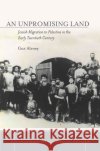
The Jewish migration at the end of the nineteenth and beginning of the twentieth centuries was one of the dramatic events that changed the Jewish people in modern times. Millions of Jews sought to escape the distressful conditions of their lives in Eastern Europe and find a better future for themselves and their families overseas. The vast majority of the Jewish migrants went to the United States, and others, in smaller numbers, reached Argentina, Canada, Australia, and South Africa. From the beginning of the twentieth century until the First World War, about 35,000 Jews reached Palestine....
The Jewish migration at the end of the nineteenth and beginning of the twentieth centuries was one of the dramatic events that changed the Jewish peop...