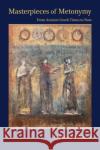
In Masterpieces of Metonymy, Gregory Nagy analyzes metonymy as a mental process that complements metaphor. If metaphor is a substitution of something unfamilar for something familiar, then metonymy can be seen as a connecting of something familiar with something else that is already familiar. Applying this formulation, Nagy offers close readings of over one hundred examples of metonymy as it comes to life in the verbal and the visual arts of Greek culture, as well as in the arts of other cultures. Though it is debatable whether all the selected examples really qualify as masterpieces,...
In Masterpieces of Metonymy, Gregory Nagy analyzes metonymy as a mental process that complements metaphor. If metaphor is a substitution of som...
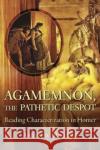
Andrew Porter explores characterization in Homer, from an oral-traditional point of view, through the resonance of words, themes, and back stories from the past and future. He analyzes Agamemnon's character traits in the Iliad, including his qualities as a leader, against events such as his tragic homecoming in the Odyssey.
Andrew Porter explores characterization in Homer, from an oral-traditional point of view, through the resonance of words, themes, and back stories fro...
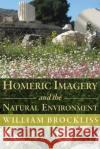
William Brockliss, responding to George Lakoff's and Mark Johnson's analysis of metaphor, explores the Homeric poets' use of concrete concepts drawn from the Greek natural environment to aid their audiences' understanding of abstract concepts. In particular, he considers Homeric images associating flowers with deception, disorder, and death.
William Brockliss, responding to George Lakoff's and Mark Johnson's analysis of metaphor, explores the Homeric poets' use of concrete concepts drawn f...
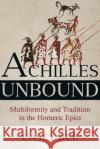
Casey Due, coeditor of the Homer Multitext, explores both the traditionality and multiformity of the Iliad. Due argues this multiform nature gives us glimpses of the very long history of the text, access to even earlier Iliads, and a greater awareness of the mechanisms by which such a remarkable epic poem could be composed in performance.
Casey Due, coeditor of the Homer Multitext, explores both the traditionality and multiformity of the Iliad. Due argues this multiform nature gives us ...
Examining Aelia Eudocia's writings as a unified whole and in context, Brian P. Sowers reveals an exceptional author representing three late-antique communities: poets interested in transforming classical literature; Christians positioned outside traditional power structures; and women who challenged social, religious, and literary boundaries.
Examining Aelia Eudocia's writings as a unified whole and in context, Brian P. Sowers reveals an exceptional author representing three late-antique co...