'Between a bottle of Epsom salts or one of twenty-year-old cognac, which would you choose? Would you rather spend your vacation with an eighty-year old leper or with Demi Moore? Do you prefer being sprinkled with ferocious red ants or sharing a sleeping compartment with Claudia Schiffer?' From the celebrated author of The Name of the Rose, here is a dazzling compendium of advice offering the correct answers to these and many other important questions. Tackling topics as diverse as the coffee pot from hell, eating on an aeroplane, how not to use a cellular phone and recognising porn movies,...
'Between a bottle of Epsom salts or one of twenty-year-old cognac, which would you choose? Would you rather spend your vacation with an eighty-year ol...
A collection of essays on the key texts that have shaped the Eco, the novelist and critic. After the opening essay on the general significance of literature, this book examines a number of major authors from the Western canon, such as French writer Nerval's masterpiece, "Sylvie", as well as the works of Cervantes, Swift, and Piero Camporesi.
A collection of essays on the key texts that have shaped the Eco, the novelist and critic. After the opening essay on the general significance of lite...
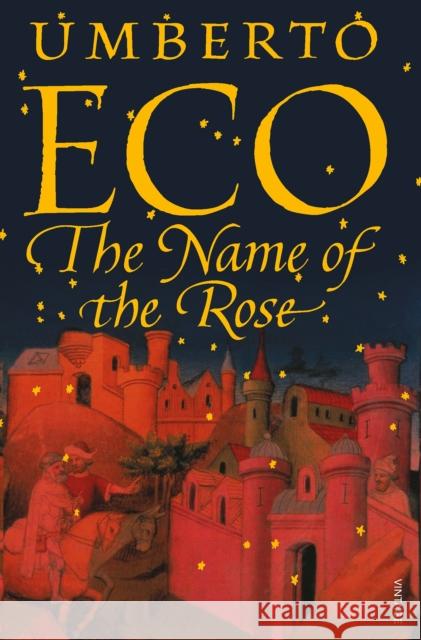
Franciscans in a wealthy Italian abbey are suspected of heresy, and Brother William of Baskerville arrives to investigate. But his delicate mission is overshadowed by seven bizarre deaths. He collects evidence, deciphers secret symbols and digs into the eerie labyrinth of the abbey where extraordinary things are happening under the cover of night.
Franciscans in a wealthy Italian abbey are suspected of heresy, and Brother William of Baskerville arrives to investigate. But his delicate mission is...
'Inventing the Enemy and Other Occasional Writings' covers a range of topics on which Umberto Eco has written and lectured over the last ten years, from the discussion of ideas that have inspired his earlier novels to a disquisition on the theme that runs through his most recent novel, that every country needs an enemy, and if it doesn't have one, must invent it.
'Inventing the Enemy and Other Occasional Writings' covers a range of topics on which Umberto Eco has written and lectured over the last ten years, fr...
19th-century Europe, from Turin to Prague to Paris, abounds with the ghastly and the mysterious. Conspiracies rule history. Jesuits plot against Freemasons. Italian republicans strangle priests with their own intestines. French criminals plan bombings by day and celebrate black masses at night.
19th-century Europe, from Turin to Prague to Paris, abounds with the ghastly and the mysterious. Conspiracies rule history. Jesuits plot against Freem...
..". the greatest contribution to semiotics] since the pioneering work of C. S. Peirce and Charles Morris." --Journal of Aesthetics and Art Criticism
..". draws on philosophy, linguistics, sociology, anthropology and aesthetics and refers to a wide range of scholarship... raises many fascinating questions." --Language in Society
..". a major contribution to the field of semiotic studies." --Robert Scholes, Journal of Aesthetics and Art Criticism
..". the most significant text on the subject published in the English language that I know of." --Arthur Asa Berger, Journal...
..". the greatest contribution to semiotics] since the pioneering work of C. S. Peirce and Charles Morris." --Journal of Aesthetics and Art Critic...
By the author of The Name of the Rose, these essays, written over the last 20 years and culled from newspapers and magazines, explore the rag-bag of modern consciousness. Eco considers a wide range of topics, from Superman and Casablanca, Federico Fellini and Michelangelo Antonioni, Jim Jones and mass suicide, and Woody Allen, to holography and waxworks, pop festivals and football, and not least the social and personal implications of tight jeans.
By the author of The Name of the Rose, these essays, written over the last 20 years and culled from newspapers and magazines, explore the rag-bag of m...
Set in the 17th century, in Italy, France and on the high seas, this is a tale of medieval legends and dastardly deeds, mixed with portions of exploration literature. Roberto, a young nobleman, waits alone on a Pacific island, separated from the island beyond: the island of the day before.
Set in the 17th century, in Italy, France and on the high seas, this is a tale of medieval legends and dastardly deeds, mixed with portions of explora...
Set in Italy in the Middle Ages, this is not only a narrative of a murder investigation in a monastery in 1327, but also a chronicle of the 14th century religious wars, a history of monastic orders, and a compendium of heretical movements.
Set in Italy in the Middle Ages, this is not only a narrative of a murder investigation in a monastery in 1327, but also a chronicle of the 14th centu...
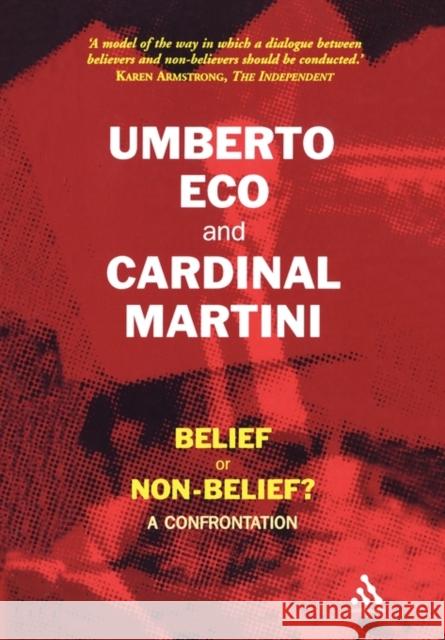
In this stimulating dialogue these two great men, who stand on opposite sides of the church door, discuss some of the most controversial issues of the day. One is a respected scholar and one of the pre-eminent ecumenical churchmen of Europe; the other the world famous author of The Name of the Rose, a scholar, philosopher and self-decalred secularist, a man who writes with equal ease about Thomas Aquinas and James Joyce, computers and the medieval Templars. Often adversarial but always amicable, their debate will fascinate many.
In this stimulating dialogue these two great men, who stand on opposite sides of the church door, discuss some of the most controversial issues of the...