"Eco wittily and enchantingly develops themes often touched on in his previous works, but he delves deeper into their complex nature... this collection can be read with pleasure by those unversed in semiotic theory." Times Literary Supplement
"
"Eco wittily and enchantingly develops themes often touched on in his previous works, but he delves deeper into their complex nature... this collec...
In this authoritative, lively book, the celebrated Italian novelist and philosopher Umberto Eco presents a learned summary of medieval aesthetic ideas. Juxtaposing theology and science, poetry and mysticism, Eco explores the relationship that existed between the aesthetic theories and the artistic experience and practice of medieval culture. " A] delightful study. . . . Eco's] remarkably lucid and readable essay is full of contemporary relevance and informed by the energies of a man in love with his subject."--Robert Taylor, Boston Globe "The book lays out so many exciting...
In this authoritative, lively book, the celebrated Italian novelist and philosopher Umberto Eco presents a learned summary of medieval aesthetic ideas...
More than twenty years after its original appearance in Italian, The Open Work remains significant for its powerful concept of "openness"--the artist's decision to leave arrangements of some constituents of a work to the public or to chance--and for its striking anticipation of two major themes of contemporary literary theory: the element of multiplicity and plurality in art, and the insistence on literary response as an interactive process between reader and text. The questions Umberto Eco raises, and the answers he suggests, are intertwined in the continuing debate on literature,...
More than twenty years after its original appearance in Italian, The Open Work remains significant for its powerful concept of "openness"--t...
embracing the web of multi-culturalism that has become a fact of contemporary life from New York to New Delhi, Eco argues that we are more connected to people of othe traditions and customs than ever before, making tolerance the ultimate value in today's world.
embracing the web of multi-culturalism that has become a fact of contemporary life from New York to New Delhi, Eco argues that we are more connected t...
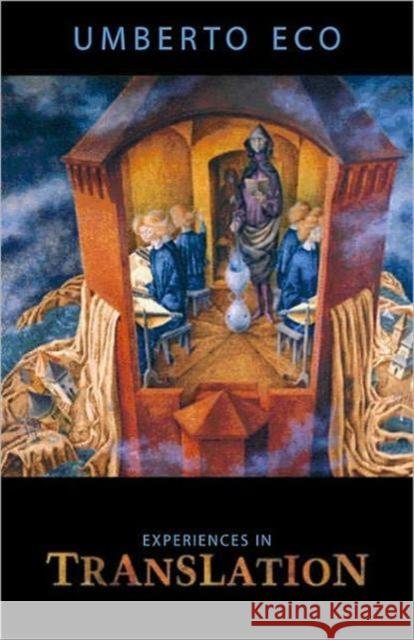
In this book Umberto Eco argues that translation is not about comparing two languages, but about the interpretation of a text in two different languages, thus involving a shift between cultures. An author whose works have appeared in many languages, Eco is also the translator of G?rard de Nerval's Sylvie and Raymond Queneau's Exercices de style from French into Italian. In Experiences in Translation he draws on his substantial practical experience to identify and discuss some central problems of translation. As he convincingly demonstrates, a translation can express an...
In this book Umberto Eco argues that translation is not about comparing two languages, but about the interpretation of a text in two different lang...
Wir befinden uns im 12. Jahrhundert, zur Zeit der Kreuzzge. Baudolino, ein gewitzter Bauernsohn aus dem Piemont, wird Adoptivsohn des Kaisers Friedrich I. Barbarossa. Den Kopf voller Flausen, Phantasien und Lgen, lenken seine irrwitzigen Ideen von nun an den Lauf der Weltgeschichte. Von den Liebesbriefen an die Kaiserin, den undurchsichtigen Machenschaften bei der Belagerung Alessandrias und dem rtselhaften Tod Barbarossas gar nicht zu reden ...
Wir befinden uns im 12. Jahrhundert, zur Zeit der Kreuzzge. Baudolino, ein gewitzter Bauernsohn aus dem Piemont, wird Adoptivsohn des Kaisers Friedric...
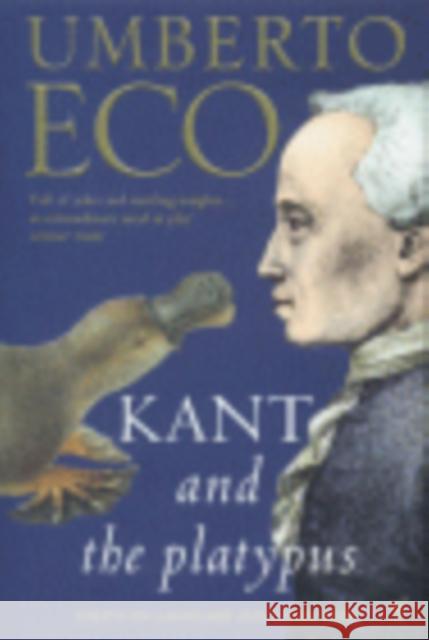
Umberto Eco undertakes a series of idiosyncratic and typically brilliant explorations, starting from the perceived data of common sense, from which flow stories or fables, often with animals, to expound a clear critique of Kant.
Umberto Eco undertakes a series of idiosyncratic and typically brilliant explorations, starting from the perceived data of common sense, from which fl...
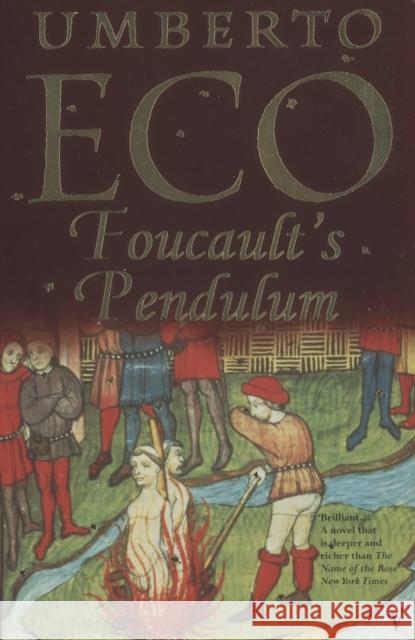
This novel by the author of The Name of the Rose follows that book's format of a complex intellectual thriller. The plot ranges back and forth through the centuries, full of arcane knowledge, secret societies, love, death, passion and perversion.
This novel by the author of The Name of the Rose follows that book's format of a complex intellectual thriller. The plot ranges back and forth through...
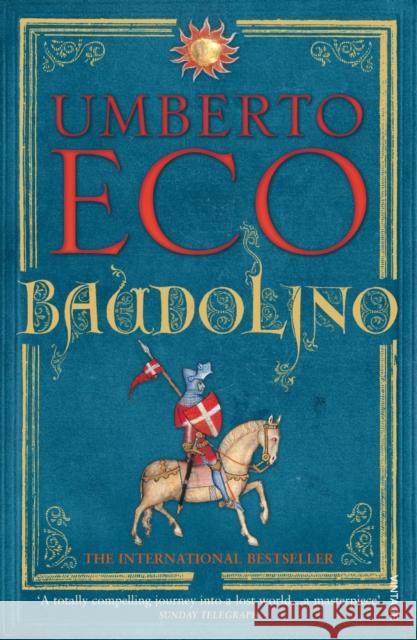
It is April 1204, and Constantinople, the splendid capital of the Byzantine Empire, is being sacked and burned by the knights of the Fourth Crusade. Amid the carnage and confusion, one Baudolino saves a Byzantine historian and high court official from certain death at the hands of the crusading warriors, and proceeds to tell his own story.
It is April 1204, and Constantinople, the splendid capital of the Byzantine Empire, is being sacked and burned by the knights of the Fourth Crusade. A...