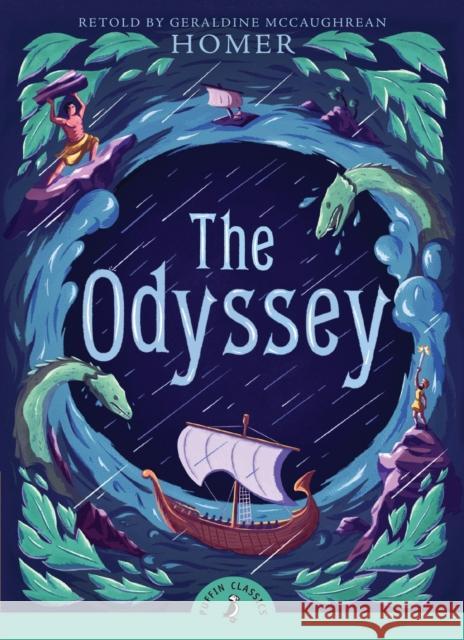
After ten years of war, Odysseus turns his back on Troy and sets sail for home. But his voyage takes another ten years and he must face many dangers - Polyphemus the greedy one-eyed giant, Scylla the six-headed sea monster and even the wrath of the gods themselves - before he is reunited with his wife and son.
After ten years of war, Odysseus turns his back on Troy and sets sail for home. But his voyage takes another ten years and he must face many dangers -...
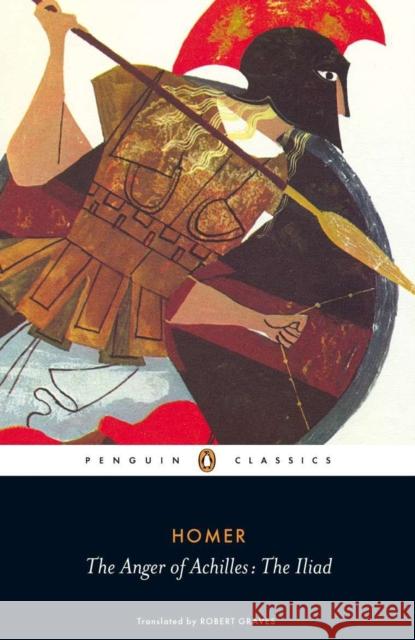
Robert Graves's dynamic retelling of Homer's powerful epic poem This edition of Homer 's Iliad, retold with authority and grace by the incomparable Robert Graves, takes a revered classic back to its roots as popular entertainment. War is raging between the Greeks and the Trojans. Achilles, the great warrior champion of the Greek army, is angrily sulking in his tent and refusing to fight, after an argument with his leader, Agamemnon. But when the Trojan warrior Hector kills Achilles' beloved friend Patroclus, Achilles plunges back into battle to seek his bloody revenge-even...
Robert Graves's dynamic retelling of Homer's powerful epic poem This edition of Homer 's Iliad, retold with authority and grace by t...
By its evocation of a real or imaged heroic age, its contrasts of character and its variety of adventure, above all by its sheer narrative power, the Odyssey has won and preserved its place among the greatest tales in the world. It tells of Odysseus' adventurous wanderings as he returns from the long war at Troy to his home in the Greek island of Ithaca, where his wife Penelope and his son Telemachus have been waiting for him for twenty years. He meets a one-eyed giant, Polyphemus the Cyclops; he visits the underworld; he faces the terrible monsters Scylla and Charybdis; he extricates himself...
By its evocation of a real or imaged heroic age, its contrasts of character and its variety of adventure, above all by its sheer narrative power, the ...
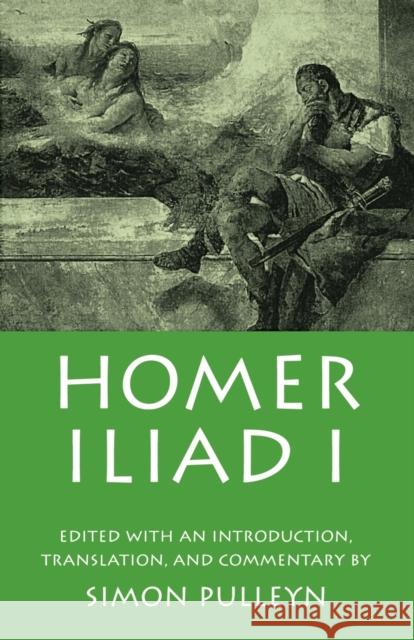
Iliad I provides the commentary and student aids lacking in larger volumes of Homer's work. It contains a full Introduction designed to highlight the most important features of the text. There are sections on the Iliad and its qualities, the Homeric question, dating, oriental influences, style, gods, men, the transmission of the text, the scholia, the epic dialect, and metre. The Commentary, as well as containing material addressed to advanced readers, is also designed to be accessible to those who are new to Homer. The Greek text of Iliad I is printed with a facing English translation of a...
Iliad I provides the commentary and student aids lacking in larger volumes of Homer's work. It contains a full Introduction designed to highlight the ...
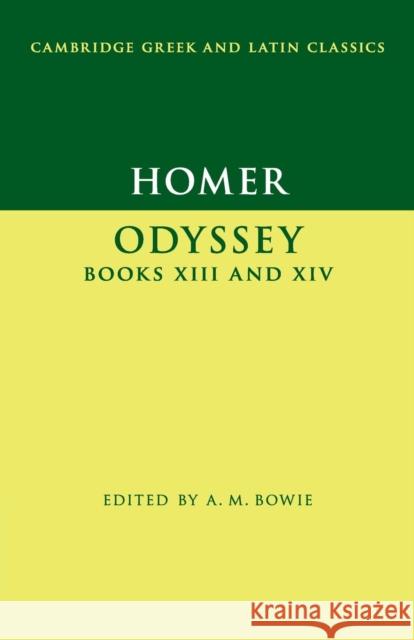
The second part of the Odyssey takes epic in new directions, giving very significant roles to people of 'lower status' and their way of life: epic notions of the primacy of the aristocrat and of the achievements of the Trojan War are submitted to scrutiny. Books XIII-XIV contain some of the subtlest human exchanges in the poem, as Athena and Odysseus spar with each other and Odysseus tests the quiet patience of his swineherd Eumaeus. The principal themes and narrative structures, especially of disguise and recognition, which the second part uses with remarkable economy, are established here....
The second part of the Odyssey takes epic in new directions, giving very significant roles to people of 'lower status' and their way of life: epic not...
Books XVII and XVIII of the Odyssey feature, among other episodes, the disguised Odysseus' penetration of his home after an absence of twenty years and his first encounter with his wife. The commentary provides linguistic and syntactical guidance suitable for upper-level students along with detailed consideration of Homer's compositional and narrative techniques, his literary artistry and the poem's central themes. An extensive introduction considers questions of formulaic composition, the nature of the poem's audience and the context of its performance, and isolates the concerns most...
Books XVII and XVIII of the Odyssey feature, among other episodes, the disguised Odysseus' penetration of his home after an absence of twenty years an...
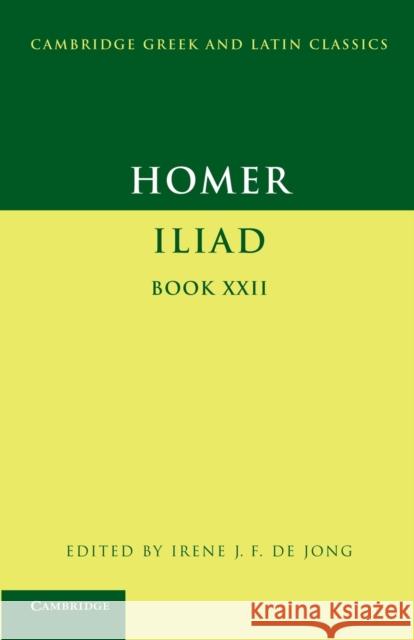
Book XXII recounts the climax of the Iliad: the fatal encounter between the main defender of Troy and the greatest warrior of the Greeks, which results in the death of Hector and Achilles' revenge for the death of his friend Patroclus; but at the same time adumbrates Achilles' own death and the fall of Troy. The introduction summarises central debates in Homeric scholarship, such as the circumstances of composition and the literary interpretation of an oral poem, and offers synoptic discussions of the structure of the Iliad, the role of the narrator, similes and epithets. There is a separate...
Book XXII recounts the climax of the Iliad: the fatal encounter between the main defender of Troy and the greatest warrior of the Greeks, which result...
This volume introduces materials that are the core knowledge in the theory of computation. The book is self-contained, with a preliminary chapter describing key mathematical concepts and notations and subsequent chapters moving from the qualitative aspects of classical computability theory to the quantitative aspects of complexity theory. Dedicated chapters on undecidability, NP-completeness, and relative computability round off the work, which focuses on the limitations of computability and the distinctions between feasible and intractable. Topics and features: *Concise, focused materials...
This volume introduces materials that are the core knowledge in the theory of computation. The book is self-contained, with a preliminary chapter desc...