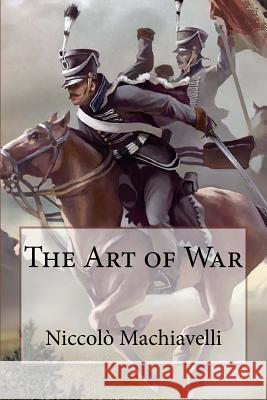
The Art of War (Italian: Dell'arte della guerra) is a treatise by the Italian Renaissance political philosopher and historian Niccolo Machiavelli. The format of The Art of War is a socratic dialogue. The purpose, declared by Lord Fabrizio Colonna (perhaps Machiavelli's persona) at the outset, "To honor and reward virtu, not to have contempt for poverty, to esteem the modes and orders of military discipline, to constrain citizens to love one another, to live without factions, to esteem less the private than the public good." To these ends, Machiavelli notes in his preface, the military is like...
The Art of War (Italian: Dell'arte della guerra) is a treatise by the Italian Renaissance political philosopher and historian Niccolo Machiavelli. The...
The Prince Summary The Prince begins with an address to Lorenzo de Medici, in which Machiavelli explains that he is seeking favor with the prince by offering him some of his knowledge. He then proceeds to classify the various kinds of states: republics, hereditary princedoms, brand-new princedoms, and mixed principalities. New states are his primary focus, for those are the hardest to deal with. A conquered state whose original prince was its sole ruler is difficult to conquer, but easy to maintain; a conquered state in which the prince shared power with the barons is easy to conquer, but...
The Prince Summary The Prince begins with an address to Lorenzo de Medici, in which Machiavelli explains that he is seeking favor with the prince by o...
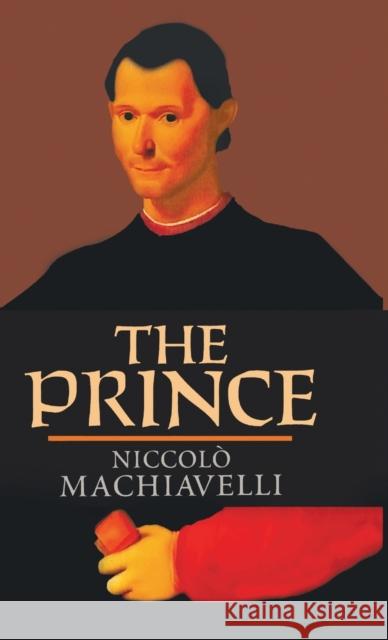
The Prince is a 16th-century political treatise, by the Italian diplomat and political theorist, Niccolo Machiavelli. From correspondence a version appears to have been distributed in 1513, using a Latin title, De Principatibus (About Principalities). However, the printed version was not published until 1532, five years after Machiavelli's death. This was done with the permission of the Medici pope Clement VII, but "long before then, in fact since the first appearance of The Prince in manuscript, controversy had swirled about his writings"
The Prince is a 16th-century political treatise, by the Italian diplomat and political theorist, Niccolo Machiavelli. From correspondence a version ap...
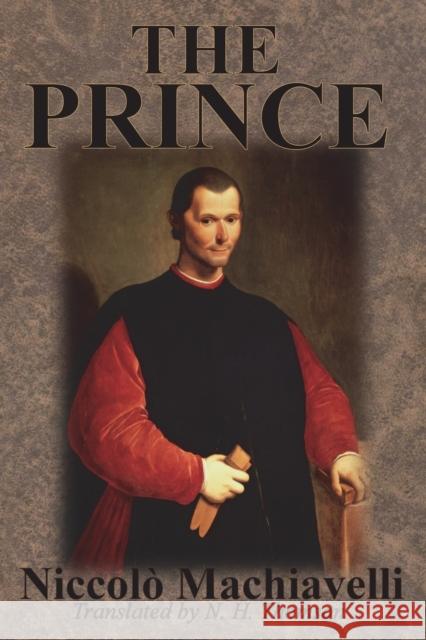
Unabridged value reproduction of THE PRINCE, by Niccolo Machiavelli and translated by N. H. Thomson for a Harvard series, is game theory from the year 1513.
THE PRINCEis divided into 26 chapters covering all the steps of power, be it in the office or across continents. Topics include various forms of power (mixed, heredity), how power is acquired (with help, through criminal acts), and important aspects of power (bearing, flatters, secretaries).
No student of influence should be without this...
Unabridged value reproduction of THE PRINCE, by Niccolo Machiavelli and translated by N. H. Thomson for ...
The Discourses on Livy (Italian: Discorsi sopra la prima deca di Tito Livio, literally "Discourses on the First Decade of Titus Livy") is a work of political history and philosophy written in the early 16th century (ca. 1517) by the Italian writer and political theorist Niccolo Machiavelli, best known as the author of The Prince. The Discourses were published posthumously with papal privilege in 1531. The title identifies the work's subject as the first ten books of Livy's Ab urbe condita, which relate the expansion of Rome through the end of the Third Samnite War in 293 BCE, although...
The Discourses on Livy (Italian: Discorsi sopra la prima deca di Tito Livio, literally "Discourses on the First Decade of Titus Livy") is a work of po...
The Prince shocked Europe in the sixteenth century--clearly describing and analyzing the tactics used haphazardly by rulers of the day. His advice has been studied and heeded ever since.
The Prince shocked Europe in the sixteenth century--clearly describing and analyzing the tactics used haphazardly by rulers of the day. Hi...
Obra mal entendida hasta por sus mas fieles biografos y admiradores, El Principe es lo que manifiesta ser: una leccion a su Principe sobre el manejo del poder; no es, y no pretende ser un tratado de etica politica. Bajo este punto de vista, las criticas dirigidas a esta magistral obra de Machiavelli por su falta de contenido moral, aparecen vacias, siendo inexistente el objeto mismo de esas criticas. El secreto del Principe reside en su explicita y noble invocacion a la unidad de la Peninsula, expresada, quiza, en tiempos demasiados tempranos para pretender que pudiese ser realizada.
Obra mal entendida hasta por sus mas fieles biografos y admiradores, El Principe es lo que manifiesta ser: una leccion a su Principe sobre el manejo d...
As a young Florentine envoy to the courts of France and the Italian principalities, Niccolò Machiavelli was able to observe firsthand the lives of people strongly united under one powerful ruler. His fascination with that political rarity and his intense desire to see the Medici family assume a similar role in Italy provided the foundation for his "primer for princes." In this classic guide to acquiring and maintaining political power, Machiavelli used a rational approach to advise prospective rulers, developing logical arguments and alternatives for a number of...
As a young Florentine envoy to the courts of France and the Italian principalities, Niccolò Machiavelli was able to o...
As a young Florentine envoy to the courts of France and the Italian principalities, Niccolò Machiavelli was able to observe firsthand the lives of people strongly united under one powerful ruler. His fascination with that political rarity and his intense desire to see the Medici family assume a similar role in Italy provided the foundation for his "primer for princes." In this classic guide to acquiring and maintaining political power, Machiavelli used a rational approach to advise prospective rulers, developing logical arguments and alternatives for a number of potential problems,...
As a young Florentine envoy to the courts of France and the Italian principalities, Niccolò Machiavelli was able to observe firsthand the li...
Benche si tratti dell'unico lavoro storico-politico dell'autore pubblicato mentre questi era ancora in vita, e un libro meno letto e conosciuto del Principe, uscito postumo. L'opera e scritta, nello stile del dialogo, con lo scopo, dichiarato in principio da Fabrizio Colonna (alter ego dello stesso Machiavelli)
Benche si tratti dell'unico lavoro storico-politico dell'autore pubblicato mentre questi era ancora in vita, e un libro meno letto e conosciuto del Pr...