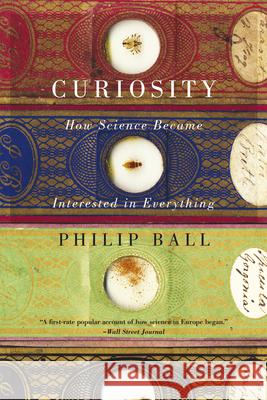
With the recent landing of the Mars rover Curiosity, it seems safe to assume that the idea of being curious is alive and well in modern science--that it's not merely encouraged but is seen as an essential component of the scientific mission. Yet there was a time when curiosity was condemned. Neither Pandora nor Eve could resist the dangerous allure of unanswered questions, and all knowledge wasn't equal--for millennia it was believed that there were some things we should not try to know. In the late sixteenth century this attitude began to change dramatically, and in Curiosity: How...
With the recent landing of the Mars rover Curiosity, it seems safe to assume that the idea of being curious is alive and well in modern science--that ...
If offered the chance--by cloak, spell, or superpower--to be invisible, who wouldn't want to give it a try? We are drawn to the idea of stealthy voyeurism and the ability to conceal our own acts, but as desirable as it may seem, invisibility is also dangerous. It is not just an optical phenomenon, but a condition full of ethical questions. As esteemed science writer Philip Ball reveals in this book, the story of invisibility is not so much a matter of how it might be achieved but of why we want it and what we would do with it. In this lively look at a timeless idea, Ball provides the...
If offered the chance--by cloak, spell, or superpower--to be invisible, who wouldn't want to give it a try? We are drawn to the idea of stealthy voyeu...