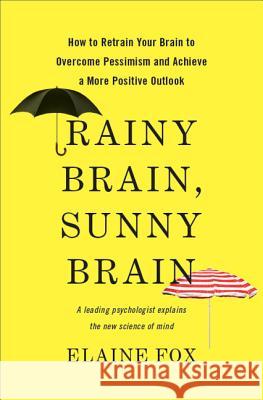
Are you optimistic or pessimistic? Glass half-full or half-empty? Do you look on the bright side or turn towards the dark? These are easy questions for most of us to answer, because our personality types are hard-wired into our brains. As pioneering psychologist and neuroscientist Elaine Fox has discovered, our outlook on life reflects our primal inclination to seek pleasure or avoid danger--inclinations that, in many people, are healthily balanced. But when our "fear brain" or "pleasure brain" is too strong, the results can be disastrous, as those of us suffering from debilitating...
Are you optimistic or pessimistic? Glass half-full or half-empty? Do you look on the bright side or turn towards the dark? These are easy questions...
Five twists on classic fairy tales from five mesmerizing authors--including -Taken in Death, - a Lieutenant Eve Dallas story from #1 New York Times bestselling author J. D. Robb.
Once upon a time, in a world far removed from the days when fairy tales were new, five bestselling authors spin versions that take the classic stories into a new dimension. You'll recognize Hansel and Gretel, Cinderella, Sleeping Beauty, and other enduring characters, but they'll exist in realms beyond your imagination, where the familiar is transformed into the extraordinary and otherworldly....
Five twists on classic fairy tales from five mesmerizing authors--including -Taken in Death, - a Lieutenant Eve Dallas story from #1 New York Ti...
It is widely recognized that visual processes modulate many social interactions. For example, the eye-gaze of another person is a powerful cue to guide attention to a particular part of the visual field. Conversely, a direct gaze may indicate potential threat or the opportunity for a sexual encounter. In addition, the social or affective significance of a stimulus, as well as the mood state of the observer, can have profound effects on basic attentional and perceptual processes. This special issue is aimed at elucidating the role of visual processes in social interactions by linking work on...
It is widely recognized that visual processes modulate many social interactions. For example, the eye-gaze of another person is a powerful cue to guid...