G.K. Chesterton's collected essays on subjects ranging from detective stories and penny dreadfuls to heraldry and patriotism. The essays originally appeared in "The Speaker" but were edited and revised for republication.
G.K. Chesterton's collected essays on subjects ranging from detective stories and penny dreadfuls to heraldry and patriotism. The essays originally ap...
"Father Brown is a direct challenge to the conventional detective and in many ways he is more amusing and ingenious." -- Saturday Review Chesterton portrays Father Brown as a short, stumpy Roman Catholic priest, with shapeless clothes and a large umbrella, and an uncanny insight into human evil. "How in Tartarus," cried Flambeau, "did you ever hear of the spiked bracelet?" -- "Oh, one's little flock, you know " said Father Brown, arching his eyebrows rather blankly.
"Father Brown is a direct challenge to the conventional detective and in many ways he is more amusing and ingenious." -- Saturday Review Chesterton po...
G.K. Chesterton was born on May 29, 1874 in London. He was known for writing academic commentary, poetry and short stories. His interest in theology and conversion to Catholicism led him to write religious fiction. In 1908, he wrote the novel The Man Who Was Thursday. His most popular work was a detective series featuring a sleuth named Father Brown. He died in 1936.
G.K. Chesterton was born on May 29, 1874 in London. He was known for writing academic commentary, poetry and short stories. His interest in theology a...
A prolific and popular writer, G. K. Chesterton (1874-1936) is best known as the creator of detective-priest Father Brown (even though Chesterton's mystery stories constitute only a small fraction of his writings). The eight adventures in this classic British mystery trace the activities of Horne Fisher, the man who knew too much, and his trusted friend Harold March. Although Horne's keen mind and powerful deductive gifts make him a natural sleuth, his inquiries have a way of developing moral complications.
A prolific and popular writer, G. K. Chesterton (1874-1936) is best known as the creator of detective-priest Father Brown (even though Chesterton's my...
G.K. Chesterton's 1908 masterpiece, The Man Who Was Thursday, is a metaphysical thriller, and a detective story filled with poetry and politics. Gabriel Syme is a poet and a police detective. Lucian Gregory is a poet and a bomb-throwing anarchist. Syme infiltrates a secret meeting of anarchists and becomes 'Thursday', one of the seven members of the Central Anarchist Council. He soon learns, however, that he is not the only one in disguise, and the nightmare begins...
G.K. Chesterton's 1908 masterpiece, The Man Who Was Thursday, is a metaphysical thriller, and a detective story filled with poetry and politics. Gabri...
"We wish you'd get rid of what you've got here, sir," he observed, digging doggedly. "Nothing'll grow right with them here." "Shrubs " said the Squire, laughing. "You don't call the peacock trees shrubs, do you? Fine tall trees -- you ought to be proud of them." "Ill weeds grow apace," observed the gardener. "Weeds can grow as houses when somebody plants them." Then he added: "Him that sowed tares in the Bible, Squire." "Oh, blast your --" began the Squire, and then replaced the more apt and alliterative word "Bible" by the general word "superstition."
"We wish you'd get rid of what you've got here, sir," he observed, digging doggedly. "Nothing'll grow right with them here." "Shrubs " said the Squire...
'I was born a Victorian; and sympathise not a little with the serious Victorian Spirit.' In this engaging and extremely personal account G K Chesterton expounds his views on Victorian literature. Many of his opinions reflect the conventions of the age; however of the Victorian novel he refreshingly comments 'it is an art in which women are quite beyond controversy'. Equally uncompromising about poets and poetry he does not hesitate to call Tennyson 'a provincial Virgil'. This book is an important landmark in our understanding of an age which produced some of Britain's most widely enjoyed...
'I was born a Victorian; and sympathise not a little with the serious Victorian Spirit.' In this engaging and extremely personal account G K Chesterto...
Chesterton has been called the Prince of Paradox. His works include journalism, philosophy, poetry, biography, fantasy and detective stories. Chesterton has great fun satirizing the Victorian sleuths such as Sherlock Holmes . These 39 tales will delight the reader. Chesterton said that these stories just came to him like sitting still and letting them light on him like flies. Some of these tales are just for fun while other are filled with good common sense.
Chesterton has been called the Prince of Paradox. His works include journalism, philosophy, poetry, biography, fantasy and detective stories. Chestert...
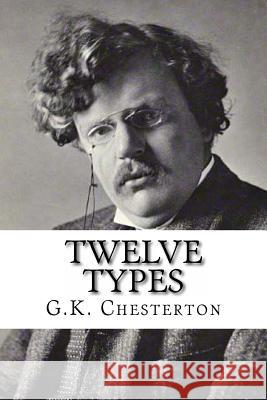
G. K. Chesterton's biographical essays provide unique portraits of 12 of Europe's most defining figures. Written by one of the world's master essayists, this collection richly expresses Chesterton's thoughts on Charlotte Bronte, William Morris, Byron, Pope, St. Francis of Assisi, Rostand, Charles II, Stevenson, Thomas Carlyle, Tolstoy, Savonarola, and Sir Walter Scott. The book is a perfect companion for any literature, politics, or history course dealing with European history. It is also an excellent addition to any personal or scholarly library."
G. K. Chesterton's biographical essays provide unique portraits of 12 of Europe's most defining figures. Written by one of the world's master essayist...
G.K. Chesterton was born on May 29, 1874 in London. He was known for writing academic commentary, poetry and short stories. His interest in theology and conversion to Catholicism led him to write religious fiction. In 1908, he wrote the novel The Man Who Was Thursday. His most popular work was a detective series featuring a sleuth named Father Brown. He died in 1936.
G.K. Chesterton was born on May 29, 1874 in London. He was known for writing academic commentary, poetry and short stories. His interest in theology a...