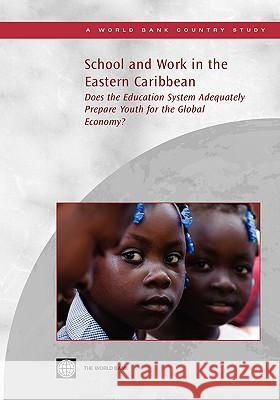
As the global economy rapidly changes and new technologies are introduced, more highly-skilled workers are required. In the countries of the Organization of Eastern Caribbean States (OECS), firms struggle to fill skilled positions due to a lack of qualified candidates, while the number of unemployed low skilled workers is growing. This paradox especially affects youth. Even during recent economic booms, youth unemployment has remained high, indicating a mismatch between skills acquired in school and the critical skills demanded by the labor market. More relevant education and training is...
As the global economy rapidly changes and new technologies are introduced, more highly-skilled workers are required. In the countries of the Organizat...
Disability is an important issue for the transition countries of Eastern Europe and the former Soviet Union. Not only is a significant portion of their population either in poor health or disabled--with implications for labor force participation and productivity--but their aging demographics project an increase in the share of disabled people, raising concerns about the sustainability of social protection programs. Thus, if these heavily resource-strapped countries fail to deal in an efficient manner with disability and health issues in their population, they could face serious challenges to...
Disability is an important issue for the transition countries of Eastern Europe and the former Soviet Union. Not only is a significant portion of thei...
'The World Bank Research Program 2008-2009: Abstracts of Current Studies' is a compendium of research projects initiated, ongoing, or completed in fiscal years 2008 to 2009 by World Bank staff and consultants.
'The World Bank Research Program 2008-2009: Abstracts of Current Studies' is a compendium of research projects initiated, ongoing, or completed in fis...
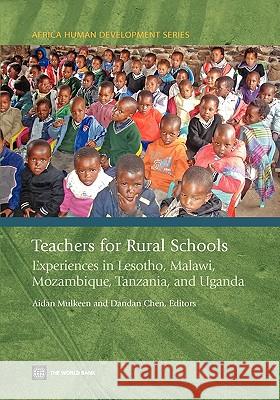
Much is going well with the effort to provide universal primary education in Sub-Saharan Africa. Gross enrollment rates have increased from 78 percent in 1998/99 to 91 percent in 2002/03; sizable investments have greatly improved school infrastructure and access; and large numbers of new teachers have been recruited. But educating the children in remote rural areas continues to be a challenge. Schools in hard-to-reach locations find it difficult to attract and retain teachers. Therefore, the deployment, effectiveness, management, and support of teachers in these areas require special...
Much is going well with the effort to provide universal primary education in Sub-Saharan Africa. Gross enrollment rates have increased from 78 percent...
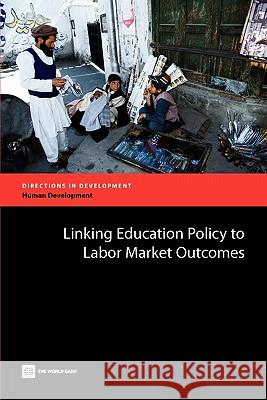
'Linking Education Policy to Labor Market Outcomes' examines current research and new evidence from Ghana and Pakistan--representative of two of the poorest regions of the world--to assess how education can increase income and help people move out of poverty. This study indicates that in addition to early investments in cognitive and noncognitive skills--which produce a high return and lower the cost of later educational investment by making learning at later ages more efficient--quality, efficiency, and linkages to the broader macro-economic context also matter. Education and relevant skills...
'Linking Education Policy to Labor Market Outcomes' examines current research and new evidence from Ghana and Pakistan--representative of two of the p...
Land is a key component of the wealth of any nation. Throughout history, virtually all civilizations have spent considerable time defining land rights and establishing institutions to administer them. Well-defined, secure, and transferable rights to land are crucial to development efforts. In developing countries, most land is used for agricultural production, a mainstay of economic sustenance. The possession of land rights also typically ensures a baseline of shelter and food supply and allows people to turn latent assets into live capital through entrepreneurial activity. Once secure in...
Land is a key component of the wealth of any nation. Throughout history, virtually all civilizations have spent considerable time defining land rights...
'...developing countries, complementing their far-reaching privatization programs, are engaged in deregulating various sectors of their economies and devising new regulatory frameworks for others, particularly the utilities sectors.' As economies become more open, pressures on countries to become more competitive drive the call for regulatory reform to reduce costs and foster increased productivity, competitiveness, and growth. This report provides an overview of the costs and benefits of regulation throughout the world. It provides case histories of regulation in different countries,...
'...developing countries, complementing their far-reaching privatization programs, are engaged in deregulating various sectors of their economies and ...
Since 1978, the World Bank's annual 'World Development Report' (WDR) has provided in-depth analysis and policy recommendations on a specific and important aspect of international development from agriculture, the role of the state, economic growth, and labor to infrastructure, health, the environment, and poverty. In the process, it has become a highly influential publication that is consulted by international organizations, national governments, scholars, and civil society networks to inform their decision-making processes. In this essay, Shahid Yusuf examines the last 30 years of...
Since 1978, the World Bank's annual 'World Development Report' (WDR) has provided in-depth analysis and policy recommendations on a specific and impor...
Reforms in financial management are critical and should be approached in an integrated way covering planning, budgeting, accounting, internal control, internal audit, external audit, and oversight. Reform in only one area of financial management will not result in the same degree of expected benefits. This diagnostic study analyzes the budgeting, accounting, financial reporting and auditing systems, and the standards and practices in both the public and private sectors of Nepal's economy. The objectives of this study are to evaluate the strengths and weaknesses of the system, to assess the...
Reforms in financial management are critical and should be approached in an integrated way covering planning, budgeting, accounting, internal control,...
Albania provides a small amount of social assistance to nearly 20% of its population through a system which allows a degree of community discretion in determining distribution. This study investigates the poverty targeting of this program. It indicates that relative to other safety net programs in low income countries, social assistance in Albania is fairly well targeted to the poor.
Albania provides a small amount of social assistance to nearly 20% of its population through a system which allows a degree of community discretion in...