Columbus stumbled upon the New World while seeking the riches of the orient, yet native peoples of the Americas already held riches beyond his knowing. From maize to potatoes to native beans, a variety of crops unfamiliar to Europeans were cultivated by indigenous peoples of the Americas, with other foods like chilies and chocolate on hand to make diets all the more interesting (even when used in combination, as aficionados of mole will attest). Chilies to Chocolate traces the biological and cultural history of some New World crops that have worldwide economic importance....
Columbus stumbled upon the New World while seeking the riches of the orient, yet native peoples of the Americas already held riches beyond his ...
Emerging from a School of American Research, this work reviews the general status of archaeological knowledge in 9 key regions of the Southwest to examine broader questions of cultural development, which affected the Southwest as a whole, and to consider an overall conceptual model of the prehistoric Southwest after the advent of sedentism."
Emerging from a School of American Research, this work reviews the general status of archaeological knowledge in 9 key regions of the Southwest to exa...
Mesa Verde, Chaco Canyon, Canyon de Chelly, and Paquime are as well known to tourists as they are to scholars as emblems of the American Southwest. This region has been the scene of intense archaeological investigation for more than a hundred years, with more research done here than in any other part of the United States. The arid and sparsely populated landscape provides excellent site preservation, while the living native peoples give cultural continuity with the past. In the first decades of the twentieth century Americans saw the Southwest as exotic as opposed to the Mexican perspective,...
Mesa Verde, Chaco Canyon, Canyon de Chelly, and Paquime are as well known to tourists as they are to scholars as emblems of the American Southwest. Th...
Tijeras Canyon, between the eastern New Mexico plains and the Rio Grande Valley, is rich in records of the past. Possibly as early as 900 AD and intermittently for centuries after, peoples of the Southwest, attracted by the protected resources of the canyon, established settlements and villages there. Archaeological study of the canyon can be based on these population changes: patterns of growth, adaptation, and abandonment. Tijeras Canyon: Analyses of the Past is the result of extensive archaeological study of the canyon conducted by the University of New Mexico summer field school of...
Tijeras Canyon, between the eastern New Mexico plains and the Rio Grande Valley, is rich in records of the past. Possibly as early as 900 AD and inter...
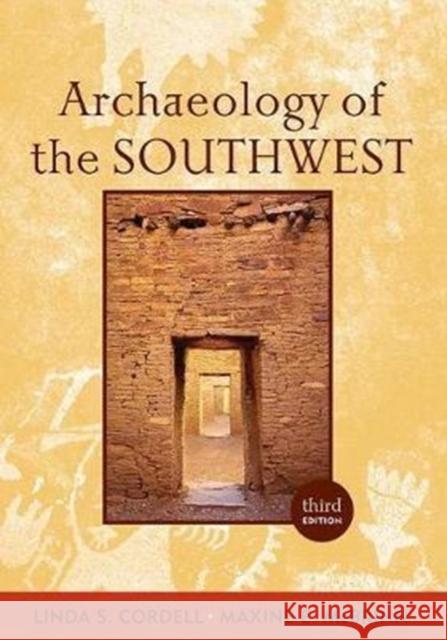
The long-awaited third edition of this well-known textbook continues to be the go-to text and reference for anyone interested in Southwest archaeology. It provides a comprehensive summary of the major themes and topics central to modern interpretation and practice. More concise, accessible, and student-friendly, the Third Edition offers students the latest in current research, debates, and topical syntheses as well as increased coverage of Paleoindian and Archaic periods and the Casas Grandes phenomenon. It remains the perfect text for courses on Southwest archaeology at the advanced...
The long-awaited third edition of this well-known textbook continues to be the go-to text and reference for anyone interested in Southwest archaeology...
The peoples of the American Southwest during the 13th through the 17th centuries witnessed dramatic changes in settlement size, exchange relationships, ideology, social organization, and migrations that included those of the first European settlers. Concomitant with these world-shaking events, communities of potters began producing new kinds of wares particularly polychrome and glaze-paint decorated pottery that entailed new technologies and new materials. The contributors to this volume present results of their collaborative research into the production and distribution of these new...
The peoples of the American Southwest during the 13th through the 17th centuries witnessed dramatic changes in settlement size, exchange relationsh...