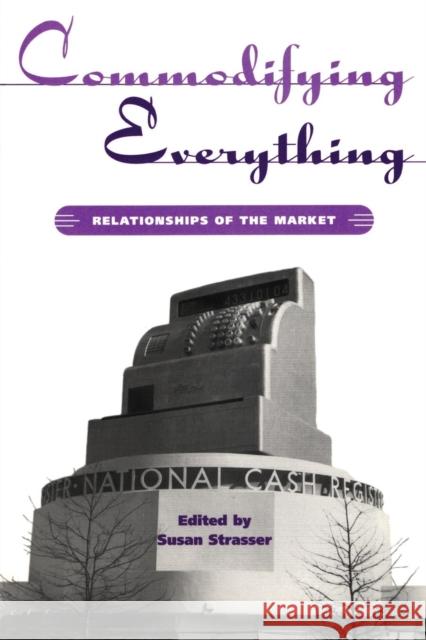
The history of consumption is a prism through which many aspects of social and political life may be viewed. The essays in this collection represent a variety of approaches and raise such themes as consumption and democracy, the development of a global economy, the role of the state, the centrality of consumption to Cold War politics, the importance of the Second World War as a historical divide, the language of consumption, the contexts of locality, race, ethnicity, gender, and class, and the environmental consequences of twentieth-century consumer society. They explore the role of the...
The history of consumption is a prism through which many aspects of social and political life may be viewed. The essays in this collection represent a...
Women reformers in the United States and Germany maintained a brisk dialogue between 1885 and 1933. Drawing on one another's expertise, they sought to alleviate a wide array of social injustices generated by industrial capitalism, such as child labor and the exploitation of women in the workplace. This book presents and interprets documents from that exchange, most previously unknown to historians, which show how these interactions reflected the political cultures of the two nations. On both sides of the Atlantic, women reformers pursued social justice strategies. The documents discussed here...
Women reformers in the United States and Germany maintained a brisk dialogue between 1885 and 1933. Drawing on one another's expertise, they sought to...
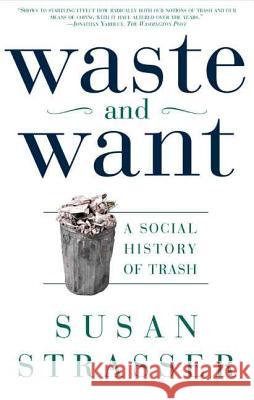
An unprecedented look at that most commonplace act of everyday life-throwing things out-and how it has transformed American society.
Susan Strasser's pathbreaking histories of housework and the rise of the mass market have become classics in the literature of consumer culture. Here she turns to an essential but neglected part of that culture-the trash it produces-and finds in it an unexpected wealth of meaning.
Before the twentieth century, streets and bodies stank, but trash was nearly nonexistent. With goods and money scarce, almost everything was reused. Strasser paints a...
An unprecedented look at that most commonplace act of everyday life-throwing things out-and how it has transformed American society.
During the twentieth century sound underwent a dramatic transformation as new technologies and social practices challenged conventional aural experience. As a result, sound functioned as a means to exert social, cultural, and political power in unprecedented and unexpected ways. The fleeting nature of sound has long made it a difficult topic for historical study, but innovative scholars have recently begun to analyze the sonic traces of the past using innovative approaches. Sound in the Age of Mechanical Reproduction investigates sound as part of the social construction of...
During the twentieth century sound underwent a dramatic transformation as new technologies and social practices challenged conventional aural exper...