Inaugurated fifty years ago as a key component in the Manhattan Project, Oak Ridge National Laboratory remains one of the nation's premier research institutions. This profusely illustrated volume, written for a non-scientific readership, chronicles the history of the laboratory from its origins to the present day. Leland Johnson and Daniel Schaffer begin their narrative in 1943 when the U.S. Army Corps of Engineers built ORNL in the hills of East Tennessee to produce plutonium for atomic weapons. After World War II, ORNL became a center for fundamental scientific research under the successive...
Inaugurated fifty years ago as a key component in the Manhattan Project, Oak Ridge National Laboratory remains one of the nation's premier research in...
On the eve of the World Summit for Sustainable Development (WSSD), held in autumn 2002 in Johannesburg, South Africa, United Nations Secretary General Kofi Annan recommended five specific areas as focal points of discussion for the global forum: Water, energy, health, agriculture and biodiversity. In his address, "Towards a Sustainable Future," delivered just four months before the WSSD, Secretary General Annan contended that concrete progress in each of these areas, often referred to by their acronym WEHAB, would be key to improving the quality of life not only in the developing world but...
On the eve of the World Summit for Sustainable Development (WSSD), held in autumn 2002 in Johannesburg, South Africa, United Nations Secretary General...
- Narrative on the history of TWAS - Insights into major issues in science in the South over the past two decades - Descriptions of some of the major players in science in the South
- Narrative on the history of TWAS - Insights into major issues in science in the South over the past two decades - Descriptions of some of the ...
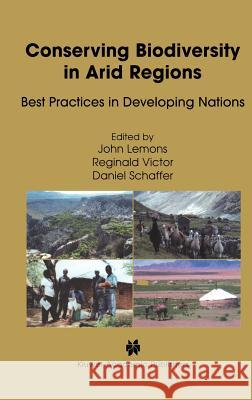
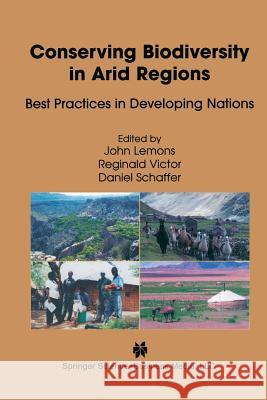
The overall goal of this book is to increase the size of and more widely disseminate the "portfolio" of research and other works aimed at protecting and sustainably utilizing biodiversity of global significance in arid and semiarid areas in developing nations. Specifically, the book focuses on best practices and lessons learnt for science, for public policy and management, for increasing the participation of local people in decision making, and for enhancing partnerships and capacity building between institutions. In part, the successful practices and programs described in this book are a...
The overall goal of this book is to increase the size of and more widely disseminate the "portfolio" of research and other works aimed at protecting a...
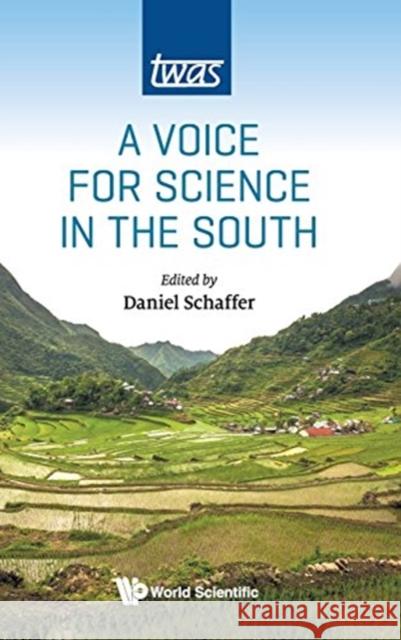
Science in the developing world has experienced historic change over the past 30 years. Nations that lacked resources for even basic science have since developed world-class research centres. Men and women who previously had no chance of pursuing scientific careers in their own countries now thrive in home-grown universities and laboratories dedicated to scientific excellence.The World Academy of Sciences (TWAS) has been front and centre during this remarkable transformation. A Voice for Science in the South tells the story of TWAS through the eyes of 11 eminent scientists associated with the...
Science in the developing world has experienced historic change over the past 30 years. Nations that lacked resources for even basic science have sinc...