• Wyszukiwanie zaawansowane
  • Kategorie
  • Kategorie BISAC
  • Książki na zamówienie
  • Promocje
  • Granty
  • Książka na prezent
  • Opinie
  • Pomoc
  • Załóż konto
  • Zaloguj się

Conserving Biodiversity in Arid Regions: Best Practices in Developing Nations » książka


zaloguj się | załóż konto
Logo Krainaksiazek.pl

koszyk

konto

szukaj
topmenu
Księgarnia internetowa
Szukaj
Książki na zamówienie
Promocje
Granty
Książka na prezent
Moje konto
Pomoc
 
 
Wyszukiwanie zaawansowane
Pusty koszyk
Bezpłatna dostawa dla zamówień powyżej 20 złBezpłatna dostawa dla zamówień powyżej 20 zł

Kategorie główne

• Nauka
 [2946912]
• Literatura piękna
 [1852311]

  więcej...
• Turystyka
 [71421]
• Informatyka
 [150889]
• Komiksy
 [35717]
• Encyklopedie
 [23177]
• Dziecięca
 [617324]
• Hobby
 [138808]
• AudioBooki
 [1671]
• Literatura faktu
 [228371]
• Muzyka CD
 [400]
• Słowniki
 [2841]
• Inne
 [445428]
• Kalendarze
 [1545]
• Podręczniki
 [166819]
• Poradniki
 [480180]
• Religia
 [510412]
• Czasopisma
 [525]
• Sport
 [61271]
• Sztuka
 [242929]
• CD, DVD, Video
 [3371]
• Technologie
 [219258]
• Zdrowie
 [100961]
• Książkowe Klimaty
 [124]
• Zabawki
 [2341]
• Puzzle, gry
 [3766]
• Literatura w języku ukraińskim
 [255]
• Art. papiernicze i szkolne
 [7810]
Kategorie szczegółowe BISAC

Conserving Biodiversity in Arid Regions: Best Practices in Developing Nations

ISBN-13: 9781402074837 / Angielski / Twarda / 2003 / 497 str.
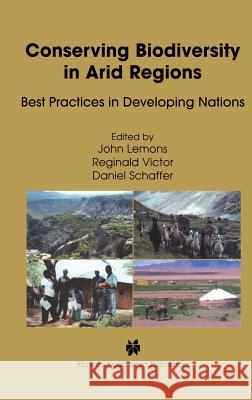
John Lemons; Reginald Victor; Daniel Schaffer
Conserving Biodiversity in Arid Regions: Best Practices in Developing Nations Lemons, J. 9781402074837 Kluwer Academic Publishers - książkaWidoczna okładka, to zdjęcie poglądowe, a rzeczywista szata graficzna może różnić się od prezentowanej.

Conserving Biodiversity in Arid Regions: Best Practices in Developing Nations

ISBN-13: 9781402074837 / Angielski / Twarda / 2003 / 497 str.

John Lemons; Reginald Victor; Daniel Schaffer
cena 605,23
(netto: 576,41 VAT:  5%)

Najniższa cena z 30 dni: 578,30
Termin realizacji zamówienia:
ok. 22 dni roboczych
Bez gwarancji dostawy przed świętami

Darmowa dostawa!

On the eve of the World Summit for Sustainable Development (WSSD), held in autumn 2002 in Johannesburg, South Africa, United Nations Secretary General Kofi Annan recommended five specific areas as focal points of discussion for the global forum: Water, energy, health, agriculture and biodiversity. In his address, "Towards a Sustainable Future," delivered just four months before the WSSD, Secretary General Annan contended that concrete progress in each of these areas, often referred to by their acronym WEHAB, would be key to improving the quality of life not only in the developing world but across the globe. For most people, I think it is fair to say that the inclusion of biodiversity in a list that focuses on basic human needs may not be self-evident. Water, energy, health and agriculture, yes. But why biodiversity? The truth is that biodiversity is just as critical to global well-being as water, energy, agriculture and health. This is because biodiversity both drives and shapes nature's intricate and dynamic structure in an enduring form and force that enables both current and future generations to enjoy its bounty.


Kategorie:
Nauka, Biologia i przyroda
Kategorie BISAC:
Nature > Environmental Conservation & Protection - General
Technology & Engineering > Agriculture - General
Technology & Engineering > Environmental - General
Wydawca:
Kluwer Academic Publishers
Język:
Angielski
ISBN-13:
9781402074837
Rok wydania:
2003
Wydanie:
2003
Ilość stron:
497
Waga:
2.00 kg
Wymiary:
23.5 x 15.5
Oprawa:
Twarda
Wolumenów:
01
Dodatkowe informacje:
Bibliografia
Wydanie ilustrowane

1 Case Studies on Conserving and Sustainably Using Biodiversity in Arid and Semiarid Regions of Southern Nations.- Africa.- 2 The Domestication of Indigenous Trees as the Basis of Sustainable Land Use in Africa.- 3 Conservation Farming with Biodiversity in South Africa: A Preliminary Evaluation of Ecosystem Goods and Services in the Bokkeveld Plateau.- 4 Strategies for In Situ Conservation of Crop Genetic Resources in Dryland Areas of Africa.- 5 A Participatory Approach for Conservation of Forest Genetic Resources.- 6 Agriculture and Biodiversity Conservation in Africa Through Indigenous Knowledge.- 7 Participation of Local Communities in the Management of Wetlands in Magadi Area, Kenya.- 8 The Value of Local and Indigenous Knowledge for the Development of Information Systems for Conservation Management.- 9 Best Practices in the World’s Oldest Desert.- 10 A Commentary on Strategies and Incentives to Improve Biodiversity in Arid and Semi-Arid Zones.- Asia.- 11 Conservation and Sustainable Use of Biodiversity in the Trans-Altai Gobi Desert of Mongolia.- 12 Ecological Assessment of Degradation Processes in the Mongolian Part of Baikal Basin.- 13 Plant Diversity and Succession of Artificial Vegetation Types and Environment in an Arid Desert Region of China.- 14 Plant Production and Diversity at Desertification Stages in Horqin Sand Grassland Region, China.- 15 Aquatic Biodiversity in Arid and Semi-Arid Zones of Asia and Water Management.- 16 Traditional Management of Biodiversity in India’s Cold Desert.- 17 Conserving Biodiversity in Arid Regions: Experiences with Protected Areas in India.- 18 Co-Management Processes to Maintain Livestock Mobility and Biodiversity in Alpine Rangelands of the Tibetan Plateau.- Latin America and the Caribbean.- 19 Theoretical Models for Regeneration of Medicinal Plants and Their Application in Sustainable Wild-Harvesting.- 20 Plants of Northeastern Brazil: A Programme in Sustainable Use of Plant Resources.- 21 Choice of Species for Recovering a Degraded Mining Area in the Semiarid Zone of Brasil.- 22 Use of Creeping Fog Water as a Non-Traditional Water Resource in Chile.- 23 Genetic Diversity and Management Implications for Vicuña Populations in Peru.- 24 Sustainable Use of the Vicuña: A Critical Analysis and the MACS Project.- 25 Sustainable Use of Andean Wildlife and Local Development of Rural Communities in Dry Areas of Latin America: A Commentary.- 26 Conflicts and Dilemmas Between Poverty and Biodiversity in the Semi-Arid Seridó of Northeast Brazil.- 27 Latin American Plant Sciences Network: A Program for the Development of Plant Sciences and Conservation of Biodiversity in Latin America.- 28 The Brazilian Biodiversity Virtual Institute.- 29 Capacity Building to Sustainably Use Biodiversity in Dryland Regions of Latin America and the Caribbean.- North Africa and the Middle East.- 30 The Importance of Native Trees in Sustaining Biodiversity in Arid Lands.- 31 Site Selection Criteria for Mangrove Afforestation Projects in Oman.- 32 The Globally Threatened Corncrake Crex crex (Egypt).- 33 Conservation of Fig (Ficus Carica L.) and Pomegranate (Punica Granatum L.) Varieties in Tunisia.- 34 A Sociological Perspective on In Situ Conservation of On-Farm Crop Genetic Diversity in Morocco.- 35 Biodiversity Conservation and Sustainable Development: A Case Study of Oman’s National Biodiversity Strategy and Action Plan.- Regionwide.- 36 Achieving Institutional Cooperation for Implementation of Sustainable Development Plans and Strategies.

Lemons, John Lemons, University of New England, Biddeford, ME.... więcej >


Udostępnij

Facebook - konto krainaksiazek.pl


Opinie o Krainaksiazek.pl na Opineo.pl

Partner Mybenefit

Krainaksiazek.pl w programie rzetelna firma Krainaksiaze.pl - płatności przez paypal

Czytaj nas na:

Facebook - krainaksiazek.pl
  • książki na zamówienie
  • granty
  • książka na prezent
  • kontakt
  • pomoc
  • opinie
  • regulamin
  • polityka prywatności

Zobacz:

  • Księgarnia czeska

  • Wydawnictwo Książkowe Klimaty

1997-2025 DolnySlask.com Agencja Internetowa

© 1997-2022 krainaksiazek.pl
     
KONTAKT | REGULAMIN | POLITYKA PRYWATNOŚCI | USTAWIENIA PRYWATNOŚCI
Zobacz: Księgarnia Czeska | Wydawnictwo Książkowe Klimaty | Mapa strony | Lista autorów
KrainaKsiazek.PL - Księgarnia Internetowa

Polityka prywatnosci - link
Krainaksiazek.pl - płatnośc Przelewy24
Przechowalnia Przechowalnia





