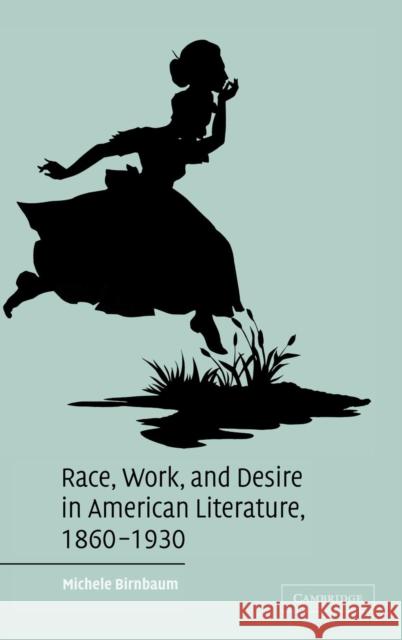
Race, Work and Desire analyses literary representations of work relationships across the colour-line from the mid-nineteenth century to the early twentieth century. Michele Birnbaum examines inter-racial bonds in fiction and literary correspondence by black and white authors and artists - including Elizabeth Keckley, Frances E. W. Harper, W. D. Howells, Grace King, Kate Chopin, Langston Hughes, Amy Spingarn and Carl Van Vechten - exploring the way servants and employers, doctors and patients, and patrons and artists negotiate their racial differences for artistic and political ends. Situating...
Race, Work and Desire analyses literary representations of work relationships across the colour-line from the mid-nineteenth century to the early twen...
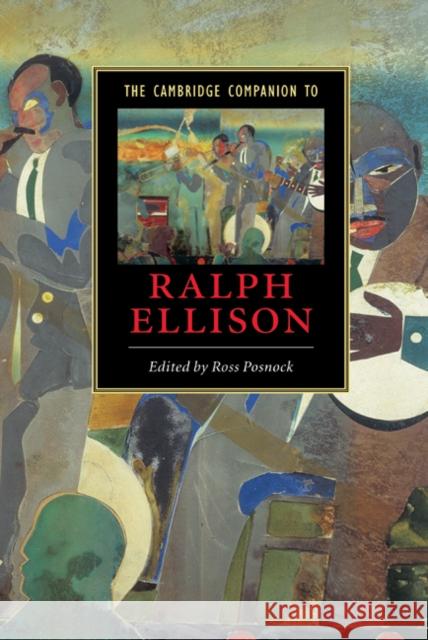
Ralph Ellison's 1952 novel Invisible Man is one of the most important controversial novels in the American canon and remains widely read and studied. This Companion provides the most up-to-date introduction to this influential and significant novelist and critic and to his masterpiece. It features newly commissioned essays, a chronology and a guide to further reading. The essays recover the compelling urgency and relevance of Ellison's political and artistic vision. Students and scholars of American and African-American literature will find this work invaluable.
Ralph Ellison's 1952 novel Invisible Man is one of the most important controversial novels in the American canon and remains widely read and studied. ...
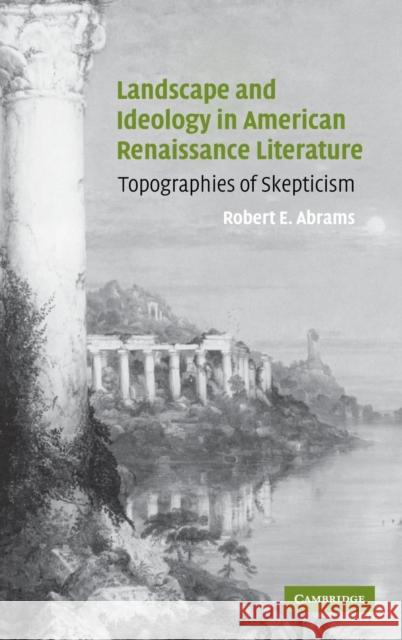
Robert Abrams argues that new concepts of space and landscape emerged in mid-nineteenth-century American writing, marking a linguistic and interpretative limit to American expansion. Abrams supports the radical elements of antebellum writing, where writers from Hawthorne to Rebecca Harding Davis disputed the naturalizing discourses of mid-nineteenth century society. Whereas previous critics find in antebellum writing a desire to convert chaos into an affirmative, liberal agenda, Abrams contends that authors of the 1840s and 50s deconstructed more than they constructed.
Robert Abrams argues that new concepts of space and landscape emerged in mid-nineteenth-century American writing, marking a linguistic and interpretat...
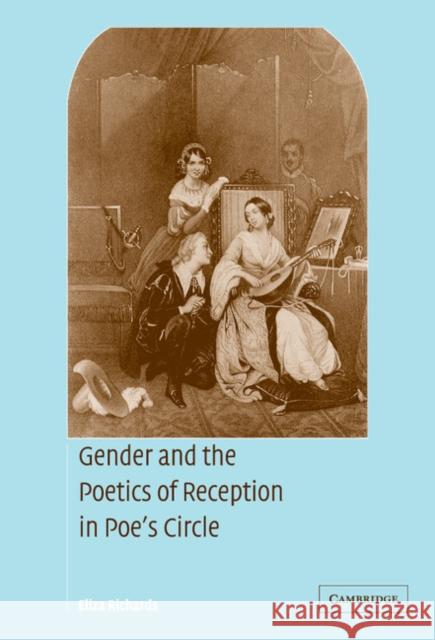
Edgar Allan Poe is frequently portrayed as an isolated idiosyncratic genius unwilling or unable to adapt himself to the cultural conditions of his time. Eliza Richards revises this portrayal through an exploration of his collaborations and rivalries with his female contemporaries. Richards interprets and re-evaluates the work of three important and largely forgotten women poets in the context of nineteenth-century lyric practices: Frances Sargent Osgood, Sarah Helen Whitman, and Elizabeth Oakes Smith.
Edgar Allan Poe is frequently portrayed as an isolated idiosyncratic genius unwilling or unable to adapt himself to the cultural conditions of his tim...
Joan Richardson provides a fascinating and compelling account of the emergence of the quintessential American philosophy: pragmatism. She demonstrates pragmatism's engagement with various branches of the natural sciences and traces the development of Jamesian pragmatism from the late nineteenth century through modernism, following its pointings into the present. Richardson combines strands from America's religious experience with scientific information to offer interpretations that break new ground in literary and cultural history. This book exemplifies the value of interdisciplinary...
Joan Richardson provides a fascinating and compelling account of the emergence of the quintessential American philosophy: pragmatism. She demonstrates...
Moving boldly between literary analysis and political theory, contemporary and antebellum US culture, Arthur Riss invites readers to rethink prevailing accounts of the relationship between slavery, liberalism, and literary representation. Situating Nathaniel Hawthorne, Harriet Beecher Stowe, and Frederick Douglass at the center of antebellum debates over the person-hood of the slave, this 2006 book examines how a nation dedicated to the proposition that 'all men are created equal' formulates arguments both for and against race-based slavery. This revisionary argument promises to be unsettling...
Moving boldly between literary analysis and political theory, contemporary and antebellum US culture, Arthur Riss invites readers to rethink prevailin...
The frontier romance, an enormously popular genre of American fiction born in the 1820s, helped redefine race for an emerging national culture. Ezra Tawil argues that the novel of white-Indian conflict provided authors and readers with an apt analogy for the problem of slavery. By uncovering the sentimental aspects of the frontier romance, Tawil redraws the lines of influence between the Indian novel of the 1820s and the sentimental novel of slavery, demonstrating how Harriet Beecher Stowe's Uncle Tom's Cabin ought to be reconsidered in this light. This study reveals how American literature...
The frontier romance, an enormously popular genre of American fiction born in the 1820s, helped redefine race for an emerging national culture. Ezra T...
The coining of the term "intellectuals" in 1898 coincided with W. E. B. Du Bois's effort to disseminate values and ideals unbounded by the color line. Du Bois's ideal of a "higher and broader and more varied human culture" is at the heart of a cosmopolitan tradition that Color and Culture identifies as a missing chapter in American literary and cultural history. The book offers a much needed and startlingly new historical perspective on "black intellectuals" as a social category, ranging over a century--from Frederick Douglass to Patricia Williams, from Du Bois, Pauline Hopkins, and...
The coining of the term "intellectuals" in 1898 coincided with W. E. B. Du Bois's effort to disseminate values and ideals unbounded by the color li...
This study examines the exchange between literature and recreational practices in 1930s America. William Solomon argues that autobiographical writers like Edward Dahlberg and Henry Miller derived aesthetic inspiration from urban manifestations of the carnival spirit: Coney Island amusement parks, burlesque, vaudeville, and the dime museum display of human oddities. More broadly, he demonstrates that the literary projects of the period pivoted around images of grotesquely disfigured bodies which appeared as part of this recreational culture.
This study examines the exchange between literature and recreational practices in 1930s America. William Solomon argues that autobiographical writers ...
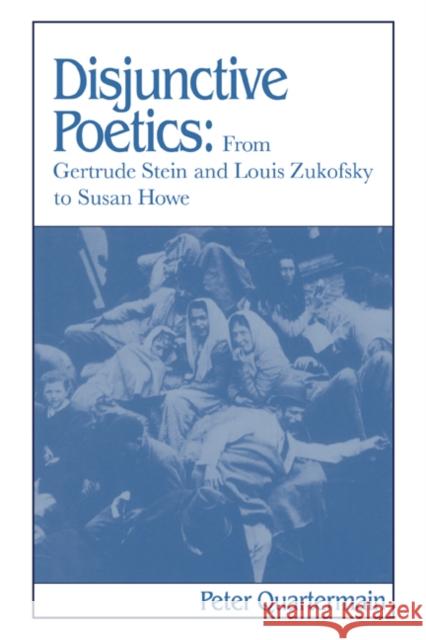
Disjunctive Poetics examines some of the most interesting and experimental contemporary writers whose work forms a counterpoint to the mainstream writing of our time. Peter Quartermain suggests that the explosion of noncanonical modern writing is linked to the severe political, social, and economic dislocation of non-English-speaking immigrants who, bringing alternative culture with them as they passed through Ellis Island in their hundreds of thousands at the turn of the century, found themselves uprooted from their tradition and disassociated from their culture. The line of American poetry...
Disjunctive Poetics examines some of the most interesting and experimental contemporary writers whose work forms a counterpoint to the mainstream writ...