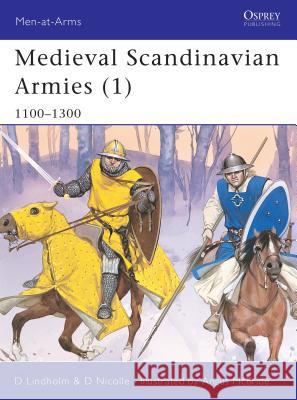
While Scandinavia's 'Viking Age' is one of the most studied aspects of early medieval history, much less has been published about the centuries that followed. Yet the armies of Sweden, Norway and Denmark offer fascinating differences from the rest of medieval Western Europe, both in their organisation and their war gear - due partly to their remoteness, climate and terrain, but partly to their long freedom from the feudal system of other kingdoms. This book explains the special nature of Scandinavian armies, shaped by the relative weakness of kings and aristocrats, and the contrasts between...
While Scandinavia's 'Viking Age' is one of the most studied aspects of early medieval history, much less has been published about the centuries that f...
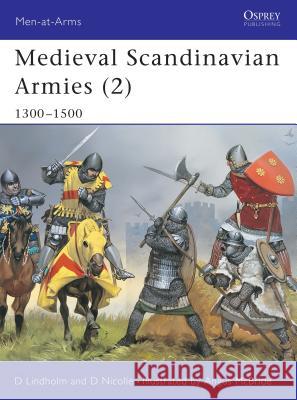
While Scandinavia's 'Viking Age' is one of the most studied aspects of early medieval history, much less has been published about the centuries which followed. Yet the armies of Sweden, Norway and Denmark offer fascinating differences from the rest of medieval Western Europe, both in their organisation and their war gear. This second of two books covers the period which saw both expansion in the Baltic, and long wars born of the attempt to bring Scandinavia under a single monarchy - the Union of Kalmar. In the North, as elsewhere, the perfection of plate armour could not prevent the steady...
While Scandinavia's 'Viking Age' is one of the most studied aspects of early medieval history, much less has been published about the centuries which ...
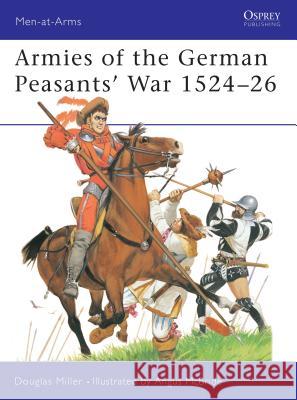
In the 1520s, a brief but savage war broke out in Germany when various insurgent groups rose to overthrow the power structure. The movement took as its emblem a peasant's shoe and the collective title of 'Bundschuh', and this became known as the Peasants' War (1524-1526) - although the rebel armies actually included as many townsmen, miners, disaffected knights and mercenary soldiers as rural peasants. The risings involved large armies of up to 18,000 men, and there were several major battles before the movement was put down with the utmost ferocity. This book details the armies, tactics,...
In the 1520s, a brief but savage war broke out in Germany when various insurgent groups rose to overthrow the power structure. The movement took as it...
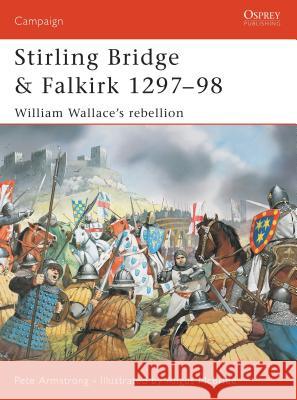
Osprey's study of William Wallace's rebellion in the First War of the Wars of Scottish Independence (1296-1357). The death of the last of the Scottish royal house of Canmore in 1290 triggered a succession crisis. Attempts to undermine Scottish independence by King Edward I of England sparked open rebellion culminating in an English defeat at the hands of William Wallace at Stirling Bridge in 1297. Edward gathered an army, marched north and at Falkirk on 22 July 1298 he brought Wallace's army to battle. Amid accusations of treachery, Wallace's spearmen were slaughtered by Edward's longbowmen,...
Osprey's study of William Wallace's rebellion in the First War of the Wars of Scottish Independence (1296-1357). The death of the last of the Scottish...
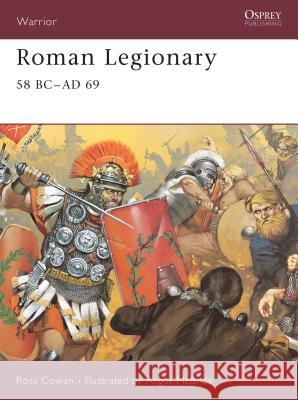
The period 31 BC-AD 43 saw the greatest expansion of the Roman Empire. In 31 BC Octavian defeated Antony at the battle of Actium and remodelled the semi-professional Roman army into a permanent force of 28 legions. Octavian became the first emperor (Augustus) and under his leadership the legions conquered northern Spain, all Europe south of the Danube line and Germany west of the Elbe. The legionaries exemplified the heroic culture of the Roman world and this title takes a behind-the-scenes look at their lives, training, weaponry and tactics, including the bloody massacre of the Teutoberg...
The period 31 BC-AD 43 saw the greatest expansion of the Roman Empire. In 31 BC Octavian defeated Antony at the battle of Actium and remodelled the se...
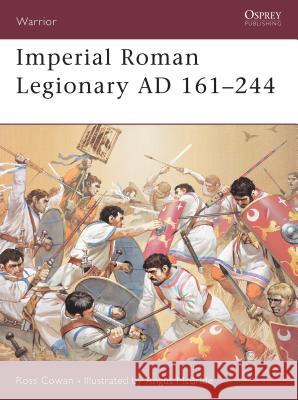
Between AD 161 and 244 the Roman legions were involved in wars and battles on a scale not seen since the late Republic. Legions were destroyed in battle, disbanded for mutiny and rebellion and formed to wage wars of conquest and defence. This volume explores the experience of the imperial legionary, concentrating on Legio II Parthica. Raised by the emperor Septimus Severus in AD 193/4, it was based at Albanum near Rome and as the emperor's personal legion, became one of the most important units in the empire.
Between AD 161 and 244 the Roman legions were involved in wars and battles on a scale not seen since the late Republic. Legions were destroyed in batt...
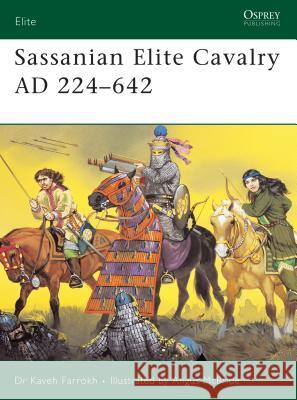
The Sassanians ruled the last great imperial Empire of Persia before the Arab conquests of the 7th century. Rome's only equal in the classical world, the Sassanian Empire had an enormous impact on the development of architecture, mythology, arts, music, military tactics and technology. Within the Sassanian military, the cavalry was the most influential element, and Sassanian cavalry tactics were adopted by the Romans, Arabs, and Turks. Their cavalry systems of weaponry, battle tactics, Tamgas, Medallions, court customs, and costumes influenced Romano-Byzantine and medieval European culture,...
The Sassanians ruled the last great imperial Empire of Persia before the Arab conquests of the 7th century. Rome's only equal in the classical world, ...
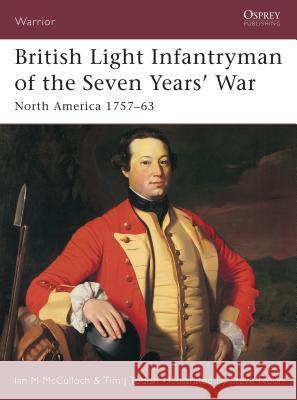
The British Light Infantryman of the Seven Years' War (1756-1763) was proficient at scouting and skirmishing, and more than a match for the French and their Indian allies. Shooting rapids in canoes, traversing swamps and snowshoeing through endless tracts of forest, British redcoats earned a reputation for resilience and resourcefulness as they adapted to the wilderness conditions of North America. Their development was a watershed in the history of irregular warfare, and this book provides a full examination of their fighting methods, covering training, tactics and campaigning from Canada to...
The British Light Infantryman of the Seven Years' War (1756-1763) was proficient at scouting and skirmishing, and more than a match for the French and...
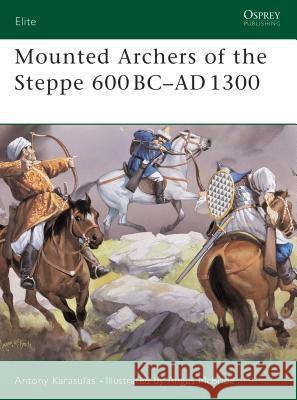
For more than 2,000 years hordes of mounted nomadic archers from the vastness of the steppe and from Central Asia spewed out into China, the Middle East, and Europe. Feared and reviled, they were a formidable threat to the lands they invaded. Their influence on military history is incalculable: the whole foundation of late Classical and Medieval Western and Middle Eastern military thought was based on the reality of a highly mobile, tough and unconventional foe, one which could strike almost anywhere at will and with highly effective long-range weapons. This book details the history, weapons,...
For more than 2,000 years hordes of mounted nomadic archers from the vastness of the steppe and from Central Asia spewed out into China, the Middle Ea...
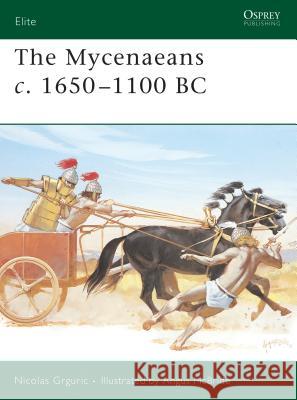
Osprey's study of Mycenaean warriors, from 1650 to 1100 BC. The timeless appeal of Homer's epic poem of the ancient Trojan War, The Iliad, has meant an eduring interest in the Mycenaean age. Modern scholarship and new archaeological evidence now allows us to recontruct with reasonable confidence the appearance of this great warrior civilization, which dominated much of the eastern Mediterranean between the 16th and 12th centuries BC. We can also make deductions, from the few surviving pictorial sources, about the tactics of these armies. This absorbing text is illustrated with examples of the...
Osprey's study of Mycenaean warriors, from 1650 to 1100 BC. The timeless appeal of Homer's epic poem of the ancient Trojan War, The Iliad, has meant a...