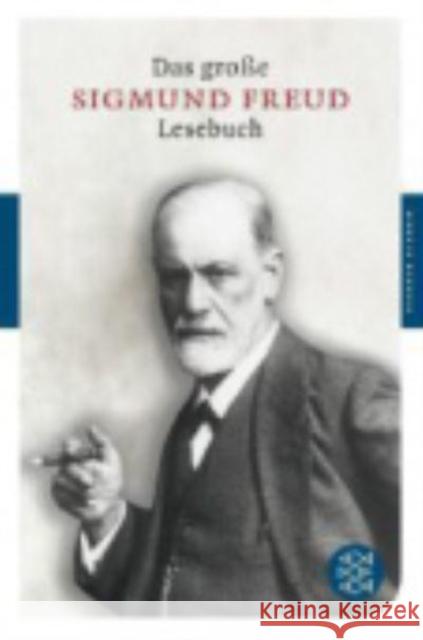
Unter der zivilisierten Oberfläche des Menschen diagnostizierte Sigmund Freud unbändige Sexualität, deren Entwicklung er in die Kindheit zurückverfolgte. Religion erklärt er als universelle Zwangsneurose. Zu seiner Zeit war Freud ein Skandal. Mit Begriffen wie dem Ödipus-Komplex ist der Vater der Psychoanalyse inzwischen längst in die Alltagskultur eingegangen. Neben einer Auswahl der wichtigsten Texte enthält das Lesebuch einen fortlaufenden Kommentar, der leichtfüßig und kenntnisreich durch das Gesamtwerk eines der einflussreichsten Denker des 20. Jahrhunderts führt.
Unter der zivilisierten Oberfläche des Menschen diagnostizierte Sigmund Freud unbändige Sexualität, deren Entwicklung er in die Kindheit zurückver...
Reprint of 1936 edition. Studies on Hysteria, often title Studies in Hysteria, was first published in 1895 by Sigmund Freud and Josef Breuer. It contained a number of Breuer and Freud's case studies of "hysterics." It included one of their most famous cases, Breuer's Anna O. (Bertha Pappenheim), which introduced the technique of psychoanalysis as a form of cure. It is widely regarded as the founding document of psychoanalysis.
Reprint of 1936 edition. Studies on Hysteria, often title Studies in Hysteria, was first published in 1895 by Sigmund Freud and Josef Breuer. It conta...
Totem and Taboo is work employing the application of psychoanalysis to the fields of archaeology, anthropology, and the study of religion. The four chapters are entitled: The Horror of Incest; Taboo and Emotional Ambivalence; Animism, Magic and the Omnipotence of Thoughts; and The Return of Totemism in Childhood.
Totem and Taboo is work employing the application of psychoanalysis to the fields of archaeology, anthropology, and the study of religion. The four ch...
2011 Reprint of 1914 Edition. Full facsimile of the original edition, not reproduced with Optical Recognition Software. Psychopathology of Everyday Life is one of the key texts of Sigmund Freud, who provided the foundation for the theory and practice of psychoanalysis. Along with the with The Interpretation of Dreams, Introduction to Psychoanalysis and Ego and the Id, the Psychopathology of Everyday Life is a classic in the literature of psychoanalysis. The book also became one of the scientific classics of the 20th century. It is also very important not only for psychopathology, but for...
2011 Reprint of 1914 Edition. Full facsimile of the original edition, not reproduced with Optical Recognition Software. Psychopathology of Everyday Li...
Professor Freud developed his system of psychoanalysis while studying the so-called borderline cases of mental diseases, such as hysteria and compulsion neurosis. By discarding the old methods of treatment and strictly applying himself to a study of the patient's life, he discovered that the puzzling symptoms had a definite meaning, and that there was nothing arbitrary in any morbid manifestation. Psychoanalysis always showed that they referred to some definite problem or conflict of the person concerned. It was while tracing back the abnormal to the normal state that Professor Freud found...
Professor Freud developed his system of psychoanalysis while studying the so-called borderline cases of mental diseases, such as hysteria and compulsi...
Reprint of the 1930 American edition. In this seminal book, Sigmund Freud enumerates the fundamental tensions between civilization and the individual. The primary friction stems from the individual's quest for instinctual freedom and civilization's contrary demand for conformity and instinctual repression. Many of humankind's primitive instincts (for example, the desire to kill and the insatiable craving for sexual gratification) are clearly harmful to the well-being of a human community. As a result, civilization creates laws that prohibit killing, rape, and adultery, and it implements...
Reprint of the 1930 American edition. In this seminal book, Sigmund Freud enumerates the fundamental tensions between civilization and the individual....
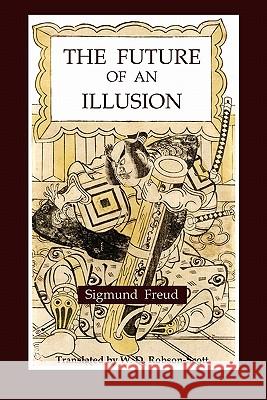
Reprint of the 1928 edition. The Future of an Illusion is a book written by Sigmund Freud in 1927. It describes his interpretation of religion's origins, development, psychoanalysis, and its future. Freud describes religion as an illusion, as one of the wishes that are the "fulfillments of the oldest, strongest, and most urgent wishes of mankind." This title remains a landmark work of the 20th century.
Reprint of the 1928 edition. The Future of an Illusion is a book written by Sigmund Freud in 1927. It describes his interpretation of religion's origi...