This study reconstructs the life of Pontius Pilate, the Roman governor responsible for the execution of Jesus. The first section provides the historical and archaeological background. The following chapters look at six first-century authors: Philo, Josephus and the four gospel writers. Each chapter asks how Pilate is being used as a literary character in each work, why each author describes Pilate in a different way, and what this tells us about the relationship between each author and the Roman state.
This study reconstructs the life of Pontius Pilate, the Roman governor responsible for the execution of Jesus. The first section provides the historic...
This is the last of the late Vincent Taylor's many notable contributions to NT scholarship and in particular to the controversy about the sources of St Luke's gospel. Taylor defends and develops the arguments in favour of a non-Markan basis for Luke which he first presented in 1926 in Behind the Third Gospel. He answers critics of that book by a detailed study of the Passion Narrative and concludes that St Luke used, in this part of his gospel at least, a special source, an authority which was as old as Mark but independent of it and which preserved accounts of the death and resurrection of...
This is the last of the late Vincent Taylor's many notable contributions to NT scholarship and in particular to the controversy about the sources of S...
While New Testament scholars generally agree that the concept of righteousness occupies an important place in the Gospel of Matthew, there is no scholarly consensus as to the meaning and function of this concept. The author of this study contends that this lack of agreement is largely due to the fact that the wrong background literature (i.e. the Old Testament and the letters of Paul) has been posited as governing Matthaean usage. It is only when Matthaean usage is viewed in terms of the world of thought reflected in the Dead Sea Scrolls and the Tannaitic literature that it becomes...
While New Testament scholars generally agree that the concept of righteousness occupies an important place in the Gospel of Matthew, there is no schol...
This is the second edition of a work which first appeared in 1979. The first edition gave an interpretation of Paul's Letters to the Galatians which proceeded along the following lines: firstly, Paul's opponents at Galatia were Jewish Christians who believed that Gentiles had to accept the Law in order to be saved; secondly, that Paul first revealed his noncircumcision gospel to James, Cephas and John at the Jerusalem Conference; thirdly, Paul's view of justification by faith was seen in terms of Christ keeping faith with Abraham's promise that all nations would be blessed; and fourthly, that...
This is the second edition of a work which first appeared in 1979. The first edition gave an interpretation of Paul's Letters to the Galatians which p...
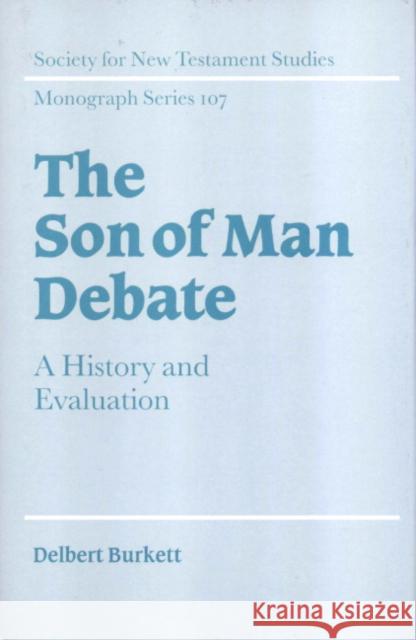
The expression "Son of Man," used in the Gospels almost exclusively by Jesus, has been the object of intensive study since the Protestant Reformation, yet scholars have failed to agree on its origin or meaning. Because of the scope and complexity of the literature, no comprehensive survey of the subject has been written in the twentieth century; Delbert Burkett's study fills this need. It provides a comprehensive historical overview of the debate from the patristic period to 1996, evaluates that research, and summarizes the present state of the question.
The expression "Son of Man," used in the Gospels almost exclusively by Jesus, has been the object of intensive study since the Protestant Reformation,...
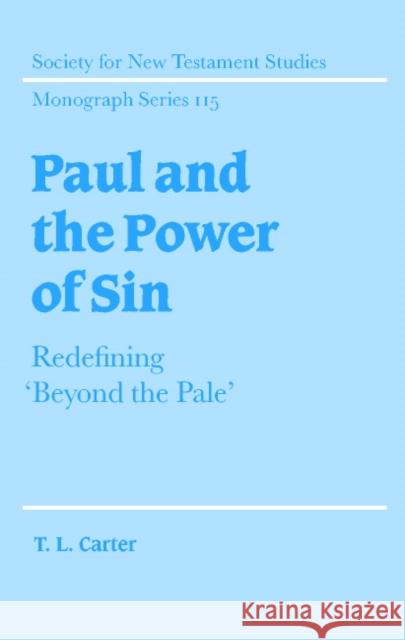
This study seeks to base Paul's language of sin in the socio-cultural context of his original letters. T.L. Carter draws on the work of social anthropologist Mary Douglas to conduct a cross-cultural analysis of the symbolism of the power of sin in the letters, examining thoroughly Douglas' "Grid and Group" model and defending its use as a heuristic tool for New Testament scholars. He also offers fresh insight into key passages from 1 Corinthians, Galatians and Romans.
This study seeks to base Paul's language of sin in the socio-cultural context of his original letters. T.L. Carter draws on the work of social anthrop...
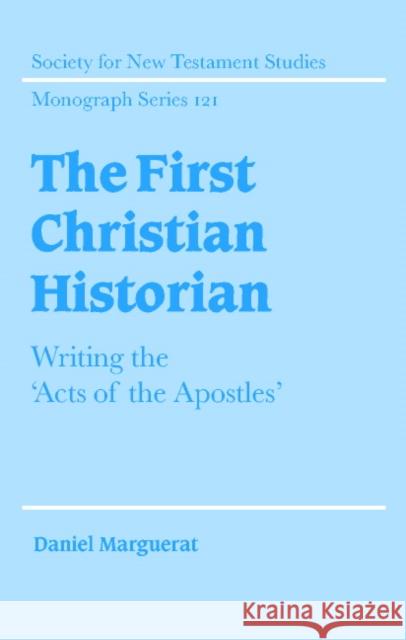
Luke's Acts of the Apostles is the only documentation available on the birth of Christianity, despite the author's vigorously disputed reliability as a historian. Daniel Marguerat avoids this true/false quagmire by establishing his evaluation of Luke's talent as an historian within the framework of ancient historiography (the rules of ancient historians and narrative criticism). His study portrays Luke as a skillful and sound theologian, and provides an original approach to the classic themes of Lucan theology.
Luke's Acts of the Apostles is the only documentation available on the birth of Christianity, despite the author's vigorously disputed reliability as ...