'And by now, mind, it's too late to redeem your debts by giving up guzzling.' Dante's poetic correspondence (or tenzone) with Forese Donati, a relative of his wife, was rife with crude insults: the two men derided one another on topics ranging from sexual dysfunction and cowardice to poverty and thievery. But in his Commedia, rather than denying this correspondence, Dante repeatedly acknowledged and evoked the memory of his youthful put-downs.
Dante's Tenzone with Forese Donati examines the lasting impact of these sonnets on Dante's...
'And by now, mind, it's too late to redeem your debts by giving up guzzling.' Dante's poetic correspondence (or tenzone) with...
The Revolt of the Scribe in Modern Italian Literature offers a perceptive re-assessment of Italian literary culture, focusing on the nature of modernity through the literature of those who revolt against established norms and expectations. By exploring selected works from authors such as Deledda, Foscolo, Ungaretti, Bertolucci, and Valeri, Thomas E. Peterson considers the categories of vatic poetry, the feminine voice, and the writings of those situated on Italy's cultural periphery.
As practitioners of literary Italian, Peterson argues that these authors are conscious of...
The Revolt of the Scribe in Modern Italian Literature offers a perceptive re-assessment of Italian literary culture, focusing on the natur...
In the 1930s, the Italian Fascist regime profoundly changed the landscape of Rome's historic centre, demolishing buildings and displacing thousands of Romans in order to display the ruins of the pre-Christian Roman Empire. This transformation is commonly interpreted as a failed attempt to harmonize urban planning with Fascism's ideological exaltation of the Roman Empire.
Roads and Ruins argues that the chaotic Fascist cityscape, filled with traffic and crumbling ruins, was in fact a reflection of the landscape of the First World War. In the radical interwar transformation of...
In the 1930s, the Italian Fascist regime profoundly changed the landscape of Rome's historic centre, demolishing buildings and displacing thousands...
Marco Bellocchio is one of Italy's most important and prolific directors, with a career spanning five decades. In this book, Clodagh J. Brook explores the boundaries between the public and the private, the political and the personal, and the collective and the individual as they appear in Bellocchio's films. Including work on psychoanalysis, politics, film production, autobiography, and the relationship between film tradition and contemporary culture, Marco Bellocchio touches on fundamental issues in film analysis.
Brook's study interrogates what it means to make personal or...
Marco Bellocchio is one of Italy's most important and prolific directors, with a career spanning five decades. In this book, Clodagh J. Brook explo...
The question of what it means to be human has preoccupied thinkers since antiquity. The classical humanism of the Italian Renaissance saw humanity as hierarchical, with elite European males at the apex while women, lower class or foreign men, and animals occupied varying lesser degrees of being. Using the theme of domestication to interrogate the intertwined notions of femininity, sexuality, and animality, Juliana Schiesari looks to early modern Italy to uncover the origins of the modern conception of the human.
Beasts and Beauties examines the relationship between...
The question of what it means to be human has preoccupied thinkers since antiquity. The classical humanism of the Italian Renaissance saw humanity ...
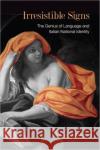
Language is now understood as a key component of cultural identity, but discourses on linguistic nationalism are only a few centuries old. In Irresistible Signs, Paola Gambarota investigates the connection between Italian language and national identity over four hundred years, from late-Renaissance linguistic theories to nineteenth-century nationalist myths.
Challenging the consensus that linguistic nationalism originated with nineteenth century German philosophers, Irresistible Signs advances a more nuanced theory of how culture and language become...
Language is now understood as a key component of cultural identity, but discourses on linguistic nationalism are only a few centuries old. In I...
Italian Literature before 1900 in English Translation provides the most complete record possible of texts from the early periods that have been translated into English, and published between 1929 and 2008. It lists works from all genres and subjects, and includes translations wherever they have appeared across the globe. In this annotated bibliography, Robin Healey covers over 5,200 distinct editions of pre-1900 Italian writings. Most entries are accompanied by useful notes providing information on authors, works, translators, and how the translations were received.
Among...
Italian Literature before 1900 in English Translation provides the most complete record possible of texts from the early periods that have...
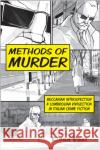
The first extended analysis of the relationship between Italian criminology and crime fiction in English, Methods of Murder examines works by major authors both popular, such as Gianrico Carofiglio, and canonical, such as Carlo Emilio Gadda.
Many scholars have argued that detective fiction did not exist in Italy until 1929, and that the genre, which was considered largely Anglo-Saxon, was irrelevant on the Italian peninsula. By contrast, Past traces the roots of the twentieth-century literature and cinema of crime to two much earlier, diverging interpretations of the...
The first extended analysis of the relationship between Italian criminology and crime fiction in English, Methods of Murder examines works...
The emergence of cinema as a predominant form of mass entertainment in the 1910s inspired intellectuals to rethink their definitions of art. The Great Black Spider on Its Knock-Kneed Tripod traces the encounter of Italy's writers with cinema, and in doing so offers vibrant new perspectives on the country's early twentieth-century culture.
This comparative study focuses on the immediate responses to this cultural phenomenon of three highly influential intellectuals, each with a competing aesthetic vision - Filippo Tommaso Marinetti, founder of Futurism; Gabriele D'Annunzio,...
The emergence of cinema as a predominant form of mass entertainment in the 1910s inspired intellectuals to rethink their definitions of art. Th...
Federico Fellini professed a desire to create an entire film made of immobile pictures. In this study, Hava Aldouby uses this quotation as a launching point to analyze Fellini s films as sequences of pictures that draw extensively on art history, and particularly painting, as a reservoir of visual imagery. Aldouby employs an innovative pictorial approach that allows her to uncover a wealth of visual evocations overlooked by Fellini scholars over the years.
Federico Fellini: Painting in Film, Painting on Film sheds light on the intertextual links between Fellini s films and...
Federico Fellini professed a desire to create an entire film made of immobile pictures. In this study, Hava Aldouby uses this quotation as a launch...