Richmond upon Thames was the first borough to be known as the 'Queen of the Suburbs', before Ealing or Surbiton were known by this sobriquet. With around 100 parks and green spaces, including Kew Gardens and Richmond Park, as well as fine examples of Tudor, Regency, Georgian and Victorian architecture, Richmond remains a desirable place to live, with a long and interesting history. In Richmond upon Thames Through Time, author Paul Howard Lang hopes to show how Richmond, to a great extent, has retained the 'Queen of the Suburbs' title. Telling the story of Richmond and its environs through a...
Richmond upon Thames was the first borough to be known as the 'Queen of the Suburbs', before Ealing or Surbiton were known by this sobriquet. With aro...
In ancient times Clapham was a secluded Surrey village, clustered round a manor house and church. By the seventeenth century, the wealthy of London were building houses here as rural retreats and, by 1800, their mansions in extensive grounds surrounded Clapham Common, which was becoming a place of recreation. The development of the railways in the nineteenth century meant that families who could afford large houses moved further out to the countryside, selling off their ground to developers who built the terraced houses which cover the area today. Around forty years ago, after a period of...
In ancient times Clapham was a secluded Surrey village, clustered round a manor house and church. By the seventeenth century, the wealthy of London we...
With a proud history of industry and creativity, Manchester is one of the world's greatest cities. In 2015 it was designated 'The Northern Powerhouse' but, of course, being the home of the Industrial Revolution, it always was. Manchester gave the world technological innovation as well as manufacturing strength. By the second half of the nineteenth century Manchester was home to more than 100 mills and well over 1,000 warehouses. It was in Manchester that Whitworth devised a standard for screw threads in 1841. Here John Dalton developed modern atomic theory, Rutherford split the atom and Alan...
With a proud history of industry and creativity, Manchester is one of the world's greatest cities. In 2015 it was designated 'The Northern Powerhouse'...
The Somerset & Dorset Railway, known as the S&D (said to also stand for 'Slow and Dirty' or 'Serene and Delightful'), ran from Bath across the Mendip hills to Bournemouth on the south coast. Never a high-speed line, the main traffic for the Somerset & Dorset during the winter months was freight and local passenger traffic. In the summer, however, there was heavy traffic as Saturday holiday services from the northern industrial towns passed along the line. In 1962, John Betjeman travelled along the Somerset & Dorset from Evercreech Junction to Highbridge and Burnham-on-Sea, making a BBC...
The Somerset & Dorset Railway, known as the S&D (said to also stand for 'Slow and Dirty' or 'Serene and Delightful'), ran from Bath across the Mendip ...
Broughty Ferry has gone through many changes since its origins as a small fishing village nestled in the shadow of a fifteenth-century castle. The industrial age saw wealthy jute barons arrive and build their grand residences there, while the coming of the train saw the town become a popular destination for holidaymakers. The twentieth century and beyond has seen Broughty Ferry evolve into a popular and affluent suburb. This compilation of images follows Broughty Ferry through all of these changes and shows how, despite officially becoming part of Dundee in 1913, 'the Ferry' has always...
Broughty Ferry has gone through many changes since its origins as a small fishing village nestled in the shadow of a fifteenth-century castle. The ind...
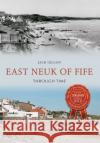
Neuk is the Scots word for nook or corner, and the delightful East Neuk, with its string of picturesque fishing and farming villages, is one of the most attractive parts of the country to investigate. Few regions present a greater number of attractions than the East Neuk with its sandy beaches, wild and precipitous cliffs, remarkable caves, celebrated golf links, notable churches, historic castles and historical associations. These villages, running from from Crail to Largo, are quite distinct from those of any other part of Scotland and have stood almost unchanged for centuries and thus...
Neuk is the Scots word for nook or corner, and the delightful East Neuk, with its string of picturesque fishing and farming villages, is one of the mo...
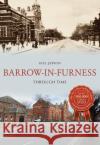
Barrow-in-Furness is a small post-industrial town at the end of a long peninsula in the north of England. Its isolated location has produced a stalwart and close population. It started life as a small hamlet and grew to become an industrial leader, first in iron and steel and later in ship-building and engineering, drawing a workforce from all over the country. The ship-building industry continues to be a major employer but today there is less diversity than in Barrow's heyday. Although the town is known for its industry, it sits in one of the most beautiful areas of Cumbria. It boasts a rich...
Barrow-in-Furness is a small post-industrial town at the end of a long peninsula in the north of England. Its isolated location has produced a stalwar...
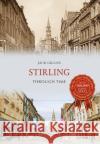
Having been granted city status during the Golden Jubilee celebrations in 2002, Stirling is Scotland's smallest city. Despite this, it has an enthralling wealth of architectural and historic heritage that would be the envy of much larger places in the country. Stirling's origins can be dated to the thirteenth century, when it was granted a royal charter and became a significant medieval settlement. Its strategic importance as the 'Gateway to the Highlands' also made it the much fought-over 'Cockpit of Scotland', making it witness to many of the most significant battles in Scottish history....
Having been granted city status during the Golden Jubilee celebrations in 2002, Stirling is Scotland's smallest city. Despite this, it has an enthrall...
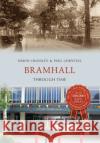
Bramhall is a thriving, bustling and leafy suburb of Stockport, close to Manchester. It has been voted the least 'lonely place' in Britain; according to research from the University of Sheffield, Bramhall came bottom of the loneliness index nationwide. It has a rich history stretching back to the Anglo-Saxon period. This book takes us back to Bramhall's early days to meet Saxons Brun and Hacun, whose lands were given by Willliam the Conqueror to Hamon de Massey, who eventually became 1st Baron of Dunham Massey. The Edwardian shops and businesses in the village centre have been replaced by...
Bramhall is a thriving, bustling and leafy suburb of Stockport, close to Manchester. It has been voted the least 'lonely place' in Britain; according ...
The Manchester Ship Canal was a huge engineering achievement. It included seven swing bridges and the aqueduct at Barton, and helped turn the cotton-producing capital of Great Britain into an inland seaport. This was a feat many at the time believed could not be achieved. One of the wonders of the modern industrial world, the Manchester Ship Canal, with its huge locks and ocean-going vessels, was a magnetic draw for enthusiastic Victorians who marvelled at its construction. This book looks at the changes and development of the Manchester Ship Canal through time, from its origins as a thriving...
The Manchester Ship Canal was a huge engineering achievement. It included seven swing bridges and the aqueduct at Barton, and helped turn the cotton-p...