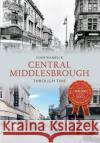
It is hard to imagine the Middlesbrough area before its industrial might was established. In 1801, the area was a small hamlet with a population of just twenty-five. Middlesbrough's growth began with the development of the coal export trade in the area, but expanded rapidly with the discovery of extensive iron ore deposits in the Cleveland Hills. The burgeoning manufacturing town subsequently gained the nickname 'Ironopolis' and was hailed as 'the youngest child of England's enterprise'. It is thought that Middlesbrough was the first major British town and industrial target to be bombed...
It is hard to imagine the Middlesbrough area before its industrial might was established. In 1801, the area was a small hamlet with a population of ju...
'Whitstable is a stirring little town, with strong business proclivities, and a history stretching far back into the remote past.' So wrote a Kentish Gazette correspondent in 1873, although he could have been writing of Whitstable today. Roman soldiers are thought to have dined on its oysters, and the area was certainly settled at the time of the Domesday Book. Over the years, the lives of Whitstable's people have been inextricably linked with the sea. Sea salt production, diving, smuggling, shipbuilding and fishing have all sustained the lives of the townspeople, along with copperas mining...
'Whitstable is a stirring little town, with strong business proclivities, and a history stretching far back into the remote past.' So wrote a Kentish ...
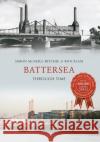
Battersea has grown to be a fashionable and vibrant district of south-west London. Referred to as Patricesy in the Domesday Book, Battersea was historically best known for market gardening, providing fruit, vegetables and flowers for the City of London. However, the area moved from rural to urban with the coming of the railways, industry and large-scale housing from the 1840s, provoking a population growth from 4,000 to 120,000 by the beginning of the twentieth century. Glimpses of the past can still be seen around modern Battersea, but much has changed over the years. Using a selection of...
Battersea has grown to be a fashionable and vibrant district of south-west London. Referred to as Patricesy in the Domesday Book, Battersea was histor...
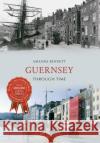
Guernsey is the most western of the Channel Islands, with a proud maritime history spanning many centuries. Only 25 square miles, the island nevertheless has a great variety of landscapes, from the rugged cliffs in the south to the low-lying dunes in the north. The ten parishes, each with their own unique community spirit, are home to over 60,000 people. This grows greatly during the summer as visitors come to experience the island's quiet country lanes and the bustling streets of St Peter Port. Historically, Guernsey people have made their mark not just on the sea, but in thriving stone...
Guernsey is the most western of the Channel Islands, with a proud maritime history spanning many centuries. Only 25 square miles, the island neverthel...
The River Forth is one of Scotland's great waterways. It has a majestic history and heritage, part of which is the Forth bridges. Of these, the most iconic is the Forth Rail Bridge, which opened in 1890. But there is also the Kincardine Bridge, opened in 1936 and once the longest swing bridge in Europe, the Forth Road Bridge, opened in 1964, and the new Queensferry Crossing, due to be completed in 2016. In this book, Michael Meighan looks at all these bridges as well as the Clackmannanshire Bridge and the fords, ferries and smaller bridges which preceded these great crossings. The Forth...
The River Forth is one of Scotland's great waterways. It has a majestic history and heritage, part of which is the Forth bridges. Of these, the most i...
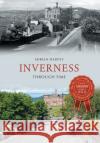
Inverness, known as the capital of the Highlands, was designated a Millennium city in 2000. This Royal and Ancient Burgh is recorded going back thousands of years, but it doesn't look like an old town because it was sacked and burned so many times that little remains of its long history. There are exceptions, including a house which dates from 1592 and Dunbar's Hospital of 1688. Also nearby is the site of the Battle of Culloden, the last battle fought on British soil. Situated at the head of the Moray Firth and the mouth of the Great Glen, Inverness is a terminus and starting point for travel...
Inverness, known as the capital of the Highlands, was designated a Millennium city in 2000. This Royal and Ancient Burgh is recorded going back thousa...
For centuries, Sydenham was a small hamlet on the edge of a large tract of common land, known as Sydenham Common, in the parish of St Mary's, Lewisham. London was more than an hour's travel away. Over little more than half a century, three events radically altered Sydenham, turning it from a rural hamlet into a populous, even fashionable, suburb of London: the enclosure of Sydenham Common, the coming of the railway in 1839 and the construction of the Crystal Palace on Sydenham Hill. Today, Sydenham and Forest Hill are attractive and popular places to live, with good access to green spaces and...
For centuries, Sydenham was a small hamlet on the edge of a large tract of common land, known as Sydenham Common, in the parish of St Mary's, Lewisham...
Herne Bay rose to prominence in the 1830s when a group of London investors recognised its potential and built a pleasure pier and promenade here, making it one of the UK's earliest seaside resorts. Its popularity increased when the railway reached this part of Kent and continued to do so throughout the Victorian era. However, like many other seaside resorts, its popularity as a holiday destination steadily declined after the Second World War when there was an increasing preference for overseas travel. Following extensive seafront regeneration in the 1990s, a jetty was built to create a small...
Herne Bay rose to prominence in the 1830s when a group of London investors recognised its potential and built a pleasure pier and promenade here, maki...
Richmond upon Thames was the first borough to be known as the 'Queen of the Suburbs', before Ealing or Surbiton were known by this sobriquet. With around 100 parks and green spaces, including Kew Gardens and Richmond Park, as well as fine examples of Tudor, Regency, Georgian and Victorian architecture, Richmond remains a desirable place to live, with a long and interesting history. In Richmond upon Thames Through Time, author Paul Howard Lang hopes to show how Richmond, to a great extent, has retained the 'Queen of the Suburbs' title. Telling the story of Richmond and its environs through a...
Richmond upon Thames was the first borough to be known as the 'Queen of the Suburbs', before Ealing or Surbiton were known by this sobriquet. With aro...
In ancient times Clapham was a secluded Surrey village, clustered round a manor house and church. By the seventeenth century, the wealthy of London were building houses here as rural retreats and, by 1800, their mansions in extensive grounds surrounded Clapham Common, which was becoming a place of recreation. The development of the railways in the nineteenth century meant that families who could afford large houses moved further out to the countryside, selling off their ground to developers who built the terraced houses which cover the area today. Around forty years ago, after a period of...
In ancient times Clapham was a secluded Surrey village, clustered round a manor house and church. By the seventeenth century, the wealthy of London we...