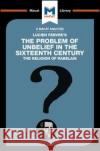
What is the past and what can we really know about it? Relying on his groundbreaking technique championing 'problem-based history,' Febvre explores whether 16th-century French writer Francois Rabelais was he really one of France's first atheists. Febvre's thorough research on Rabelais and the times he lived in challenges this accepted view.
What is the past and what can we really know about it? Relying on his groundbreaking technique championing 'problem-based history,' Febvre explores wh...
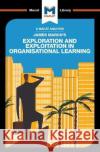
Exploration and Exploitation is a key text for scholars and business practitioners interested in promoting economic well-being and sustainable growth. March's work promotes the preservation of companies' competitiveness and sustainability in the fluctuating market environment by maintaining a balance between exploration and exploitation processes.
Exploration and Exploitation is a key text for scholars and business practitioners interested in promoting economic well-being and sustainable growth....
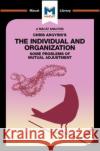
A critical analysis of Argyris's Integrating The Individual and the Organization, in which Chris Argyris used strong, well-structured arguments to make his point. His reasoning has strong implications for solving a problem that many organizations experience: disengaged and disloyal employees.
A critical analysis of Argyris's Integrating The Individual and the Organization, in which Chris Argyris used strong, well-structured arguments to mak...
Historians of the American Revolution had always seen the struggle for independence either as a conflict sparked by heavyweight ideology, or as a war between opposing social groups acting out of self-interest.
In The Ideological Origins of the American Revolution, Bernard Bailyn begged to differ, re-examining familiar evidence to establish new connections that in turn allowed him to generate fresh explanations. His influential reconceptualizing of the underlying reasons for America's independence drive focused instead on pamphleteering – and specifically on the actions...
Historians of the American Revolution had always seen the struggle for independence either as a conflict sparked by heavyweight ideology, or as a w...
The history of anthropology is, to a large extent, the history of differing modes of interpretation.
As anthropologists have long known, examining, analyzing and recording cultures in the quest to understand humankind as a whole is a vastly complex task, in which nothing can be achieved without careful and incisive interpretative work. Edward Evans-Pritchard’s seminal 1937 Witchcraft, Oracles, and Magic Among the Azande is a model contribution to anthropology’s grand interpretative project, and one whose success is based largely on its author’s thinking skills. A major issue...
The history of anthropology is, to a large extent, the history of differing modes of interpretation.
Edward Said’s Orientalism is a masterclass in the art of interpretation wedded to close analysis. Interpretation is characterized by close attention to the meanings of terms, by clarifying, questioning definitions, and positing clear definitions. Combined with one of the main sub-skills of analysis, drawing inferences and finding implicit reasons and assumptions in arguments, interpretation becomes a powerful tool for critical thought.
In Orientalism, the theorist, critic and cultural historian Edward Said uses interpretation and analysis to closely examine...
Edward Said’s Orientalism is a masterclass in the art of interpretation wedded to close analysis. Interpretation is characterized by clo...
Amos Tversky and Daniel Kahneman’s 1974 paper ‘Judgement Under Uncertainty: Heuristics and Biases’ is a landmark in the history of psychology. Though a mere seven pages long, it has helped reshape the study of human rationality, and had a particular impact on economics – where Tversky and Kahneman’s work helped shape the entirely new sub discipline of ‘behavioral economics.’
The paper investigates human decision-making, specifically what human brains tend to do when we are forced to deal with uncertainty or complexity. Based on experiments carried out with...
Amos Tversky and Daniel Kahneman’s 1974 paper ‘Judgement Under Uncertainty: Heuristics and Biases’ is a landmark in the history of p...
Toni Morrison’s Playing in the Dark: Whiteness and the Literary Imagination is a seminal piece of literary criticism, and a masterclass in the critical thinking skill of interpretation.
Interpretation plays a vital role in critical thinking: it focuses on interrogating accepted meanings and laying down clear definitions on which a strong argument can be built. Both history and literary history in the US have frequently revolved around understanding how Americans define themselves and each other, and Morrison’s work seeks to investigate, question, and redefine one of...
Toni Morrison’s Playing in the Dark: Whiteness and the Literary Imagination is a seminal piece of literary criticism, and a masterclass ...
Social anthropologist Jean Lave and computer scientist Etienne Wenger’s seminal Situated Learning helped change the fields of cognitive science and pedagogy by approaching learning from a novel angle. Traditionally, theories of learning and education had focused on processes of cognition – the mental processes of knowledge formation that occur within an individual. Lave and Wenger chose to look at learning not as an individual process, but a social one.
As so often with the creative thinking process, a small, simple shift in emphasis was all that was required to show things in...
Social anthropologist Jean Lave and computer scientist Etienne Wenger’s seminal Situated Learning helped change the fields of cognitive science a...