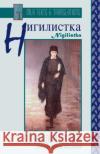
First published in Switzerland in 1892, finally printed in Russia in 1906, and never before translated into English, is the coming-of-age story of Vera Barantsova, a young aristocrat who longs to devote her life to a cause. Her privileged world is radically changed by Alexander I's emancipation of the serfs. Vera first hopes to follow in the footsteps of Christian martyrs, but a neighboring landowner--a liberal professor fired from his position at Saint Petersburg University and exiled to his estate--opens her eyes to the injustice in Russia.
A blend of social commentary and...
First published in Switzerland in 1892, finally printed in Russia in 1906, and never before translated into English, is the coming-of-age ...
Greatly influenced by writers ranging from Dickens and Proust to Woolf and Colette, Anna Banti was a prominent figure on the Italian literary scene from the 1940s until her death in 1985. The five tales in "La signorina" e altri racconti display her talent across many genres--fiction, science fiction, historical fiction, mystery.
Banti's stories portray the ageless conflict between the expectations of society and the aspirations of the individual. In "Vocazioni indistinte," the young Ofelia becomes a pianist after her marriage prospects fail, but self-doubt turns her success...
Greatly influenced by writers ranging from Dickens and Proust to Woolf and Colette, Anna Banti was a prominent figure on the Italian literary scene...
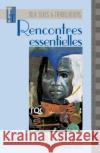
Published in 1969, Recontres essentielles is the first novel by a woman of sub-Saharan francophone Africa. Therese Kuoh-Moukoury, of Cameroon, wrote it "to inspire other women to write." Its story of love, infertility, a failed marriage, and adultery looks at both interpersonal connections and national politics from a feminist perspective.
In the introduction the volume editor, Cheryl Toman, provides valuable background with a discussion of African matriarchy, past and present; ethnic groups in Cameroon; interracial relationships; and polygamy as it affects women's roles in...
Published in 1969, Recontres essentielles is the first novel by a woman of sub-Saharan francophone Africa. Therese Kuoh-Moukoury, of Cameroo...
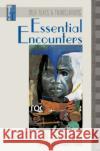
Published in 1969, Essential Encounters is the first novel by a woman of sub-Saharan francophone Africa. Therese Kuoh-Moukoury, of Cameroon, wrote it "to inspire other women to write." Its story of love, infertility, a failed marriage, and adultery looks at both interpersonal connections and national politics from a feminist perspective.
In the introduction the volume editor, Cheryl Toman, provides valuable background with a discussion of African matriarchy, past and present; ethnic groups in Cameroon; interracial relationships; and polygamy as it affects women's roles in the...
Published in 1969, Essential Encounters is the first novel by a woman of sub-Saharan francophone Africa. Therese Kuoh-Moukoury, of Cameroon,...
Currently spoken by almost 250 million people in Pakistan and India and the second most widely spoken language in Britain, Urdu has one of the richest literatures of all south Asian languages. The modern Urdu poets presented in this book offer a fascinating range of forms and styles that grew out of that tradition, as well as a complex commentary on the experience--personal, religious, cultural, political--of the issues and dilemmas of the twentieth century. In his introduction, M. A. R. Habib outlines the history of Urdu literature, identifies the major poets associated with the classical...
Currently spoken by almost 250 million people in Pakistan and India and the second most widely spoken language in Britain, Urdu has one of the rich...
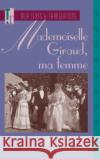
Adolphe Belot was the envy of his contemporaries Emile Zola and Gustave Flaubert: his books, unlike theirs, were best-sellers. He specialized in popular fiction that provided readers with just the right mix of salaciousness and propriety. (Under the initials A. B. he dispensed entirely with propriety.)
The sensational Mademoiselle Giraud, ma femme (published in 1870 with a preface by Zola) tells of the suffering of a naive young man whose new bride will not agree to consummate the marriage. Eventually he learns from an acquaintance, to his amazement, that their wives are...
Adolphe Belot was the envy of his contemporaries Emile Zola and Gustave Flaubert: his books, unlike theirs, were best-sellers. He specialized in po...
Elsa Bernstein lived at the center of Munich's cultural life from the 1890s into the next century. Her literary salon was frequented by such authors as Rainer Maria Rilke, Theodor Fontane, Henrik Ibsen, and Thomas Mann. Her plays, written under the pseudonym Ernst Rosmer, are noteworthy for their unconventional female figures, uninhibited language, taboo subjects, and realistic detail. Susanne Kord, the editor and translator of Twilight, discusses the reception of Bernstein's works--at first enthusiastic, then increasingly sexist--and the theme, in Twilight, of the culturally...
Elsa Bernstein lived at the center of Munich's cultural life from the 1890s into the next century. Her literary salon was frequented by such author...
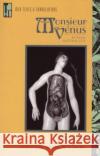
When the rich and well-connected Raoule de Venerande becomes enamored of Jacques Silvert, a poor young man who makes artificial flowers for a living, she turns him into her mistress and eventually into her wife. Raoule's suitor, a cigar-smoking former hussar officer, becomes an accomplice in the complications that ensue.
When the rich and well-connected Raoule de Venerande becomes enamored of Jacques Silvert, a poor young man who makes artificial flowers for a livin...
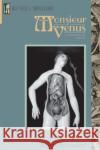
When the rich and well-connected Raoule de Venerande becomes enamored of Jacques Silvert, a poor young man who makes artificial flowers for a living, she turns him into her mistress and eventually into her wife. Raoule's suitor, a cigar-smoking former hussar officer, becomes an accomplice in the complications that ensue.
When the rich and well-connected Raoule de Venerande becomes enamored of Jacques Silvert, a poor young man who makes artificial flowers for a livin...
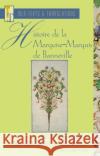
The beautiful Marquise de Banneville meets a handsome marquis, and they fall in love. But the young woman is actually a young man (brought up as a girl and completely in the dark about her--or his--true sex), while the marquis is actually a young woman who likes to cross-dress. Will they live happily ever after?
In the introduction, Joan DeJean presents the fascinating puzzle of authorship of this lighthearted gender-bending tale written in the late seventeenth century in France. Was it Francois-Timoleon de Choisy, an abbot who was happiest in drag? Marie-Jeanne L'Heritier, an...
The beautiful Marquise de Banneville meets a handsome marquis, and they fall in love. But the young woman is actually a young man (brought up as a ...