Battle diaries are essential for understanding what generals are thinking as they work their way through the fog of battle. Nicholas Sarantakes juxtaposes the diaries of two very different generals who both fought at Okinawa: Lt. Gen. Buckner, a by-the-numbers man who favored the use of artillery and tanks to reduce entrenched positions, and Gen. Stilwell, a prickly outsider who preferred maneuver to set-piece battles. Sarantakes identifies individuals, includes explanations of important events alluded to by the generals and provides glossaries of main characters and military terms. The...
Battle diaries are essential for understanding what generals are thinking as they work their way through the fog of battle. Nicholas Sarantakes juxtap...
With intimidating tales of bellowing drill instructors and their seemingly incongruous tasks, "Reluctant Lieutenant" captures the essence of what it meant to survive the training regimen of the Old Army. Author Jerry Morton is a gifted storyteller equally at home describing blind navigation through the woods on a dark night as recounting the perils of smuggling a skin flick into his barracks at OCS. In this engaging memoir, Morton reconstructs his reluctant journey through basic training, advanced infantry training, and infantry Officer Candidate School during the Vietnam era. His is a...
With intimidating tales of bellowing drill instructors and their seemingly incongruous tasks, "Reluctant Lieutenant" captures the essence of what it m...
The Korean conflict was a pivotal event in China's modern military history. The fighting in Korea constituted an important experience for the newly formed People's Liberation Army Air Force (PLAAF), not only as a test case for this fledgling service but also in the later development of Chinese air power. Xiaoming Zhang fills the gaps in the history of this conflict by basing his research in recently declassified Chinese and Russian archival materials. He also relies on interviews with Chinese participants in the air war over Korea. Zhang's findings challenge conventional wisdom as he compares...
The Korean conflict was a pivotal event in China's modern military history. The fighting in Korea constituted an important experience for the newly fo...
With intimidating tales of bellowing drill instructors and their seemingly incongruous tasks, Reluctant Lieutenant captures the essence of what it meant to survive the training regimen of the Old Army. Author Jerry Morton is a gifted storyteller equally at home describing blind navigation through the woods on a dark night as recounting the perils of smuggling a skin flick into his barracks at OCS. In this engaging memoir, Morton reconstructs his reluctant journey through basic training, advanced infantry training, and infantry Officer Candidate School during the Vietnam era. His is...
With intimidating tales of bellowing drill instructors and their seemingly incongruous tasks, Reluctant Lieutenant captures the essence of what...
During World War II, the army established 107 evacuation hospitals to care for the wounded and sick in theaters around the world. An evacuation hospital was a forward hospital accepting patients from the battlefield. It was where the wounded first received definitive care. Formed at Camp Breckenridge, the 95th Evac arrived in Casablanca in April 1943, with seven thousand troops, thirty doctors, and forty nurses. First pitching their tents at Oujda, they moved eastward toward Algeria before making a D-day landing on the beaches of Salerno, Italy, on September 9, 1939. Shortly thereafter,...
During World War II, the army established 107 evacuation hospitals to care for the wounded and sick in theaters around the world. An evacuation hospit...
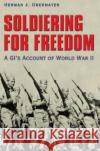
Only a small percentage of the sixteen million servicemen called up during World War II saw front-line service. For the others, war involved training, reinforcement depots, tedious assignments, and lots of waiting. Herman J. Obermayer was one of those who earned a combat star without ever coming close enough to a battlefront to hear or see booming guns. Nonetheless, his letters then, and his reflection on them now, reveal important aspects of the war and the wartime world. From school, from basic training, and later from Europe, Obermayer wrote home with vivid descriptions of life in the...
Only a small percentage of the sixteen million servicemen called up during World War II saw front-line service. For the others, war involved training,...
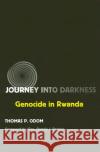
In July 1994, Thomas P. Odom was part of the U.S. Embassy team that responded to the Goma refugee crisis. He witnessed the deaths of 70,000 refugees in a single week. In the previous three months of escalating violence, the Rwandan genocide had claimed 800,000 dead. Now, in this vivid and unsettling new book, Odom offers the first insider look at these devastating events before, during, and after the genocide. Odom draws on his years of experience as a defense attache and foreign area specialist in the United States Army to offer a complete picture of the situation in Zaire and Rwanda,...
In July 1994, Thomas P. Odom was part of the U.S. Embassy team that responded to the Goma refugee crisis. He witnessed the deaths of 70,000 refugees i...
Only a small percentage of the sixteen million servicemen called up during World War II saw front-line service. For the others, war involved training, reinforcement depots, tedious assignments, and lots of waiting. Herman J. Obermayer was one of those who earned a combat star without ever coming close enough to a battlefront to hear or see booming guns. Nonetheless, his letters then, and his reflection on them now, reveal important aspects of the war and the wartime world. From school, from basic training, and later from Europe, Obermayer wrote home with vivid descriptions of life in the...
Only a small percentage of the sixteen million servicemen called up during World War II saw front-line service. For the others, war involved training,...
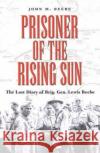
A never-before-published account of the experience of an American officer at the hands of Japanese captors, "Prisoner of the Rising Sun" offers new evidence of the treatment accorded officers and shows how the Corregidor prisoners fared compared with the ill-fated Bataan captives. When Japanese aircraft struck airfields in the Philippines on December 8, 1941, Col. Lewis C. Beebe was Gen. Douglas MacArthur's chief supply officer. Promoted to brigadier general, he would become chief of staff for General Wainwright in early March, 1942. From his privileged vantage point, Beebe kept diary...
A never-before-published account of the experience of an American officer at the hands of Japanese captors, "Prisoner of the Rising Sun" offers new ev...
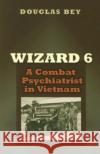
Wizard 6 describes my tour of duty as a psychiatrist assigned to the 1st Infantry Division in Vietnam during 1969 and 1970. It was another existence. We referred to home as "the world...." As with any combat environment, there was the irorry of military psychiatrists helping men adjust to a crazy place. In 1969 six psychiatrists were assigned to combat divisions in Vietnam, charged with treating soldiers showing psychiatric symptoms in order to get them back into battle. Doug Bey, whose radio call name in the 1st Infantry Division was Wizard 6, was one of those psychiatrists. Drawing on...
Wizard 6 describes my tour of duty as a psychiatrist assigned to the 1st Infantry Division in Vietnam during 1969 and 1970. It was another existence. ...