Of the ancient Greek Sophists, Gorgias of Leontini (ca. 483-ca. 376 b.c.e.) has endured more than his share of insistent detractors. Aristophanes depicted him as a barbaric sycophant, Plato considered him an opportunistic charlatan indifferent to truth and morality, and Aristotle saw him as a gaudy but inept stylist. Scott Consigny joins the commentators who find merit in Gorgias's thought, but his perceptions of Gorgias differ from those of the two most influential efforts at rehabilitation. He maintains that both the "subjectivist" reading by Hegel and the "empiricist" reading by George...
Of the ancient Greek Sophists, Gorgias of Leontini (ca. 483-ca. 376 b.c.e.) has endured more than his share of insistent detractors. Aristophanes depi...
An analysis of how public arguments centered on "the people" contribute to the complex process of nation building; At a time when national identity is a potent political force, Strategies of Remembrance sheds light on the relationships between economic, civic, cultural, and ethnic forms of nationalism, and on the interactions of nationalism in those forms with the politics of memory and the thetoric of democracy. Despite the broadly acknowledged fact that national identities are negotiated through discourse, concrete studies of the process are rare. By focusing on rejected public addresses,...
An analysis of how public arguments centered on "the people" contribute to the complex process of nation building; At a time when national identity is...
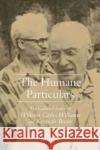
Significantly deepening our understanding of two key figures from the modernist period, The Humane Particulars collects the letters between William Carlos Williams and Kenneth Burke. Written during forty-two years of close friendship and literary debate, these nearly 250 letters span two long lives, two complicated personalities, and two brilliantly productive careers. The animated exchange between a canonical poet and the leading American rhetorical critic of the twentieth century offers a more complete vision of their outlooks and their contributions to the shape and tenor of the modernist...
Significantly deepening our understanding of two key figures from the modernist period, The Humane Particulars collects the letters between William Ca...
Protagoras and Logos brings together in a meaningful synthesis the contributions and rhetoric of the first and most famous of the Older Sophists, Protagoras of Abdera. Most accounts of Protagoras rely on the somewhat hostile reports of Plato and Aristotle. By focusing on Protagoras's own surviving words, this study corrects many long-standing misinterpretations and presents significant facts: Protagoras was a first-rate philosophical thinker who positively influenced the theories of Plato and Aristotle, and Protagoras pioneered the study of language and was the first theorist of rhetoric. In...
Protagoras and Logos brings together in a meaningful synthesis the contributions and rhetoric of the first and most famous of the Older Sophists, Prot...
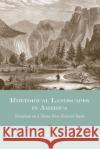
At the same time a reading of Kenneth Burke and of tourist landscapes in America, Gregory Clark's new study explores the rhetorical power connected with American tourism. Looking specifically at a time when citizens of the United States first took to rail and then highway to become sightseers in their own country, Clark traces the rhetorical function of a wide-ranging set of tourist experiences. He explores how the symbolic experiences Americans share as tourists have helped residents of a vast and diverse nation adopt a national identity. In doing so he suggests that the rhetorical power of...
At the same time a reading of Kenneth Burke and of tourist landscapes in America, Gregory Clark's new study explores the rhetorical power connected wi...
Now known to the Chinese as the ten years of chaos, the Chinese Cultural Revolution (1966-1976) brought death to thousands of Chinese and persecution to millions. Rhetoric of the Chinese Cultural Revolution identifies the rhetorical features and explores the persuasive effects of political language and symbolic practices during the period. Xing Lu examines how leaders of the Communist Party constructed and enacted a rhetoric in political contexts to legitimize power and violence and to dehumanize a group of people identified as class enemies. Lu provides close readings of the movement's...
Now known to the Chinese as the ten years of chaos, the Chinese Cultural Revolution (1966-1976) brought death to thousands of Chinese and persecution ...
Kenneth Burke continued to write poetry after the 1968 publication of his Collected Poems, but until now the poetry from the last quarter century of his life has remained largely unpublished, hiding in the mass of papers at his farmhouse in Andover, New Jersey. Suggesting that the Burke canon is not complete without these works, Julie Whitaker and David Blakesley here assemble the poems that the celebrated critic wrote between 1968 and his death. The collection of more than 150 poems provides new evidence that Burke continued "dancing an attitude" until the end of his life. In his...
Kenneth Burke continued to write poetry after the 1968 publication of his Collected Poems, but until now the poetry from the last quarter century of h...
A Ciceronian Sunburn reconsiders the complexion of Tudor poetics by demonstrating the ways in which poets and pedagogues appropriated the rhetorical brilliance of Cicero to inform their approaches to learning. By recasting the poetic texts of Edmund Spenser and Sir Philip Sidney as works that participated in sixteenth-century debates on learning, E. Armstrong challenges conventional views of Tudor poetics. He argues that the poetry of Spenser, Sidney, and others of the period reflects a more fully developed understanding of Ciceronian rhetoric than is found in the lectures, pedagogical...
A Ciceronian Sunburn reconsiders the complexion of Tudor poetics by demonstrating the ways in which poets and pedagogues appropriated the rhetorical b...
Rhetorics of Display is a pathbreaking volume that brings together a distinguished group of scholars to assess an increasingly pervasive form of rhetorical activity. Editor Lawrence J. Prelli notes in his introduction that twenty-first century citizens continually confront displays of information and images, from the verbal images of speeches and literature to visual images of film and photography to exhibits in museums to the arrangement of our homes to the merchandising of consumer goods. The volume provides an integrated, comprehensive study of the processes of selecting what to reveal and...
Rhetorics of Display is a pathbreaking volume that brings together a distinguished group of scholars to assess an increasingly pervasive form of rheto...
The first book-length study of the overseer in four decades, Wiethoff's study bridges historical, legal, and rhetorical scholarship to present a provocative investigation into the multifaceted roles of this oft-forgotten figure in plantation society. Wiethoff canvasses the period from 1650 through 1865 and across a southern expanse that stretches to include the Upper and Deep South. Overseers left scant written evidence about their lives and times, but Wiethoff unearths characterizations constructed by friends and enemies, neighbors and strangers. He also mines the legal record to gauge the...
The first book-length study of the overseer in four decades, Wiethoff's study bridges historical, legal, and rhetorical scholarship to present a provo...