The Rio Mayo region of northwestern Mexico is a major geographic area whose natural history remains poorly known to outsiders. Lying in a region where desert and tropical, northern and southern, and continental and coastal species converge, it boasts an abundance of flora first documented by Howard Scott Gentry in 1942 in a book now widely regarded as a classic of botanical literature. This new book updates and amends Gentry's Rio Mayo Plants. Undertaken with Gentry's support and participation before his death in 1993, it reproduces the original text, which appears here with...
The Rio Mayo region of northwestern Mexico is a major geographic area whose natural history remains poorly known to outsiders. Lying in a regio...
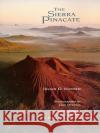
South of the border, a spectacular range of ancient volcanoes rises from the desert floor just a few miles from the Sea of Cortez. Virtually untraveled, the Sierra Pinacate in northwestern Mexico beckons adventurers and scientists. Here, in words and pictures, is a remarkable introduction to this place of almost surreal beauty. Sometimes veiled in clouds or dust storms, the Pinacate have long been shrouded in mystery as well. From prehistoric times until today, people of Sonora have told tales of giants, men and animals, bottomless pits, endless tunnels, hostile Indians, smoking...
South of the border, a spectacular range of ancient volcanoes rises from the desert floor just a few miles from the Sea of Cortez. Virtually u...
When William John McGee set out from Washington, D.C., for the Sonoran Desert in 1894, he was inspired by a passion for adventure as much as a thirst for knowledge. McGee lived in an era when discovery was made through travel rather than study, and reputations were forged by going where no outsiders had gone before. A self-taught scientist in the newly forming field of anthropology, McGee led two expeditions through southern Arizona and northern Sonora for the Bureau of American Ethnology. There he conducted ethnographic research among the Papagos (Tohono O'odham) and the Seris,...
When William John McGee set out from Washington, D.C., for the Sonoran Desert in 1894, he was inspired by a passion for adventure as much as a ...
From the Pinacate lava fields and expansive dunes to the shores of the Gulf of California, the Gran Desierto is one of the hottest and driest places in the Western Hemisphere. Yet this region in the state of Sonora in northwestern Mexico embraces a remarkable number of habitats with a fascinating and surprisingly rich flora. This is the heart of the Sonoran Desert, still in a largely primordial state, in juxtaposition with the ravished wetlands of the once great Rio Colorado. Flora of the Gran Desierto is the culmination of more than twenty-five years of research in this...
From the Pinacate lava fields and expansive dunes to the shores of the Gulf of California, the Gran Desierto is one of the hottest and driest p...
The origin stories of the O odham (Pima) Indians of Arizona are renowned for their beauty and complexity but have been collected in only a handful of books. This volume the third full O odham telling of ancientness to appear in print brings together dozens of stories collected in 1927 by anthropologist Ruth Benedict during her only visit to the Pimas. Never before published, they helped inspire Benedict to write her groundbreaking book Patterns of Culture.
The Pimas represented a way of life that Benedict at first called Dionysian after hearing the stories, narratives,...
The origin stories of the O odham (Pima) Indians of Arizona are renowned for their beauty and complexity but have been collected in only a h...
With its colorful landscape and wonderful diversity of plant and animal communities, the southwestern borderlands have attracted naturalists for centuries. As Col. Thomas Henry noted in 1853, there "are to be found many curious birds, peculiar to the country." This book identifies more than 100 early ornithologists and explorers who entered the Southwest from 1528 to 1900, all of whom have contributed in significant ways to our understanding of the region's avian life.
Dan Fischer identifies those individuals who documented the natural history of the Southwest and summarizes...
With its colorful landscape and wonderful diversity of plant and animal communities, the southwestern borderlands have attracted naturalists...
Towering over deserts, arid scrublands, and dry tropical forests, giant cacti grow throughout the Americas, from the United States to Argentina--often in rough terrain and on barren, parched soils, places inhospitable to people. But as David Yetman shows, many of these tall plants have contributed significantly to human survival. Yetman has been fascinated by columnar cacti for most of his life and now brings years of study and reflection to a wide-ranging and handsomely illustrated book. Drawing on his close association with the Guarijios, Mayos, and Seris of Mexico--peoples for whom...
Towering over deserts, arid scrublands, and dry tropical forests, giant cacti grow throughout the Americas, from the United States to Argentina--often...
Over nearly three centuries, Jesuit, Franciscan, and Dominican missionaries built a network of churches throughout the "new world" of New Spain. Since the early twentieth century, scholars have studied the colonial architecture of southern New Spain, but they have largely ignored the architecture of the north. However, as this book clearly demonstrates, the colonial architecture of Northern New Spain--an area that encompasses most of the southwestern United States and much of northern Mexico--is strikingly beautiful and rich with meaning. After more than two decades of research, both in the...
Over nearly three centuries, Jesuit, Franciscan, and Dominican missionaries built a network of churches throughout the "new world" of New Spain. Since...